Finn and the candy spin Slot Demo – Honest Review, RTP & Volatility

Game Overview and Basic Information
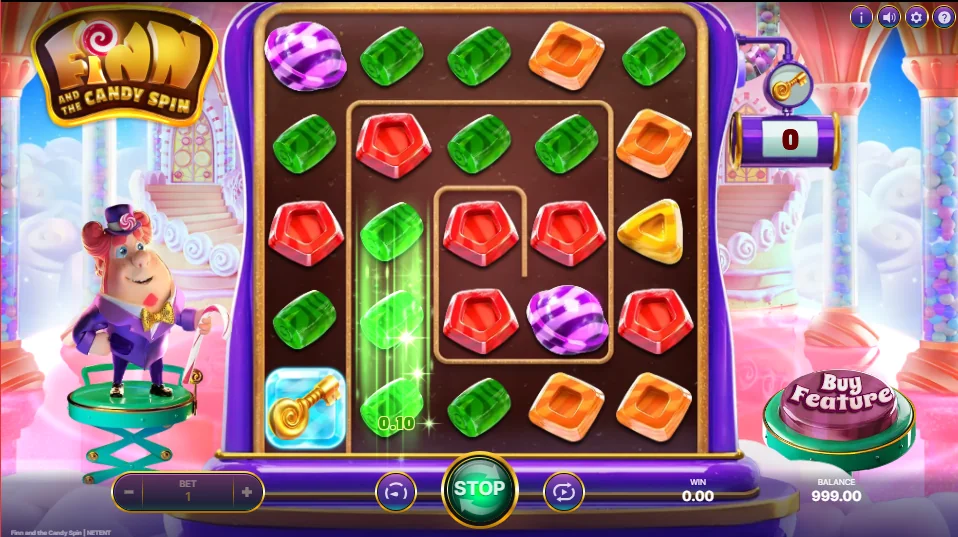
NetEnt released Finn and the Candy Spin as a direct successor to Finn and the Swirly Spin, carrying forward the spiral grid mechanic but rebuilding the reward structure from scratch. The game runs on a 5×5 grid without traditional paylines – instead, symbols collapse inward along a spiral path toward a central chest, which acts as the trigger point for bonus activation. This isn’t cosmetic design; the spiral movement fundamentally changes how wins accumulate and how bonus access is earned.
The RTP sits at 96.62%, placing it comfortably above the industry median for licensed online slots. Volatility is classified as low-to-medium, which means dry stretches are real but the peak reward ceiling compensates meaningfully. The max win reaches 336× the bet – not a theoretical outlier, but a figure anchored in the bonus round’s multiplier chain mechanics.
Minimum bet starts at €0.10, with the upper limit reaching €100 per spin. The game is certified for fair play under standard regulatory frameworks and carries no progressive jackpot – all payouts are fixed-odds and governed by the RTP structure. Understanding this before playing shapes expectations accurately: Finn and the Candy Spin rewards patience over aggression.
Easy, Fast, Comfortable
The control panel strips away everything non-essential. Spin, autoplay, bet adjustment, and sound toggle are immediately accessible without submenus. NetEnt’s interface architecture here prioritizes zero friction – new players locate every function within seconds, while experienced players won’t find anything missing from the standard toolkit.
Autoplay supports up to 1,000 spins with configurable loss limits and single-win caps, which is more granular than many competitors offer at this price tier. The demo version mirrors the full interface exactly, including turbo spin mode and quick spin acceleration, so players testing the free play version get an unmodified feel for real-money pacing.
Loading speed is fast across stable connections. The game initializes without requiring additional plugin installation, and the session state is preserved through brief disconnections on most platforms. For players managing limited session windows, the lack of intrusive animations on standard spins keeps the tempo brisk without sacrificing clarity.
Game Design
Theme and Graphics
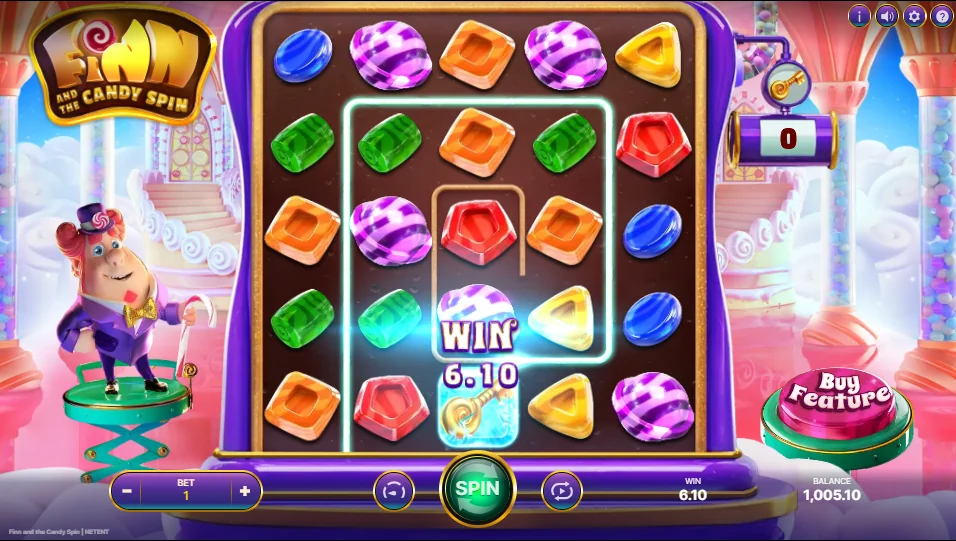
The visual world of Finn and the Candy Spin occupies a specific aesthetic register – Irish folklore filtered through a confectionery lens. Finn himself, a small red-haired leprechaun, anchors the theme without overwhelming it. The background layers soft rolling hills and stone ruins behind a candy-colored foreground grid, creating depth without visual clutter.
Symbol design leans heavily into the sweet shop motif: lollipops, gummy bears, hard candies, and chocolate pieces replace traditional card-rank icons entirely. This decision gives the paytable a visual coherence that low-tier symbols in competing slots often lack. The chest centerpiece shifts color and texture as the spiral progresses, providing a visual feedback loop that reinforces mechanical anticipation.
Animations during wins are restrained but precise – matching symbols pulse briefly before clearing, and the spiral movement is smooth rather than jarring. The color palette favors warm reds, pinks, and yellows without tipping into visual noise at higher bet levels.
Sounds and Gameplay Experience
The audio layer builds a coherent acoustic identity without looping the same four-bar motif indefinitely. Background music shifts tempo subtly during active win chains, signaling escalation without resorting to jarring transitions. The sound design avoids the overcrowded sonic landscape common in feature-heavy slots – each mechanical event has its own distinct audio cue.
Finn occasionally reacts to spin outcomes with short voiced expressions, adding a layer of personality that feels deliberate rather than obligatory. These reactions scale with outcome size, so a large cascade win produces a different response than a single-symbol match. Immersion holds across longer sessions because the audio environment changes just enough to avoid the numbness that repetitive soundtracks produce.
Bonuses and Symbols
Symbols in the Game
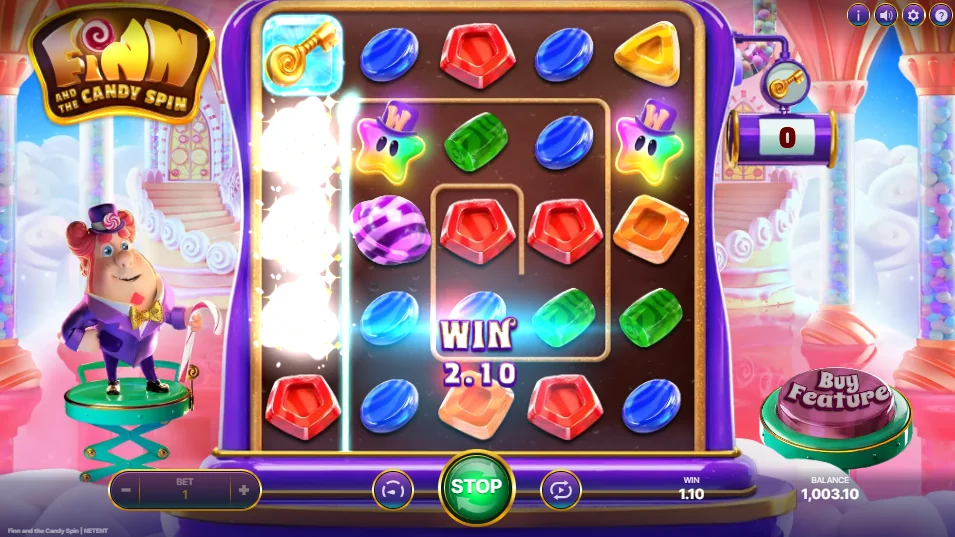
The symbol hierarchy in Finn and the Candy Spin divides cleanly into three tiers. Premium symbols – the golden harp, Finn himself, a pot of gold, and a four-leaf clover – carry the highest individual payout values and appear less frequently on the grid. Mid-tier symbols include the candy cane and lollipop variants, offering moderate payouts with higher frequency. The lowest tier consists of standard candy shapes that fill the grid regularly and primarily serve to build cascades toward higher-value matches.
Wild symbols substitute for all standard symbols and do not expire after a single use – they persist on the grid until cleared by the spiral movement. This persistence distinguishes the wild mechanic from passive substitution; a well-positioned wild can contribute to multiple successive wins within a single spin sequence. Star symbols carry a separate function, acting as accumulation tokens rather than direct payout contributors.
Bonus Rounds and Free Spins
The bonus structure branches into four distinct free spin modes, each triggered by landing a specific color-coded key in the central chest. The four modes are: Lucky Wilds (random wilds added per spin), Pixie Spins (a 3×3 reel set with high-value symbol concentration), Bonus Coins (coin multipliers accumulate across the round), and Dragon Spins (a multiplier wild that increases with each cascade).
This branching design is the core strategic variable in Finn and the Candy Spin. The Dragon Spins mode carries the highest theoretical ceiling because the multiplier wild can compound across several cascades within a single free spin, stacking value geometrically. Pixie Spins, by contrast, offers more consistent returns with lower variance. The chest color visible at any point during base play signals which bonus mode is loading – experienced players monitor this as a session management tool.
Retriggering within bonus rounds is possible in select modes, extending the round without resetting accumulated multipliers in Dragon Spins, which is where the 336× max win becomes mechanically plausible rather than purely theoretical.
Paytable and Winning Combinations
Wins are formed by landing three or more matching symbols anywhere on the 5×5 grid – no fixed payline alignment required. The cascade mechanic means a single spin can produce multiple consecutive win events as cleared symbols are replaced from the top of the grid. Each cascade in the sequence can itself trigger a new win, and the chain continues until no new matches form.
Premium symbol payouts for five-of-a-kind: the golden harp returns 50x the bet, Finn returns 30x, the pot of gold 25x, and the four-leaf clover 20x. At a €1 bet, five golden harps in a cascade produces €50 before any multiplier is applied. Across a multi-cascade chain, these values stack additively, not multiplicatively – the multiplier wild in Dragon Spins is the exception, applying a multiplier to each individual win it contributes to.
Jackpot
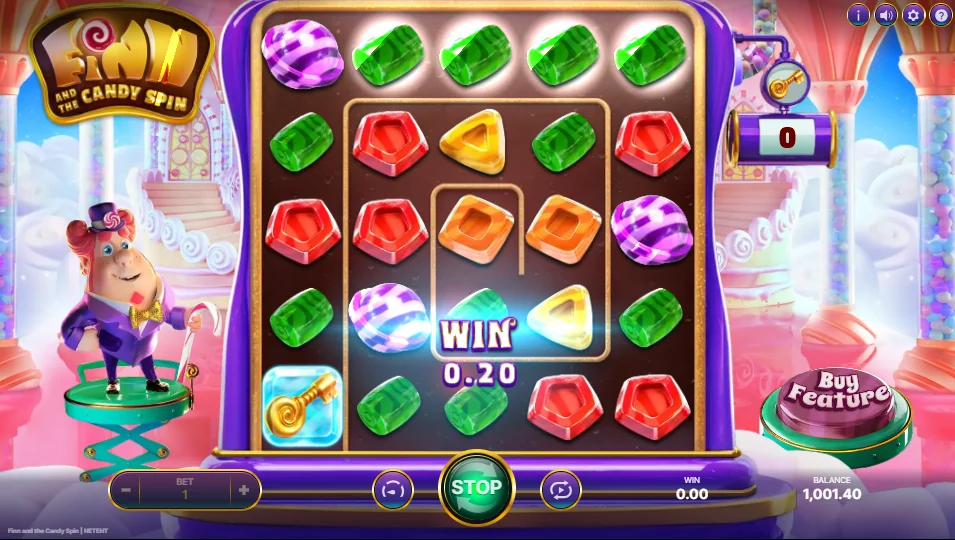
Finn and the Candy Spin does not include a progressive jackpot. The maximum win of 336× operates as a fixed theoretical ceiling determined by the Dragon Spins bonus mode under optimal multiplier accumulation. This structure means the game’s top payout is achievable through base mechanics without requiring a separate jackpot pool entry – the full RTP of 96.62% is distributed across regular gameplay rather than partially allocated to a jackpot reservoir.
For players specifically seeking progressive jackpot exposure, this game sits outside that category. For players who prefer knowing the exact payout ceiling in advance, the fixed-max structure offers a measurable risk profile that progressive formats cannot.
Mobile Device Compatibility
The game is built on HTML5 and scales cleanly to both portrait and landscape orientations across iOS and Android. Touch controls map correctly to all interface elements – bet adjustments, autoplay configuration, and the turbo spin toggle each respond without precision issues on standard screen sizes above 4.7 inches.
Performance on mid-range hardware remains stable during cascade sequences and bonus round animations. No significant frame drops appear during Dragon Spins multiplier chains, which are the most animation-intensive sequences the game produces. The mobile version does not reduce graphical fidelity relative to desktop – the same visual resolution and animation smoothness carry across platforms without compromise.
Battery consumption sits in a normal range for an HTML5 slot at standard autoplay speeds. Players running extended sessions on mobile should be aware that turbo spin mode at high autoplay counts draws more power, though this is a general characteristic of all high-iteration autoplay configurations rather than a platform-specific limitation.
Advantages and Disadvantages
Advantages
The spiral grid mechanic creates a win-building dynamic that fixed-payline grids cannot replicate – cascade chains generate compounding excitement that is structurally baked into the base game rather than reserved for bonus rounds. The four-branch bonus system provides meaningful differentiation between bonus experiences, offering replay variance beyond simple free-spin repetition.
The RTP of 96.62% is competitive and verified, which matters practically for extended demo and real-money sessions. The persistent wild mechanic in the base game extends win windows without requiring special trigger events. Demo availability is unrestricted, enabling full mechanical exploration before any deposit commitment.
Limitations
The low-to-medium volatility profile creates genuine dry spells – players entering the game expecting frequent small wins will find the pacing unrewarding during low-activity stretches. The spiral mechanic, while strategically interesting, adds a layer of visual tracking that some players find cognitively demanding compared to static reel layouts.
The chest-color bonus selection system operates without player input; the outcome is predetermined and the color display is informational rather than interactive. Players seeking skill-adjacent bonus selection mechanics will find this passivity frustrating. Additionally, the max win ceiling of 336×, while substantial, requires Dragon Spins activation with a favorable multiplier chain – a combination that demands patience and a session length most casual players won’t sustain.
Conclusion
Finn and the Candy Spin builds its identity around a single architectural decision: replacing the passive reel with a directional spiral grid that converts every spin into a converging cascade event. That design choice cascades – pun structurally intended – into every other aspect of the game, from how wilds persist to why the bonus branches matter differently depending on session goals.
The 96.62% RTP and low-to-medium volatility position this as a session game rather than a hit-and-run slot. The Dragon Spins path to 336× requires time and luck in specific proportion. The demo version faithfully represents this dynamic, making it the most efficient starting point before committing real funds. Players who engage with the spiral mechanic as a system rather than a background visual will extract more strategic value from each session than those who treat it as incidental.