
Mahjong Ways Slot Demo by PG Soft: Honest Review, RTP & Volatility

Game Overview and Basic Information
Mahjong Ways is PG Soft’s first attempt at turning the tile game of mahjong into a slot, and PG Soft announced it on 15.01.2020. So what is Mahjong Ways in practical terms? It is a 5 × 4 grid paying 1,024 ways, built on a cascading engine where every winning cluster clears out and a rising multiplier trails along above the reels.
The base specification of the Mahjong Ways slot is straightforward. The Mahjong Ways RTP is 96.92%, and the volatility is medium. PG Soft lists the maximum win as 25,000x; treat it as a cap rather than a target. Bet limits are set by the operator, so check them in the game.
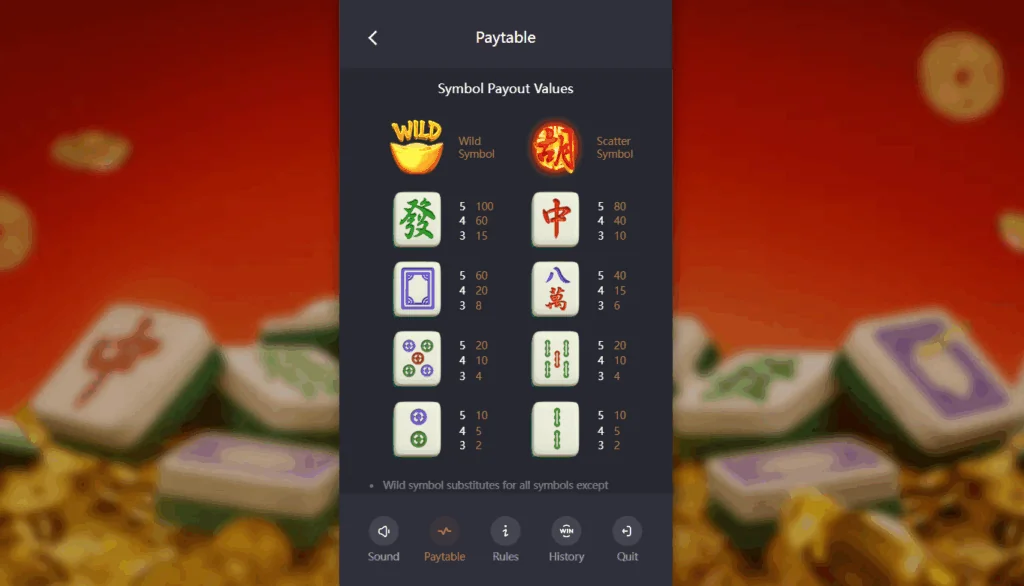
Wins form when three or more matching tiles appear on adjacent reels starting from the leftmost. The eight tile symbols pay between 1x and 10x the stake for a five-of-a-kind. That sounds modest until you remember that the cascade multiplier and the wild conversions are doing most of the heavy lifting in the Mahjong Ways game.
This Mahjong Ways review walks through the rules, the cascade mechanic, the symbol hierarchy, the bonus round, mobile behaviour and the realistic ceiling of the game.
Easy, Fast, Comfortable
There is nothing to install, and anyone working out how to play Mahjong Ways can do it here in a couple of minutes. The Mahjong Ways demo loads directly in a browser tab, which makes it easy to test the cascade rhythm before committing real money. Free play mode uses the same maths as the paid version, so the pacing and the multiplier behaviour you see are the real thing.
Session controls are generous. Turbo mode strips out the animation delays, and autoplay is available for longer stretches.
Because it is a cascading game, one spin can resolve into a chain of several clearances. The Mahjong Ways gameplay loop therefore feels slower per spin than a fixed-payline slot but delivers more on-screen action. The running multiplier gives you something to watch even during small wins.
Access to Mahjong Ways free play is worth using for a specific reason. PG Soft does not publish a hit rate or bonus frequency, and a demo session is the cheapest way to feel how long the wait for scatters actually is.
Game Design
Theme and Graphics
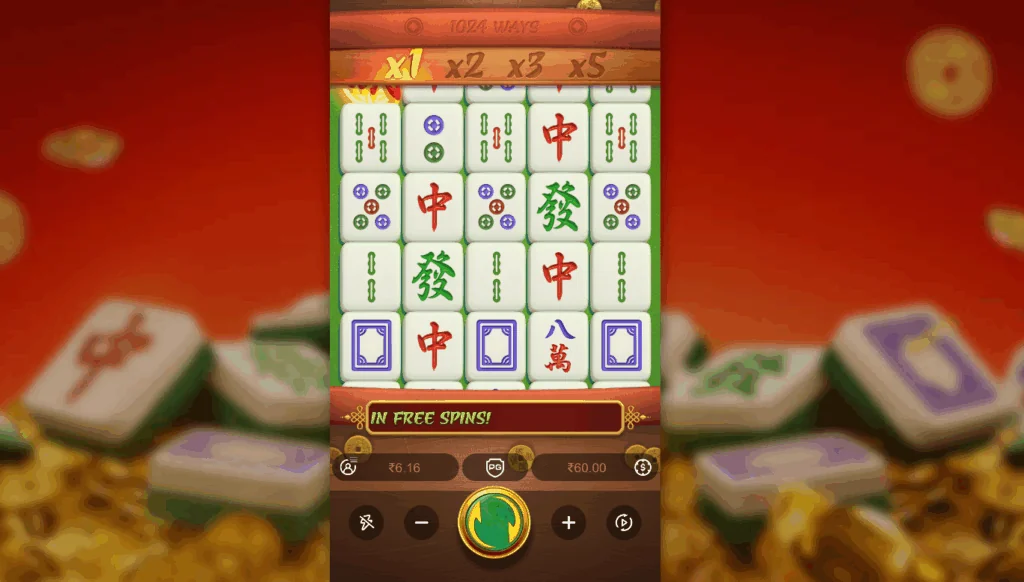
The presentation is restrained by PG Soft standards. Polished ivory tiles sit on a dark lacquered frame, gold trim marks the reel edges, and the multiplier counter hangs above the grid in a small illuminated plaque. There is no cluttered background art competing with the tiles.
Animation quality is where the budget went. Tiles clatter into place, cleared tiles shatter and drop away, and gold-plated versions of the pay symbols glint noticeably enough that you spot them before the cascade resolves.
Readability holds up well at small sizes, which matters because the tile faces are the only thing distinguishing one symbol from another. The colour coding on the Chinese characters is strong enough that you do not need to know mahjong to tell the tiles apart.
Sounds and Gameplay Experience
The soundtrack recreates the chatter of a four-player mahjong table, complete with the clack of tiles being shuffled. It is in Chinese, which some players find atmospheric and others find distracting; the audio can be muted without affecting anything else.
Each cascade raises the pitch of the win chime, which is a small touch that makes a long chain feel like it is building towards something. The bonus trigger gets a louder, brassier cue that is hard to miss even with the volume low.
Overall the Mahjong Ways gameplay is calm rather than frantic. There are no interruptive cut-scenes, no wheel spins and no picking rounds, so the rhythm stays consistent from the first spin to the last.
Bonuses and Symbols
Symbols in the Game
The Mahjong Ways symbols are eight mahjong tiles arranged in a value hierarchy, with the tile bearing green Chinese characters at the top. The paytable itself is deliberately flat, so the multipliers do the heavy lifting.
The gold ingot acts as the wild and substitutes for any paying tile to complete or extend a win. It cannot pay on its own, which keeps it purely functional rather than a prize symbol in its own right.
The most important detail is the gold-plated variant. Pay symbols on the three middle reels can appear gold-plated, and if such a symbol forms part of a win it converts into a wild on the next cascade. That conversion is what turns a two-step chain into a five-step one.
Bonus Rounds and Free Spins
Scatter tiles trigger the free spins round, and that is where the Mahjong Ways features shift gear. The cascade multiplier trail, which tops out at 5x during normal play, doubles its range in the bonus: wins start boosted at 2x and climb as high as 10x.
The multiplier does not reset between spins inside the round, so a long bonus with repeated cascades is the realistic route to a large result. This is also why the game’s ceiling sits so far above what the paytable alone would suggest.
Three Scatter symbols anywhere trigger 12 free spins, and each additional Scatter adds 2 more. That is a long wait at medium volatility. It is the single most useful number to know before planning a session, because the base game on its own rarely produces anything dramatic.
Paytable and Winning Combinations
The Mahjong Ways rules for forming a win are simple: three or more matching tiles must land on adjacent reels, counted from the leftmost. With four rows on each of the five reels the game advertises 1,024 ways to win, which is every combination of one symbol position per reel.
Because top tile payouts stop at 10x, individual clusters are small. The arithmetic of the game is built around stacking multiple clearances rather than landing one big line.
Small wins land regularly at medium volatility. That frequency keeps the balance moving, but most of those hits are worth less than the stake, which is the usual trade-off in cascade-driven design.
Jackpot
There is no jackpot in Mahjong Ways, fixed or progressive. Nothing accumulates across spins and nothing is pooled between players, so the multiplier trail inside the free spins round is the only route to a large result.
PG Soft lists the Mahjong Ways max win as 25,000x, a cap that few sessions approach. Reaching even that requires an exceptional bonus round with a long uninterrupted cascade chain at the top of the multiplier range.
Mobile Device Compatibility
PG Soft builds mobile-first, and this title is a clear example. The 5 × 4 grid scales into portrait without cropping, the multiplier plaque stays visible, and the bet controls collapse into a single tray at the bottom of the screen.
It runs in Safari on iOS and Chrome on Android with no app or plugin, and it behaves the same inside operator apps. Turbo mode is particularly useful on a phone, where the cascade animations otherwise eat into session time.
Tablets get the desktop layout scaled up, which makes the gold-plated symbols easier to spot mid-cascade. On smaller phones those highlights are still visible but require more attention.
Reopening the session resumes from the unresolved round rather than voiding it, which matters on a cascade game where a single spin can take several seconds to finish resolving.
Advantages and Disadvantages
Advantages
PG Soft publishes the 96.92% return openly rather than burying it behind operator-specific configurations. For a medium-volatility game that is a solid combination.
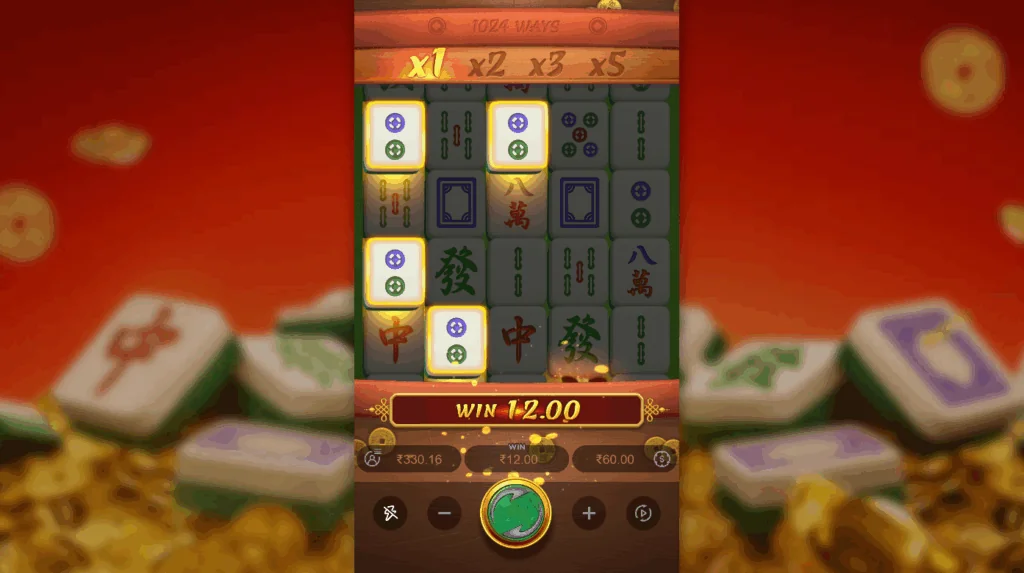
The cascade multiplier trail gives the base game a sense of progression that fixed-payline slots lack. Even a modest chain builds towards 5x, and that visible counter is a large part of why the game holds attention.
Gold-plated symbols converting to wilds on the following cascade is an elegant mechanic. It rewards the exact situation you want, extending an existing win rather than handing out a random bonus.
Regular small wins keep sessions from feeling dead, which matters for a game whose upside is concentrated in the bonus round. That balance is the main reason the title has stayed in rotation for years.
Limitations
Check the minimum bet at your casino before you plan a session.
The free spins can take a long time to arrive, especially given that base-game wins are small. The gap between bonuses is where most of the bankroll pressure comes from.
The paytable is flat by design. Top tiles paying 10x means that without the multiplier trail or a bonus round, individual wins rarely feel meaningful, and some players read that as the game being stingy.
Chinese-language table chatter and mahjong iconography are an acquired taste. There is nothing wrong with the audio, but it offers no help in learning the symbol hierarchy if the tiles are unfamiliar to you.
Conclusion
Mahjong Ways has aged well. The cascade engine, the multiplier trail and the gold-plated wild conversions still feel considered rather than bolted on. The 96.92% return backs up the design with numbers that are easy to check.
PG Soft fans can also read our reviews of Double Fortune and Wild Bandito.
It suits patient players. The Mahjong Ways volatility is medium and the payoff is concentrated in the free spins. So the game rewards a bankroll set up to wait rather than one chasing a quick result.
The best Mahjong Ways strategy is simply arithmetic. Divide your session budget by your stake and check that the result comfortably exceeds a few hundred spins; if it does not, lower the stake. Anyone unsure should spend twenty minutes in the demo first.
Frequently Asked Questions
Mahjong Ways 2 and Lucky Neko are the PG Soft games most often played alongside Mahjong Ways. Both reviews cover the paytable, the bonus trigger and the real max win.