
Lightning Dice Demo – Honest Review, RTP & Strategy
Game Overview and Basic Information
What is Lightning Dice? It is a live three-dice game show from Evolution Gaming, streamed from a live studio with a real dealer and settled on a certified return of 96.21%. The Lightning Dice game is played from a browser against the studio feed rather than against other players.
The numbers first. Lightning Dice returns 96.21% to the player over the long run, opens at €0.10 a round, offers the sixteen possible totals from three to eighteen and carries a documented ceiling of 1,000x. The table has been in the lobby since 04/06/19, long enough for its behaviour to be documented rather than guessed.
Lightning Dice volatility is best described as high, and it depends heavily on which part of the layout you use: the middle totals land often but pay little, while the extreme totals pay hundreds to one and almost never appear, so the distribution is heavily skewed.
A Lightning Dice review has to be clear about the ceiling. The Lightning Dice max win is 1,000x the stake, reached when a 1,000x multiplier lands on the total you backed. There is no progressive jackpot attached — every payout comes from the posted paytable.
Easy, Fast, Comfortable
Anyone asking how to play Lightning Dice can be up and running in under a minute. The table runs in the browser with no download, and the interface exposes every bet in one screen.
A true Lightning Dice demo is not offered at the live table, because a real dealer and real equipment are involved in every round. The closest thing to Lightning Dice free play is the First Person RNG edition of the format, which uses the same maths and the same paytable but replaces the studio feed with a rendered table.
Rounds are short and the betting window is fixed, so a session can be as long or as brief as you want. Nothing has to be installed, and the same account balance works across every table in the lobby.
Bet sizing is adjusted with one control, and the layout remembers your last configuration when you return.
How to Play Lightning Dice
Rules and Bet Types
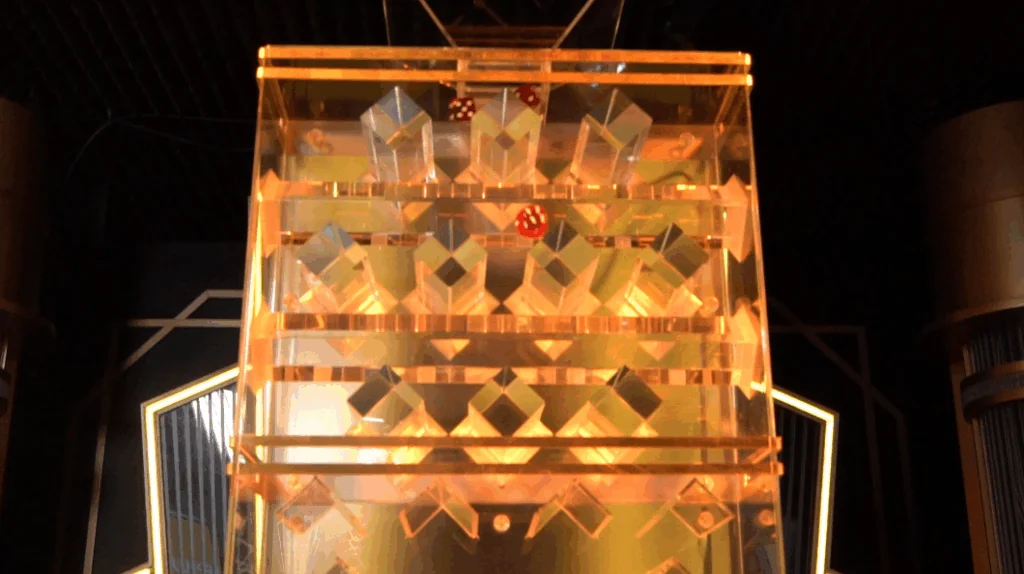
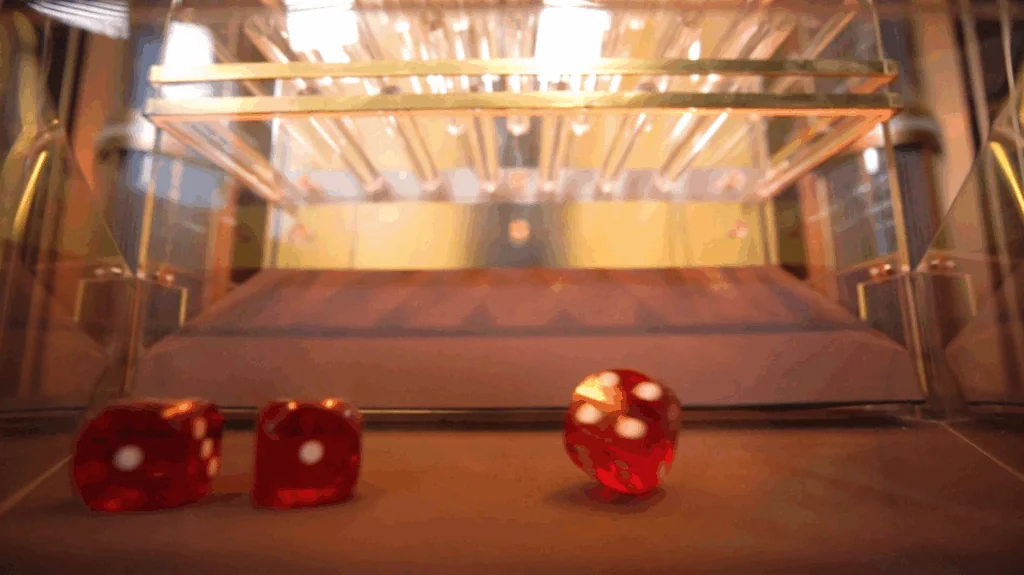
Three dice are dropped through a lit tower and settle on a tray. Players bet on the total, from three to eighteen, and are paid the posted odds for that total if it comes up.
The Lightning Dice rules are posted in the table information panel and do not change between rounds. Before the dice are released, the presenter strikes between one and five totals with lightning, assigning each a multiplier from 50x to 1,000x.
The sixteen possible totals from three to eighteen are available, and each carries its own payout and its own probability. Understanding that split is the whole of the learning curve here.
Lightning Strikes on Dice Totals
One to five of the sixteen possible totals are struck before each drop and given a multiplier between 50x and 1,000x. If your total is struck and comes in, the standard payout is replaced by that multiplier.
The base odds are reduced to fund those multipliers, which is the same trade the studio uses across its Lightning range. The strike is random and independent of where the bets sit.
This is the part of Lightning Dice gameplay that separates the table from the standard version of the format, and it is worth watching for a few rounds in the statistics panel before committing a stake.
Game Design
Studio, Theme and Symbols
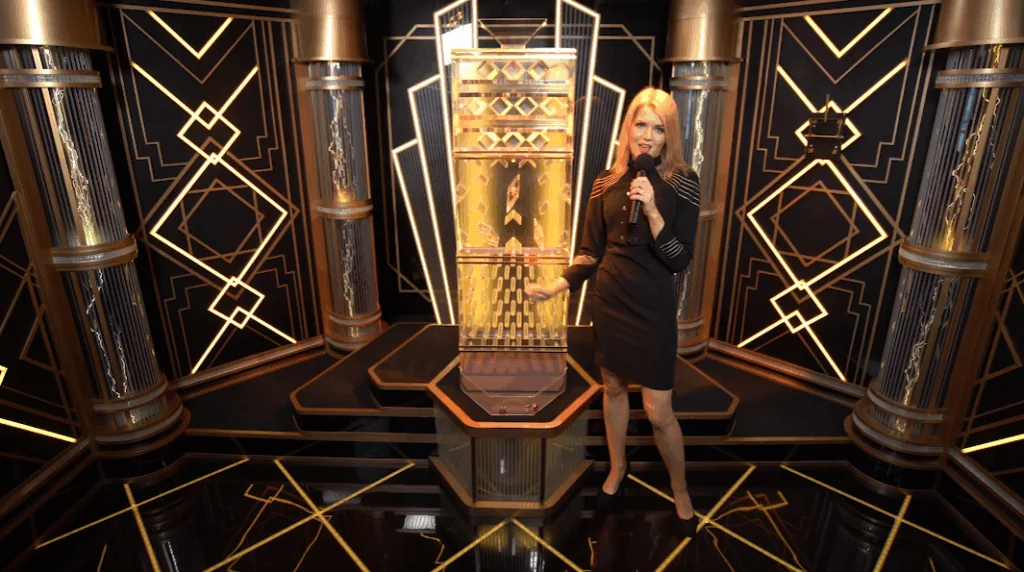
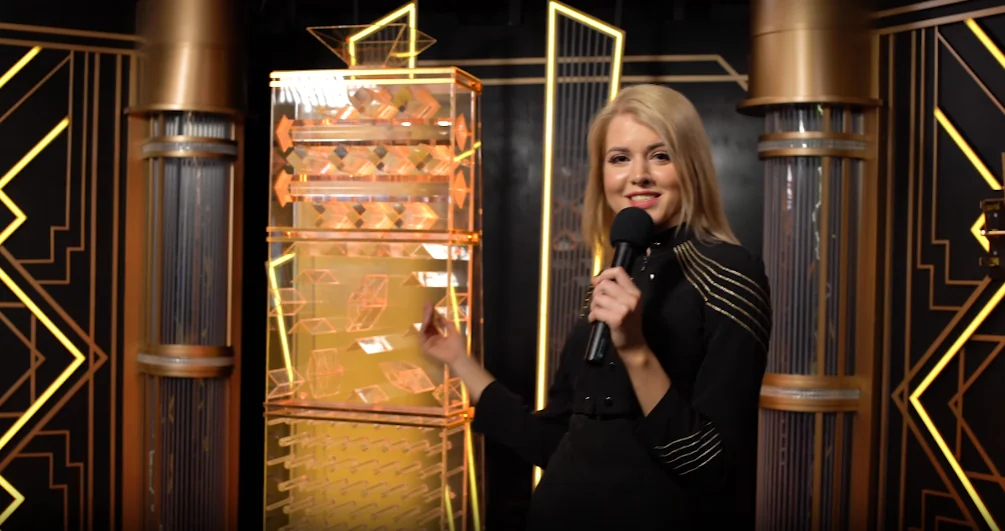
Lightning Dice is presented from a compact studio built around a lit tower that the dice tumble down. The studio set is built for clarity rather than spectacle.
Lightning Dice symbols and table markings follow the standard convention for the format, which matters more than it sounds: a player who knows the classic layout needs no re-learning here.
The dealer works to a fixed script and the round timer is displayed throughout, so there is never any doubt about how long is left to place a bet.
Sound and Gameplay Experience
Audio is limited to the dealer, the equipment and a light background bed. Nothing competes with the dealer for attention, and the whole soundtrack can be muted without losing any information.
Lightning Dice gameplay is driven entirely by the round timer: place bets, wait for the result, collect or move on. Round length is fixed and displayed on screen, so a session can be planned by the clock as easily as by the balance.
A statistics panel, a history strip and a favourite-bets tool are all available from the main screen, which is where most of the practical decision-making happens.
Payouts, RTP and Volatility
Payout Table and Odds
Payouts follow the probability of each total: the totals of three and eighteen pay by far the most because there is only one dice combination that produces each, while the total of ten and eleven pay least.
Every total carries a broadly similar house edge once the reduced base odds and the multipliers are combined, so there is no mathematically superior total to back.
Every payout is settled on the stake placed on that specific position, so the arithmetic never needs converting. The posted table is the same for every player at the table, at every stake level.
RTP and House Edge
The certified Lightning Dice RTP is 96.21%. That figure is the long-run theoretical return under the posted rules, and it is verified by an independent testing house rather than claimed by the operator.
The 96.21% return applies across the board. No individual total offers a better long-run figure than another.
In practical terms the house edge is the mirror image of that figure, and it applies to every round independently. No sequence of past results changes the edge on the next one.
Max Win and Volatility
The Lightning Dice max win of 1,000x the stake is the documented ceiling for a single round. Reached when a 1,000x multiplier lands on the total you backed.
Volatility follows directly from that: high overall, because the multipliers are applied to totals that are already rare.
Lightning Dice Strategy
Lightning Dice strategy begins by accepting that the 96.21% return is fixed. No staking pattern, streak-reading or progression alters it, and any system that claims otherwise is selling a story.
What can be managed is exposure. Spreading across several central totals produces frequent small returns; backing three or eighteen produces very long losing runs and occasional very large rounds.
Set a bankroll that survives at least 60 rounds at your chosen stake, and decide the stop-loss and stop-win before the first bet rather than during a losing run.
The statistics panel is useful for understanding the distribution, not for predicting it. Use it to check your own assumptions about frequency, then ignore it when the wheel or the deal actually resolves.
Mobile Device Compatibility
The video feed adapts to the connection, so a phone receives a lower bitrate rather than a stuttering stream. The table is the same product on a phone as on a desktop: same dealer, same round, same 96.21% return.
Portrait mode stacks the video above the betting layout and is the better choice for quick sessions; landscape widens the layout and is easier if you place several bets per round.
The stream drops quality rather than freezing on a weak connection, and any bet already accepted is settled by the server regardless of what the handset does.
There is no app to install. Lightning Dice runs in the mobile browser, which keeps storage use at zero and means the table is always the current version.
Advantages and Disadvantages
Advantages
Multipliers from 50x to 1,000x on struck totals. Against a 96.21% return, this is the part of the specification that shows up over a long run of rounds rather than in a single session.
Up to five totals struck every round. It is the kind of detail that becomes obvious after an hour at the table rather than from a lobby thumbnail.
Physical dice tower with a visible drop. Combined with the sixteen possible totals from three to eighteen and a €0.10 entry point, that keeps the cost of a session predictable.
96.21% return across every total. And one more worth naming: Stakes from €0.10 a total. None of this beats the house edge — it simply means the 96.21% return is delivered in a format that is comfortable to sit with.
Limitations
High volatility, especially on extreme totals. It is disclosed in the table information rather than hidden, but it sets the floor for what a session costs.
Base odds reduced to fund the multipliers. Worth knowing before you read a bad run as anything other than normal behaviour for a high table.
Central totals pay very little. That shapes the stake you should pick far more than any strategy article will.
Round pace is slower than a card game. No genuine free-play version of the live table. Neither point is a dealbreaker, but a Lightning Dice review that skipped them would not be worth reading.
Conclusion
Lightning Dice is a live three-dice game show from Evolution Gaming with a 96.21% return, the sixteen possible totals from three to eighteen and a 1,000x ceiling. Players who arrive looking for a Lightning Dice slot equivalent will find something different: the maths are transparent, the round is short and the outcome is decided by physical equipment rather than a random number generator.
It works best with a fixed stake and a fixed exit point, and the First Person edition of the format is the cheapest way to learn the layout before real money is involved.
The Lightning Dice rules are short, the Lightning Dice features are visible from the first round, and nothing important is hidden. Learn the paytable, pick a stake you can repeat, and treat the 1,000x ceiling as a statistical tail rather than a plan.