
Rummy Card Game Demo by JILI: Honest Review, RTP & Strategy

Game Overview and Basic Information

It is a thirteen-card rummy game from Jili Games, listed by the studio in its table and card category rather than among its slots.
Jili Games describes it as the classic Indian multiplayer card game: you use the 13 cards in your hand to form special card types and compete with opponents. There is no reel grid to describe, so the table below covers the hand instead.
The official card lists a max win of 320x and a release in 07.2021. A volatility rating is not published, and the bet range is set by the operator. The game rules in the official JILI demo list an RTP of 97.00%; check the game info at your casino.
There are no reels and no scatter chains: the 320x max win is the studio’s own published figure for the title.
Easy, Fast, Comfortable
The thirteen cards are laid out on the main screen with the stake control, and the rules are available from the game menu.
A Rummy demo may be available at your casino, and it is the easiest way to learn the combinations and the table flow before staking real money.
The bet range is set by the operator, so check the limits at your casino.
Rounds move quickly, but each one is a contest against other players rather than a single automatic deal.
How to Play Rummy
Rules and Bet Types
The Rummy rules follow classic Indian thirteen-card rummy. You receive thirteen cards and aim to arrange them into valid sequences and sets before your opponents, and the result depends on the combinations you form.
The card rankings and combination rules follow Indian rummy rather than poker, so sequences of the same suit and sets of the same rank are what matter. The full rules are available in the game menu.
Nothing in the Rummy rules is hidden behind a menu: the bet, the table and your hand are all on the main screen at once. This is why the format reads as simple even to a first-time player.
Sequences, Sets and How the Hand Is Priced
Rummy combinations decide the result: pure sequences are the foundation of a valid hand, while mixed sequences and sets complete it. The exact scoring is listed in the in-game rules.
Because you play against opponents, your choices during the hand matter. Jili Games describes the game as a test of wisdom, skill and luck.
Game Design
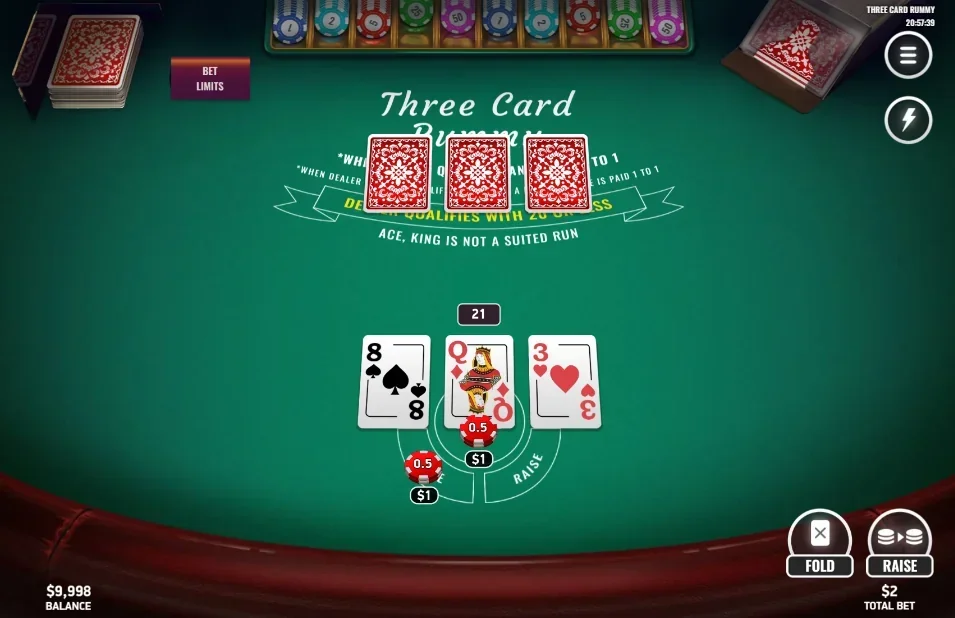
Theme and Visuals
The theme is a plain Indian card table, presented without a narrative wrapper; the studio describes it as India’s exclusive thirteen-card game.
The Rummy symbols are functional rather than decorative: the playing cards are the symbols, and the sequences and sets they form decide the result.
Payouts, RTP and Volatility

Payout Structure and Multipliers
Payouts depend on the result of the hand against your opponents and on the stake you chose.
The official card lists 320x as the max win. There is no multiplier layer stacked on top.
The Rummy features list is short by design: a thirteen-card hand and multiplayer competition. There are no bonus rounds, free hands or multipliers.
RTP and House Edge
The game rules in the official JILI demo list an RTP of 97.00%; check the game info at your casino.
A hundred rounds can finish well above or well below it.
Check the Rummy RTP inside the operator’s own game info panel before playing for real money, because the version an operator deploys is the one that applies.
Max Win and Volatility
The Rummy max win is 320x the stake, as listed on the official card.
Jili Games does not publish a volatility rating. Swings depend on the opponents, your choices and the cards you receive.
Rummy Strategy
No betting pattern changes the house edge. What a strategy can do is improve your decisions during the hand and keep the stake under control.
Learn which sequences and sets make a valid hand, practise sorting thirteen cards quickly, and keep flat stakes within a set number of rounds.
This is a multiplayer rummy table where skill and luck both play a part, not a single automatic deal.
Fairness and Randomness
The game runs on a random number generator, and each deal is independent of the last.
None of this changes the odds in the player’s favour. Check the game rules at your casino before playing for real money.
Mobile Device Compatibility
Rummy runs in mobile browsers in portrait, with the thirteen-card hand on the main screen.
Advantages and Disadvantages

Advantages
320x max win on the official card. It is the studio’s own figure for the title.
The combination paytable follows rummy rules. Pure sequences and sets are priced rather than poker hands.
Thirteen-card format familiar in India.
Multiplayer competition against opponents. Skill and luck both matter.
Limitations
Results also depend on luck. Good decisions help, but they cannot control the cards you receive.
320x is a low ceiling. There is no multiplier layer above the paytable.
No bonus rounds or free hands. The paytable is the entire game once seen.
Bet range set by the operator. The game rules in the official JILI demo list an RTP of 97.00%; check the game info at your casino.
Conclusion
Rummy is a thirteen-card rummy game that does one thing and does it cleanly. Multiplayer competition keeps it engaging, and the 320x max win gives the round a reason to be watched.
JILI fans can also read our reviews of Hilo and Andar Bahar.
Rummy from this studio is a simple adaptation of the classic Indian game: thirteen cards, valid sequences and sets, and opponents to beat. The format is instantly familiar to Indian players, while the lack of bonus content means the appeal is the card game itself.
Losing runs are part of any card game. Try a few low-stake rounds first and decide whether the format suits you.