First Person Dream Catcher – Honest Review, RTP & Strategy
Game Overview and Basic Information
What is First Person Dream Catcher? It is an RNG money-wheel game from Evolution First Person, run by a random number generator and with a listed return of 95.65%. The First Person Dream Catcher game is played from a browser in a software-run version, with no other players involved. The BetFM game catalogue lists the connected version at 95.65%.
The numbers first.The BetFM catalogue lists an RTP of 95.65% for the connected version; the table opens at the operator’s minimum stake per round, offers the six numbered wheel segments and has a maximum win of 40x. The table has been in the lobby since 11 July 2019.
First Person Dream Catcher volatility is best described as medium, and it depends heavily on which part of the layout you use: the low numbers occupy most of the wheel and pay small, while the 40 segment appears only once, so the swing depends entirely on which segments you cover.
The maximum win is 40x the stake, paid on the 40 segment before any multiplier is applied. There is no progressive jackpot attached; every payout comes from the posted paytable.
Easy, Fast, Comfortable
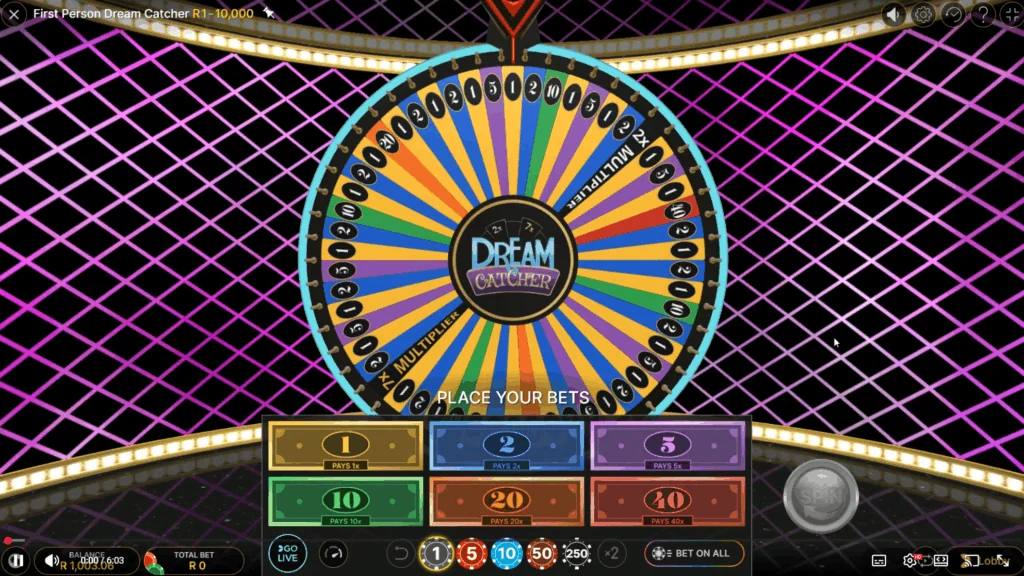
The table runs in the browser with no download, and the interface exposes every bet in one screen.
Unlike the studio table, this version does have a genuine First Person Dream Catcher demo. First Person Dream Catcher free play runs in the browser with practice credits, no registration and no download, and it uses exactly the same paytable and the same 95.65% return as the real-money build.
Rounds are short and the betting window is fixed, so a session can be as long or as brief as you want. Nothing has to be installed, and the same account balance works across every table in the lobby.
Bet sizing is adjusted with the chip selector.
How to Play First Person Dream Catcher
Rules and Bet Types
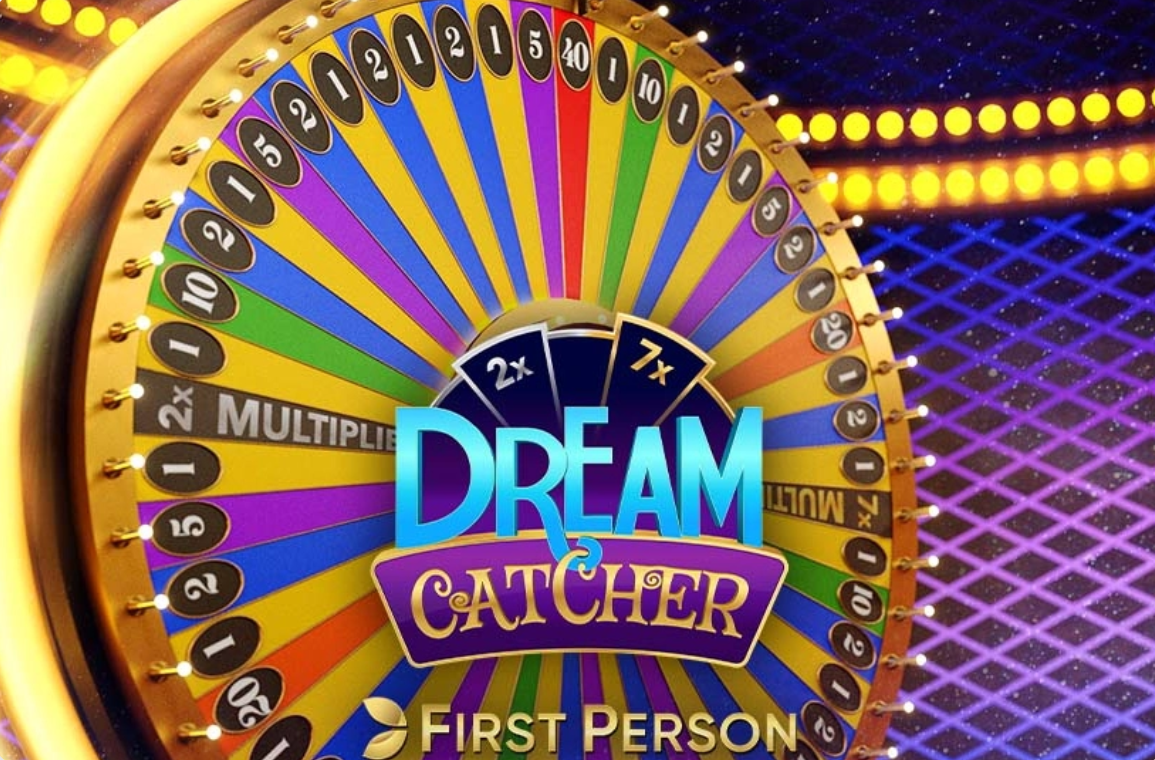
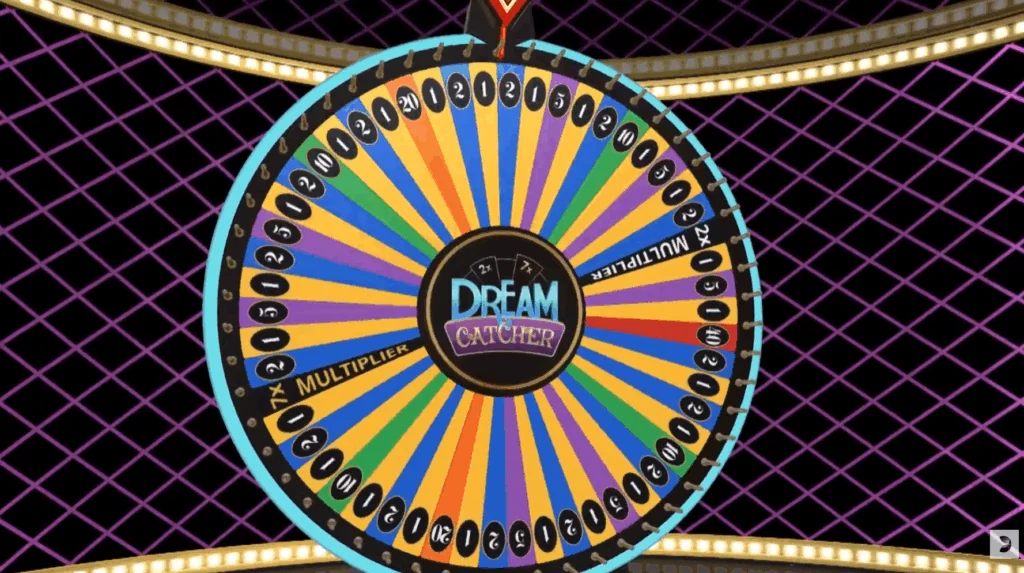
A rendered 54-segment money wheel is spun by a random number generator rather than a presenter. Six numbers are printed across the segments, 1, 2, 5, 10, 20 and 40, and a winning segment pays its face value to one.
The First Person Dream Catcher rules are posted in the table information panel and do not change between rounds. Two further segments carry multipliers of 2x and 7x. Landing one does not pay: bets stay in place, the wheel spins again and the next winning number pays at the multiplied odds. Multipliers landed on successive spins are multiplied together.
The six numbered wheel segments are available, and each carries its own payout and its own probability.
Segment Distribution and Multipliers
The wheel is deliberately unbalanced and the segment counts match the live table exactly. What changes is the driver: an audited random number generator replaces the physical wheel and the dealer.
The practical advantage is that this version can be played in free-play mode and at any hour, and it includes a one-click route into the live table when you want the studio feed instead.
This is the main difference between First Person Dream Catcher and a standard table, and it is worth watching a few rounds in the statistics panel before committing a stake.
Game Design

Studio, Theme and Symbols
First Person Dream Catcher is presented as a rendered RNG version of the money wheel and not a studio feed. The studio set is built for clarity rather than spectacle.
There is no presenter: the wheel is spun as soon as you confirm the bet, so there is no betting timer to wait for.
Sound and Gameplay Experience
Audio is limited to wheel effects and a light background bed, and the whole soundtrack can be muted without losing any information.
First Person Dream Catcher gameplay is driven entirely by the round timer: place bets, wait for the result, collect or move on. The betting time is shown on screen in every round.
A statistics panel and a history of recent results are available from the main screen.
Payouts, RTP and Volatility
Payout Table and Odds
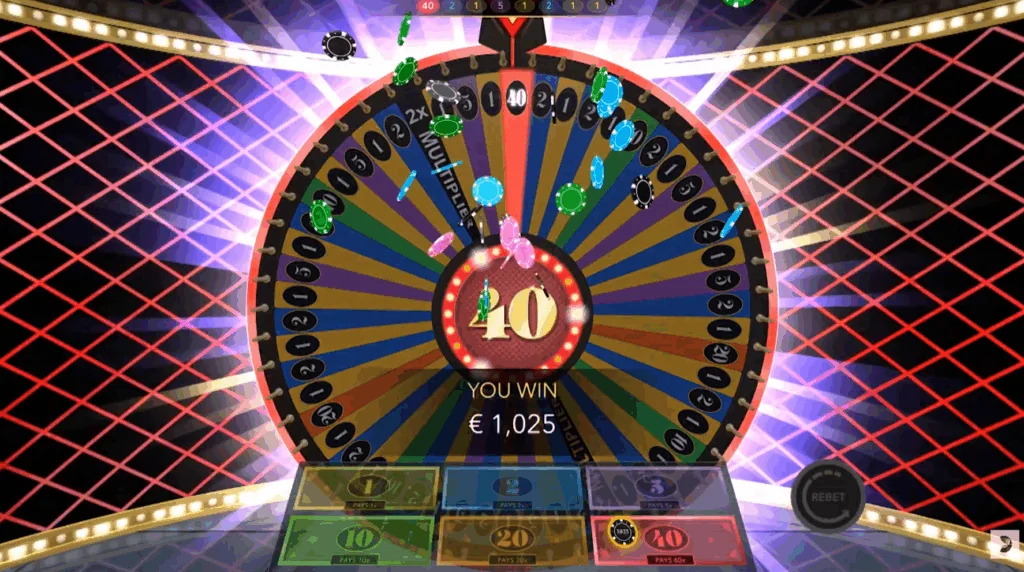
Each number pays its own face value to one: the 1 segment pays 1 to 1, the 40 segment pays 40 to 1. Nothing else is paid and there are no side bets.
Because the segment counts are published, the probability of each outcome is fully transparent, which is rare in a game-show format.
The posted table is the same for every player at the table, at every stake level.
RTP and House Edge
The listed First Person Dream Catcher RTP is 95.65%. That figure is the long-run theoretical return under the posted rules.
The BetFM catalogue lists 95.65% for the connected version; the return differs slightly from number to number, and the figure for each is shown in the table information panel.
In practical terms the house edge is the mirror image of that figure, and it applies to every round independently. No sequence of past results changes the edge on the next one.
Max Win and Volatility
The First Person Dream Catcher max win of 40x the stake is the maximum for a single round. Paid on the 40 segment before any multiplier is applied.
Volatility follows directly from that: medium overall, because the high segments are rare and the two multiplier segments defer the result rather than paying, then multiply the next win.
First Person Dream Catcher Strategy
No staking pattern, streak-reading or progression changes the RTP of a bet, and any system that claims otherwise is selling a story.
What can be managed is exposure. Covering the 1 and 2 segments keeps a session alive longest; covering 20 and 40 produces long dry runs. The expected cost per spin is identical either way.
Choose a stake you can repeat for many rounds, and decide the stop-loss and stop-win before the first bet, never during a losing run.
The statistics panel is useful for understanding the distribution instead of for predicting it. Use it to check your own assumptions about frequency, then ignore it when the round actually resolves.
Mobile Device Compatibility
The video feed adapts to the connection, so a phone on a weak signal gets a lower-quality stream instead of a frozen one. The table is the same product on a phone as on a desktop: same wheel, same paytable, same 95.65% return.
Portrait mode stacks the video above the betting layout and is the better choice for quick sessions; landscape widens the layout and is easier if you place several bets per round.
Any bet already accepted is settled by the server regardless of what the handset does.
First Person Dream Catcher runs in the mobile browser, so there is no app to install or update.
Advantages and Disadvantages
Advantages
Playable in free-play mode, unlike the live table.
95.65% return per the BetFM catalogue.
Instant rounds with no betting window to wait for.
Segment counts match the studio wheel exactly. One-click switch through to the live table.
Limitations
No dealer and no studio atmosphere.
Ceiling is only 40 to 1 before multipliers. Long losing runs are normal behaviour for this table.
The 40 segment appears once on the wheel.
Multiplier segments pay nothing directly. Outcome is generated rather than physically drawn.
Conclusion
First Person Dream Catcher is an RNG money-wheel game from Evolution First Person with a 95.65% return, the six numbered wheel segments and a 40x ceiling. The rules are posted at the table and each round is short.
It works best with a fixed stake and a fixed exit point, and watching a few rounds is the cheapest way to learn the layout before real money is involved.
The First Person Dream Catcher rules are short and the features are visible from the first round. Learn the paytable, pick a stake you can repeat, and treat the 40x ceiling as a statistical tail, never as a plan.
Other Evolution First Person games reviewed on BetFM include Red Baron and Super Speed Dragon Tiger.
Gambling is for adults aged 18 and over. Set a loss limit before you play, take breaks, and stop if it stops being fun.
Frequently Asked Questions
Different bet patterns change how fast your balance moves; the best First Person Dream Catcher strategy sets out the options.