
First Person Dream Catcher Strategy: Cover Every Number or Pick Spots?
First Person Dream Catcher is the RNG version of Evolution’s money wheel. A 54-segment wheel decides the result, and you bet on which number it will stop on. Players often ask whether it is smarter to cover all six numbers or to pick only a few. The short answer: covering everything does not remove the house edge and usually loses a little on each spin, while picking spots changes how swingy your session feels, not the long-run return. The game’s listed RTP is 95.65%. Read the full game breakdown in our First Person Dream Catcher review.
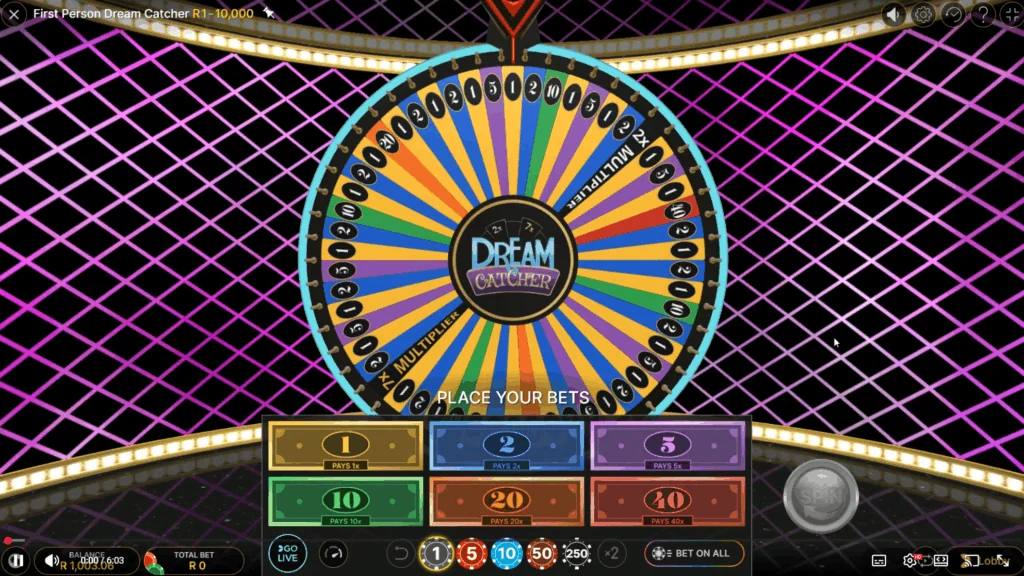
How the wheel is built
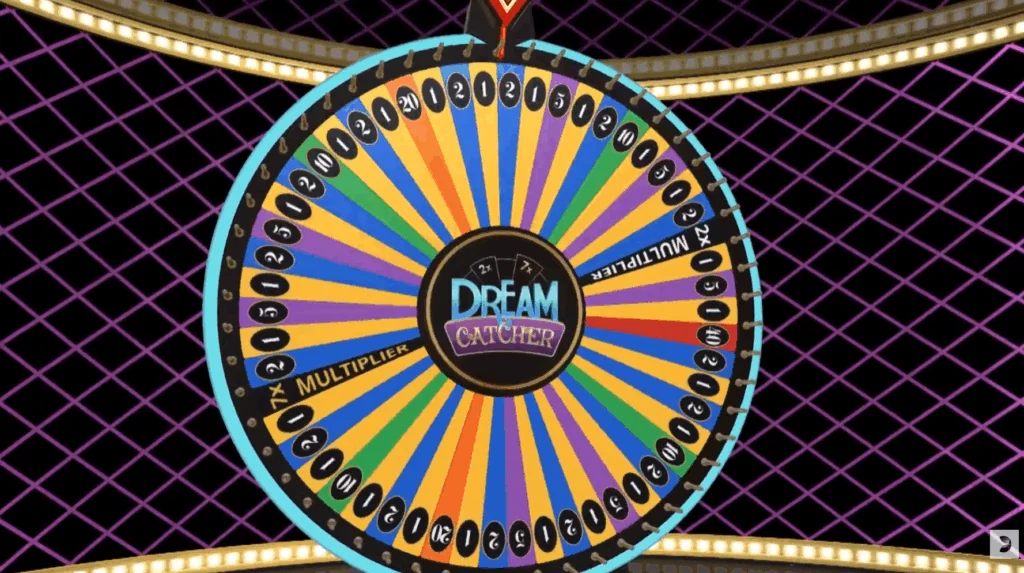
The wheel has 54 segments: 52 carry a number and two are multiplier segments, 2x and 7x. The numbers are not spread evenly, and each pays its own value to one when it wins.
- 1: 23 segments, pays 1:1, lands about 42.6% of the time
- 2: 15 segments, pays 2:1, about 27.8%
- 5: 7 segments, pays 5:1, about 13%
- 10: 4 segments, pays 10:1, about 7.4%
- 20: 2 segments, pays 20:1, about 3.7%
- 40: 1 segment, pays 40:1, about 1.9%
When the wheel stops on 2x or 7x, nobody wins that spin. Your bets stay in place, the wheel spins again, and the multiplier is applied to the next winning number, which is where the biggest payouts come from.
Why covering every number loses slowly
If you place ₦100 on each of the six numbers, you stake ₦600 per spin. Only one number can win. When 1 lands, the most common result, you get back ₦200 (your ₦100 plus ₦100 winnings) and lose ₦400 on the other bets. When 2 lands you get back ₦300. You only finish ahead when 5, 10, 20 or 40 hits. Spreading money across the board feels safe because something always wins, but the combined bet still carries the house edge and most spins end slightly down.
Picking select spots
Betting on fewer numbers does not beat the house edge either. Every bet position carries a built-in edge, and the return differs from number to number, so check the game rules for the exact values. What clearly changes is variance:
- Betting on 1 or 2 gives frequent small wins and slow, steady movement in your balance.
- Betting on 10, 20 or 40 gives long gaps between wins but much bigger payouts, especially if a multiplier lands first.
- Mixing a low and a high number is a middle path many players use for entertainment.
There is no pattern to follow. Each spin is decided by the random number generator, so a number that has not appeared for a while is not “due”, and past results do not change the next spin.
A practical approach for a session
- Set a budget before you start, for example ₦5,000, and keep each spin’s total stake to 1–2% of it.
- Choose your style: frequent small wins on 1 and 2, or rare bigger ones on 10–40.
- Do not double your stake after losses; the wheel has no memory.
- Stop when you reach your loss limit or a win target you set in advance.
Frequently Asked Questions
For more on this topic, see our article “Crazy Time A Results and Statistics”.
What is the RTP of First Person Dream Catcher?
Is it better to bet on all numbers in Dream Catcher?
Which number comes up most often?
How do the 2x and 7x segments work?
Is there a winning strategy for Dream Catcher?
Play Responsibly
Gambling is for adults aged 18 and over. Real-money play carries a risk of loss, and no strategy guarantees a win. Only stake money you can afford to lose, set deposit and time limits, and stop if it stops being fun. If you need support, contact a local problem-gambling service.
How we checked this guide: game data comes from the provider, the BetFM review and the BetFM game catalogue. Figures can differ between versions and casinos, so check the info screen in the game.