Splitting in Blackjack: Rules and When to Split
Splitting in blackjack means turning a pair into two separate hands by matching your original bet. You can split two cards of equal value; aces and eights are almost always worth splitting, while tens and fives never are. Below: the exact rules and which pairs to split.
What Splitting in Blackjack Means
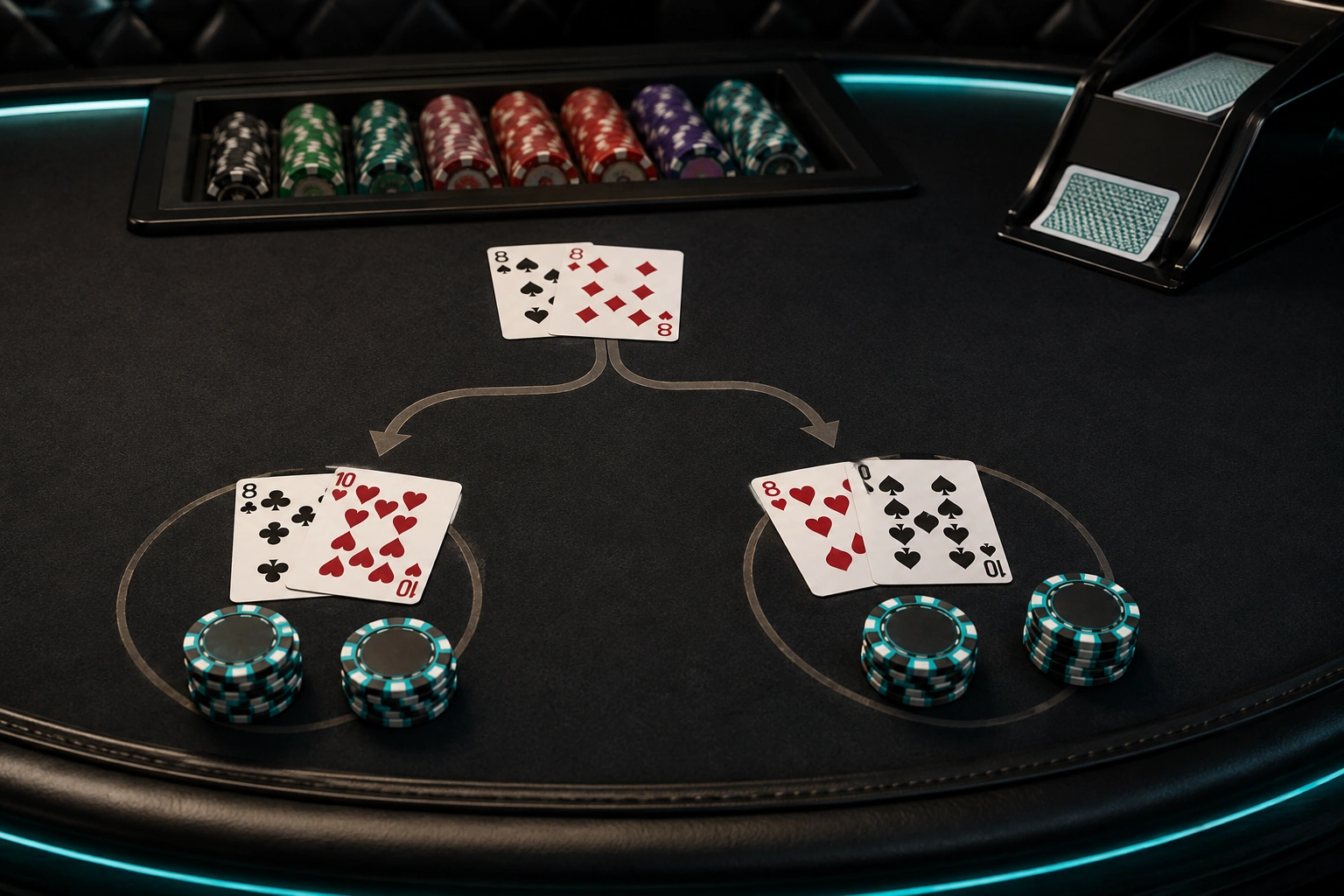
Split is the rule that lets a player break a starting hand of two identical cards into two separate hands, each backed by its own bet. The moment a dealer confirms two cards of matching rank – two 8s, two 9s, a pair of aces – the option appears on the table, usually signaled by a chip placed beside the original wager rather than on top of it. This distinguishes split from double down, where the extra chip goes directly next to the existing stack.
Once a split is made, the dealer separates the pair into two individual hands, adds a second card to each, and play proceeds on the first hand as if it were a fresh deal. Only after that hand is resolved – through stand, hit, bust, or a further split – does the dealer move to the second hand. The core mechanic of splitting hasn’t changed since the rule was formalized, but the fine print around it varies significantly between tables: how many times a player can re-split, whether aces get one card only, and whether doubling after a split is even permitted.
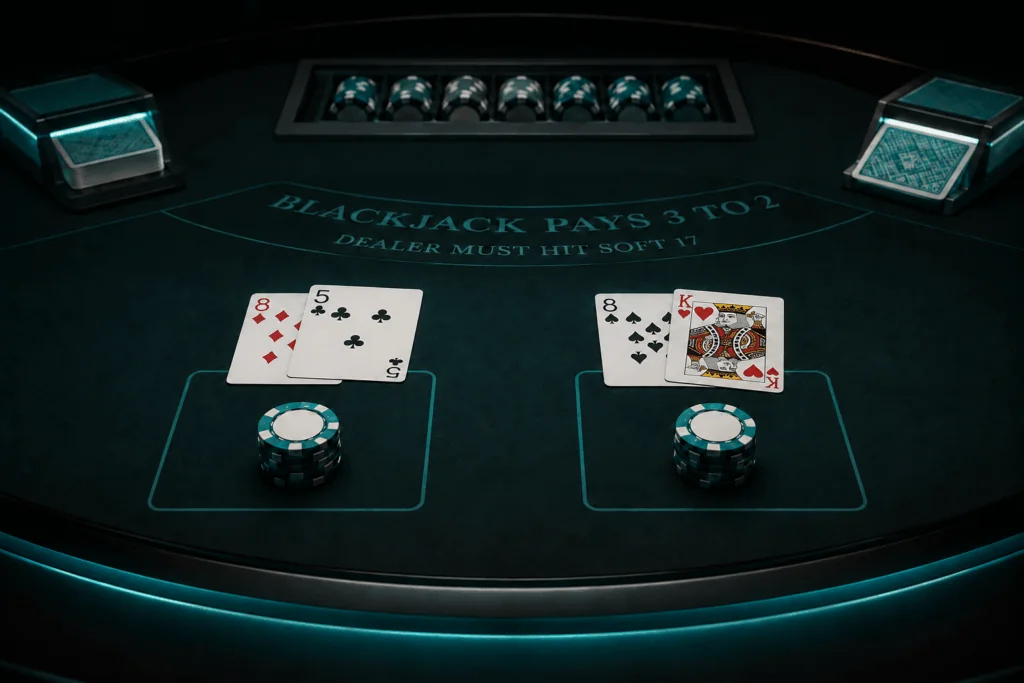
Table felt layouts almost always print a shorthand version of these conditions near the betting spots, though the phrasing differs from casino to casino. Reading that print before sitting down saves confusion later, since a rule allowed at one table – like re-splitting aces – might be blocked two tables over.
and Start Winning Today
How to Split a Pair at the Table
Executing a split requires no special skill beyond recognizing a pair and knowing the house’s specific limitations. The physical action is minimal: tap the felt behind the original bet, or say “split” aloud if playing at a live table where a dealer manages chip placement. Live dealer software mirrors this with a single button that only activates when a splittable pair is detected, removing any guesswork about eligibility.
Digital blackjack tables, whether on desktop or app, display the split option as a distinct button separate from hit, stand, and double. It appears automatically and disappears the instant it’s no longer valid – for example, after the first split has already happened and re-splitting is disabled by house rule. This immediate visual feedback removes the need to memorize every permutation of rules; the interface effectively enforces them in real time.
Where friction shows up is in live dealer environments during high-traffic hours. A split doubles the number of decisions a dealer has to process for that seat, and on a crowded table this can slow the pace noticeably. Players used to fast single-hand rounds sometimes find splits mentally taxing simply because they require tracking two separate outcomes instead of one.
Blackjack Split Rules
Which Pairs You Are Allowed to Split
Split doesn’t have its own visual theme – it’s a procedural rule layered onto whatever blackjack variant is being played, from a classic green-felt table to a stylized neon variant with animated card flips. What changes visually is how the second hand is rendered: some tables shift the split hands slightly apart with a subtle highlight around the active one, while others stack them vertically with a dimmed overlay on the hand not currently in play.
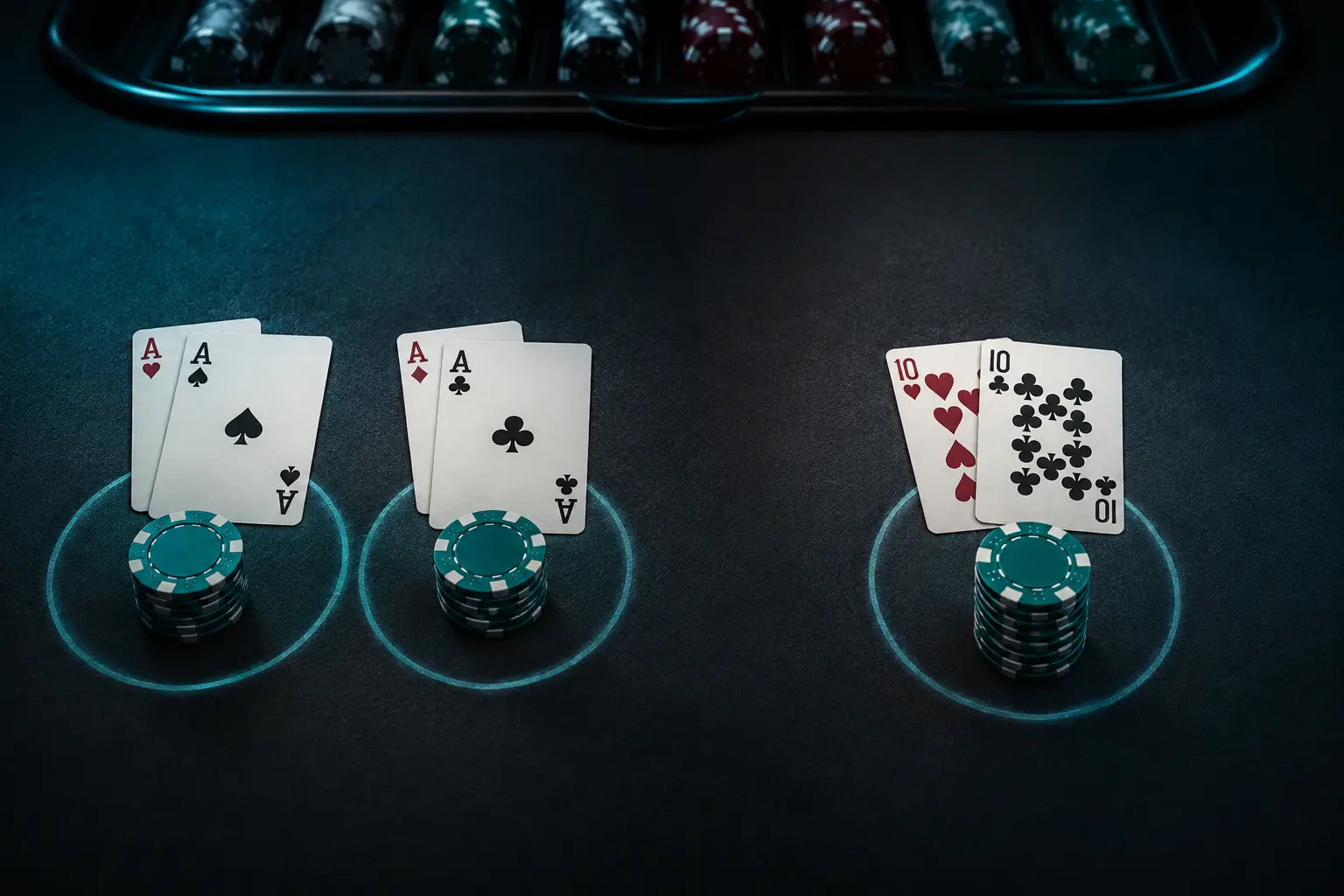
Card face design has no functional bearing on splitting, but clarity matters practically. Tables using minimalist card faces with large, high-contrast rank symbols make it easier to spot a pair at a glance, especially at low resolutions on mobile screens. Ornate or heavily stylized card backs and faces, while visually appealing, occasionally slow recognition of an exact pair, particularly with face cards that share value but not rank – a king and a queen are not a splittable pair, even though some players confuse “same value” with “same rank.”
Resplitting, Hitting and Doubling After a Split
The audio cue tied to a split is typically a short, distinct chip-clack sound different from the one used for a standard bet or a hit. This auditory separation helps players confirm the split registered correctly without needing to glance away from the cards. In live dealer formats, the dealer’s verbal confirmation – repeating “split” back to the table – serves the same function, adding a layer of procedural trust that automated software replicates through sound design alone.
Pacing during a split hand tends to feel different from a standard round. Because two hands are resolved sequentially, there’s a rhythm shift: a brief pause between the resolution of the first hand and the dealing of the second hand’s continuation. Some players describe this as making split hands feel more deliberate, almost like playing two quick rounds back to back rather than one longer one.
When to Split in Blackjack
Card Values That Decide the Split
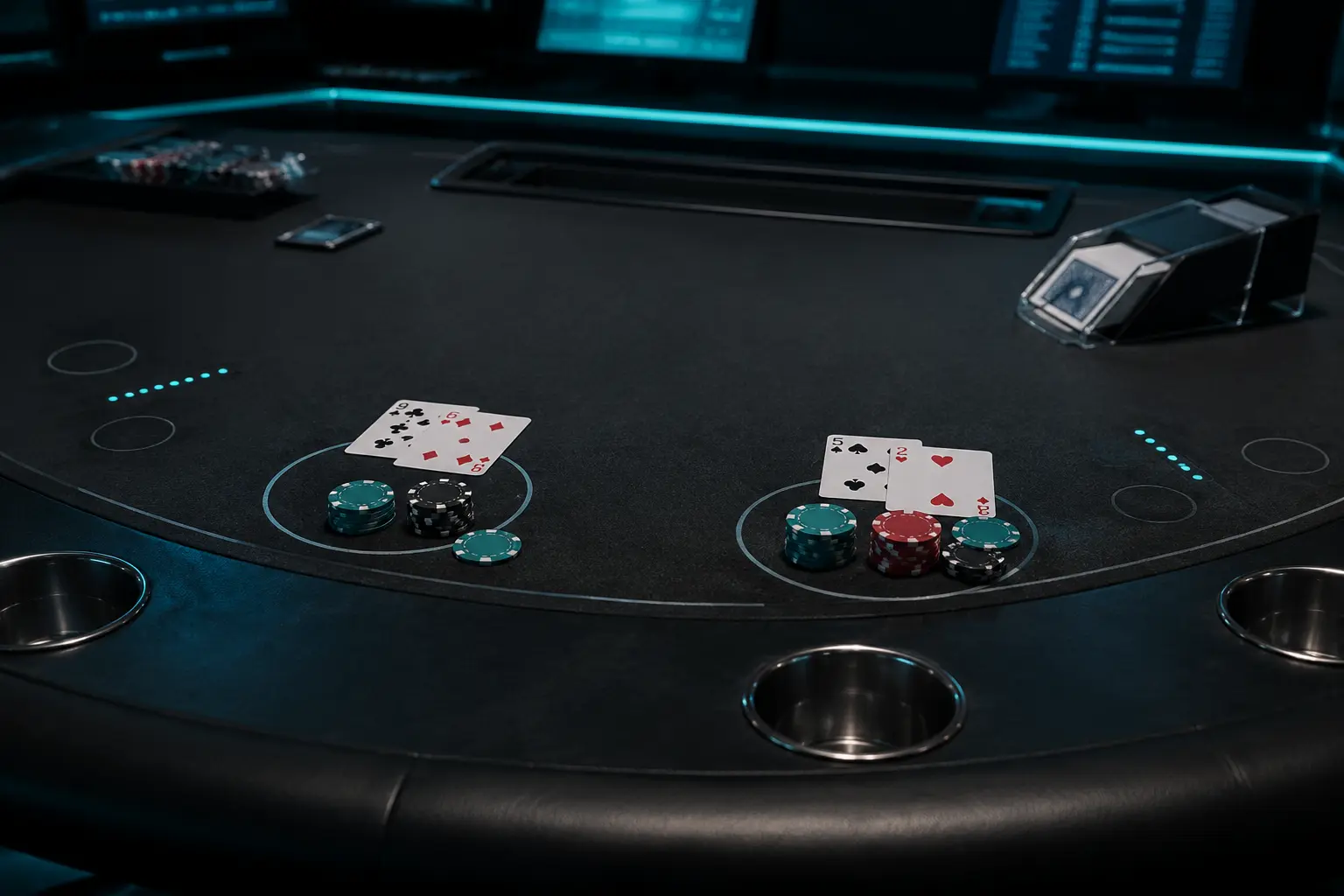
Blackjack doesn’t use symbols in the way slot games do, but the card ranks function as the core “symbol set” driving every decision, including whether a split is even available. Aces carry dual value (1 or 11), which is why splitting aces is treated as a special case rather than a routine pair split. Face cards – jack, queen, king – all count as 10 for hand value, but they are not interchangeable for splitting purposes; a jack and a king cannot be split together despite both counting as 10 in total hand value.
This distinction between value and rank is the most common point of confusion for newer players approaching the split decision, since visually a 10-value pair looks similar in terms of hand strength but is only splittable if the ranks match exactly.
Splitting Aces and Eights
Standard blackjack, including its splitting mechanic, has no free spins or bonus round structure – those features belong to slot mechanics, not card-based table games. Where blackjack variants do introduce bonus elements, such as side bets on pairs or bust protection, these run independently of the split decision and are wagered separately before the hand begins, not triggered by the act of splitting itself.
Payouts on Split Hands
Splitting doesn’t create a new payout structure; each resulting hand is paid at standard odds – typically even money on a win, with blackjack-specific 3:2 payouts generally unavailable on a hand formed after a split, since a split hand’s natural 21 usually counts as a regular 21 rather than a blackjack. This detail catches out players who split a pair of aces expecting blackjack-level payout if a ten-value card follows; most rule sets classify that as 21, paid at 1:1, not 3:2.
Each split hand is settled against the dealer’s final hand independently. It’s entirely possible to win one split hand and lose the other in the same round, which effectively means a split can result in a net push, a net win, or a net loss regardless of how strong the original pair appeared.
Split Hands and Jackpot Side Bets
Progressive jackpot side bets exist in some blackjack variants, usually tied to getting specific card combinations regardless of the main hand’s outcome. These jackpot mechanics operate on a separate wager placed before the deal and are not affected by whether a player chooses to split. A split pair itself never qualifies as a jackpot-triggering combination on its own; the jackpot bet evaluates its own designated card patterns independently of hand-splitting decisions.
Splitting on Mobile and Live Tables
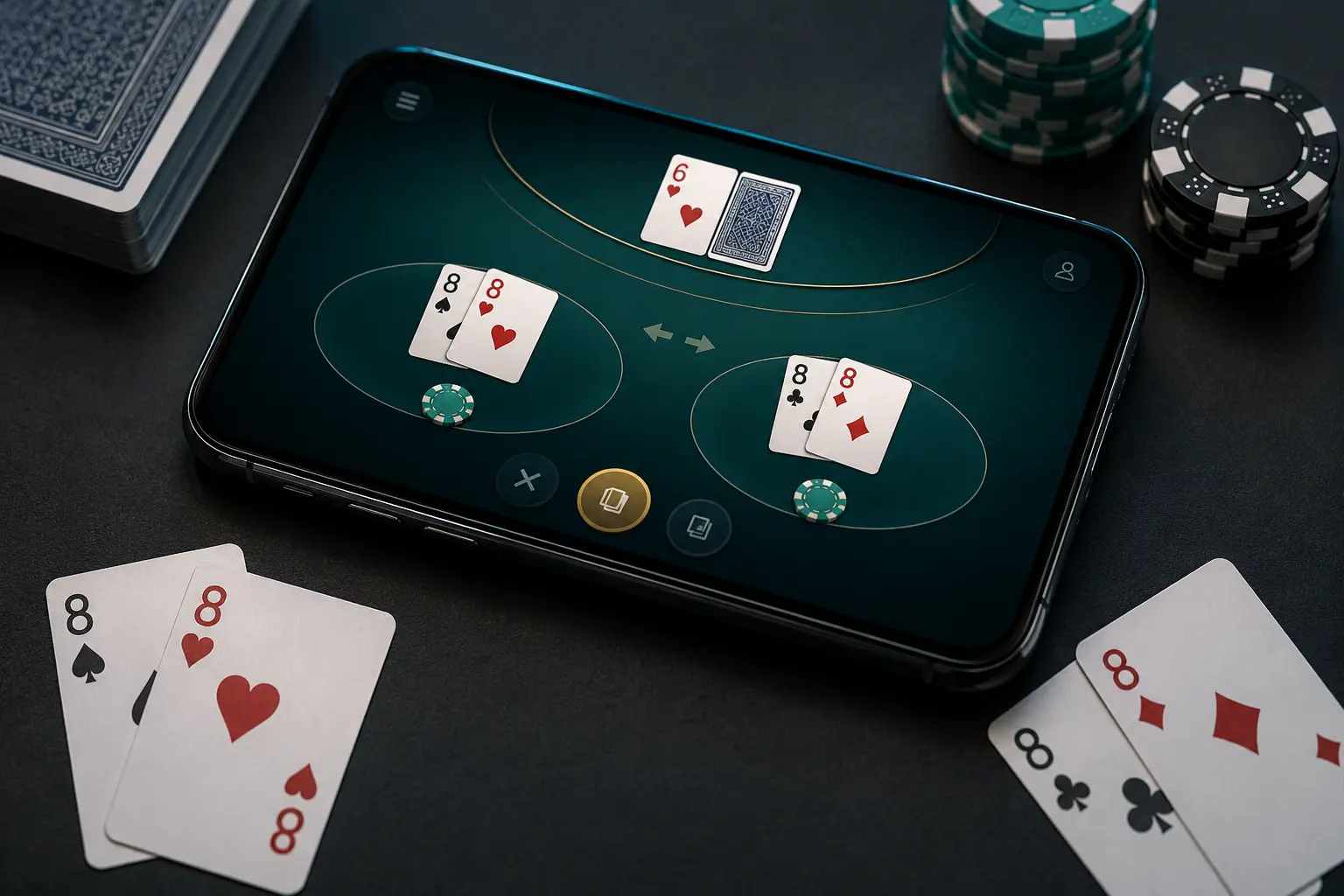
Split functionality translates cleanly to mobile screens because the decision only requires a single tap on a clearly labeled button. The challenge on smaller screens isn’t the split action itself but the visual layout after the split occurs – two hands need to be displayed without cramping card readability. Well-optimized mobile blackjack apps solve this by using a horizontal scroll or a slight zoom on the active hand, while poorly optimized versions can compress both hands into a space too small to clearly distinguish card ranks.
Touch responsiveness matters more here than on desktop, since a mistimed tap on a crowded interface can occasionally trigger the wrong action if the split and double buttons sit close together. Most modern mobile blackjack tables address this with generous spacing and a brief cooldown after each tap to prevent accidental double inputs.
Splitting in Blackjack: Advantages and Risks
Why Splitting Lowers the House Edge
Splitting turns a mediocre starting hand into two independent opportunities, which is particularly valuable with pairs like 8s against a strong dealer upcard, where standing pat on a 16 is statistically weak. It also allows a player to separate two low-value cards, such as a pair of 2s or 3s, into hands that can be built up individually rather than locked into a single low total.
The rule gives skilled players a mathematical edge in specific, well-documented situations – splitting aces and 8s almost universally improves expected value compared to standing or hitting on the combined hand, based on basic strategy charts used across most rule variations.
When Splitting Costs You Money
Splitting doubles the exposure on the table, meaning a poorly chosen split – such as splitting 10s just because “matching cards feel good” – can turn one strong hand into two mediocre ones, doubling the loss if both go bad. Table limits on re-splitting can also block a player from separating a third or fourth matching card, forcing a suboptimal hand to be played out as-is.
House-specific restrictions, like disallowing splitting aces more than once or removing the option to double after a split, reduce the rule’s theoretical value. A player following textbook split strategy at one casino may find that identical strategy performs worse at another simply due to these procedural differences.
and Get Your Bonus Today
How Splitting Works: Key Points
Split works as a precision tool rather than a default choice – its value depends entirely on which pair appears and what the dealer shows. Aces and 8s represent the clearest cases where splitting consistently outperforms the alternative, while pairs like 10s or 5s are largely better left intact under standard basic strategy. The rule’s mechanics are simple to execute, but its effectiveness rests on knowing the specific pair combinations worth separating and the house rules governing re-splits, doubling, and ace treatment at the table being played.