What Is a Bust in Blackjack?
A bust in blackjack means your total goes above 21 and the bet is lost immediately, even if the dealer busts later in the same round. Hard totals of 12 or more can bust; soft hands holding an ace cannot. Below: which totals are risky and how to avoid busting.

What a Bust in Blackjack Means
Twenty-one is the ceiling, and going past it ends the hand immediately. That single rule defines what a bust in blackjack actually is: a hand whose total value exceeds 21, at which point the hand loses regardless of what the dealer holds. There’s no comparison stage after that – the outcome is already sealed. The rule applies identically to the dealer and to every player at the table, though the timing of the check differs depending on whose turn it is.
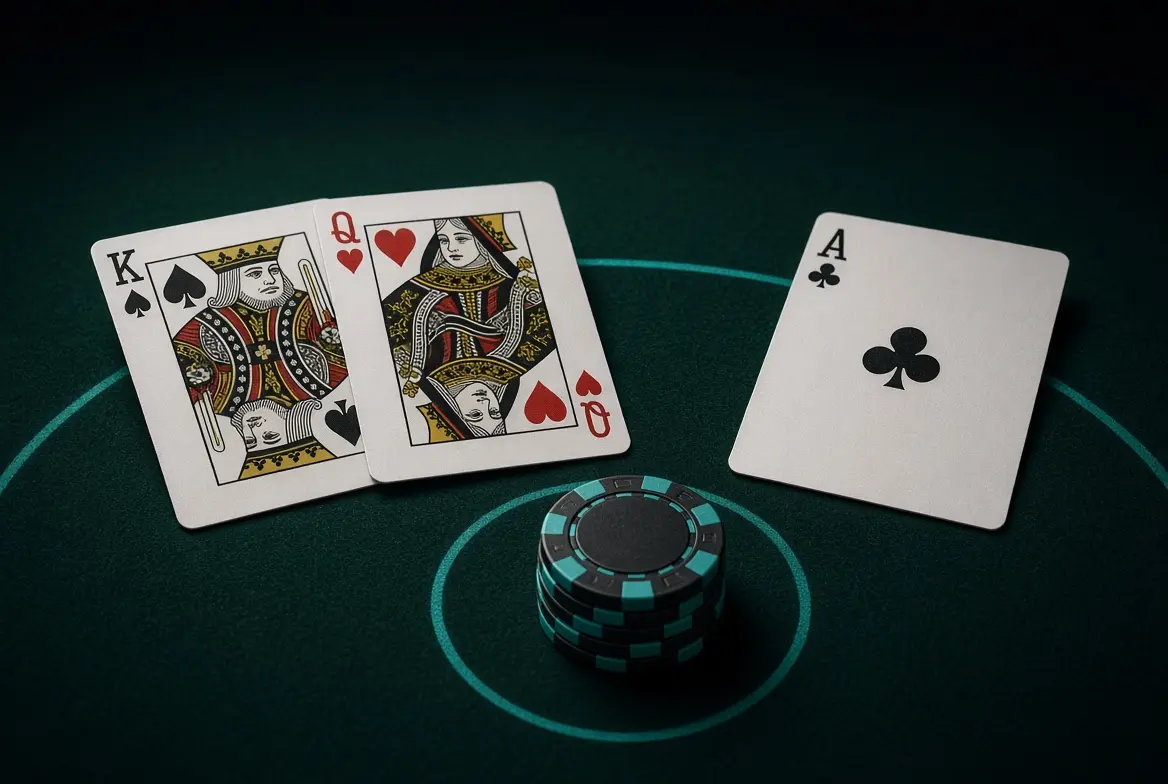
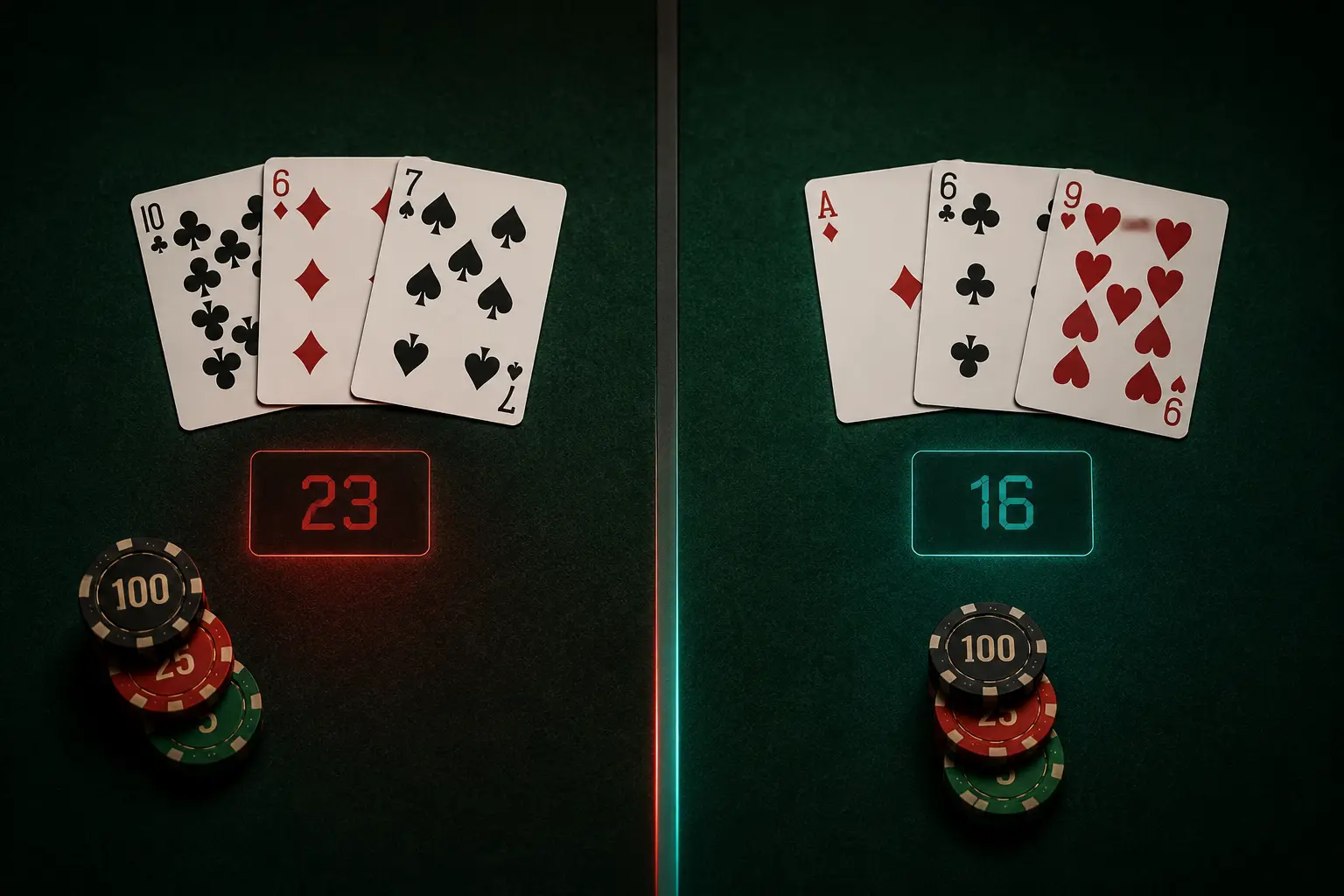
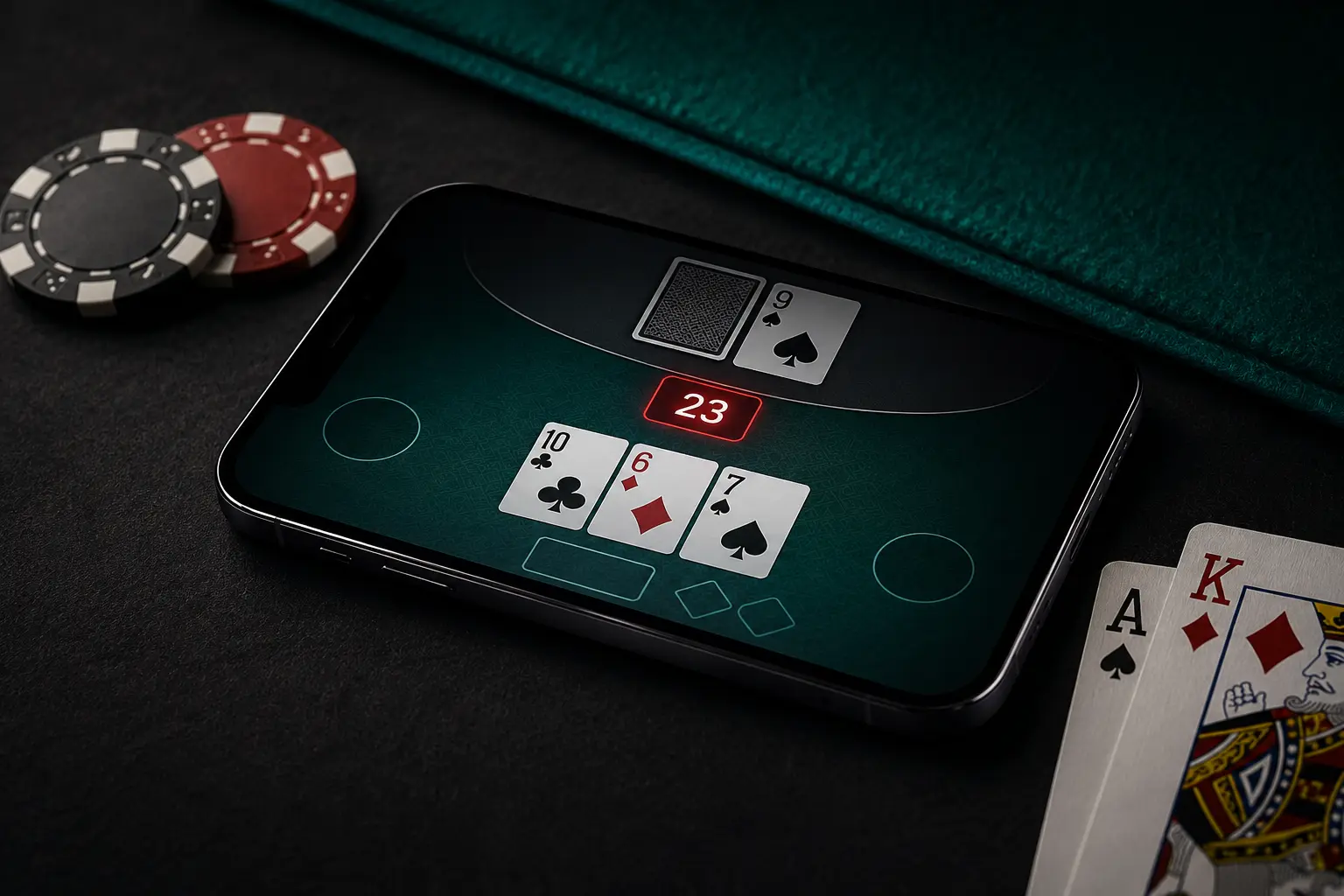
Card values behind this math are simple. Numbered cards count at face value, face cards count as 10, and the ace flexes between 1 and 11 depending on which value keeps the hand alive. A hand of 10-6-7 busts at 23; a hand of Ace-6-9 stays intact because the ace drops to 1, giving 16 instead of 26. This flexibility is why the term “soft hand” exists – it describes a hand where an ace still has room to shift value before a bust becomes possible.
Bust meaning in blackjack, then, isn’t a side rule – it’s the mechanism that gives the entire game its risk profile. Every hit is a bet against exceeding that number, and the dealer’s forced draws follow the same threshold under different constraints.
and Start Winning Today
How a Bust Plays Out at the Table
Recognizing a bust at the table takes no calculation beyond basic addition, which is part of why blackjack remains approachable for new players. A dealer announces the total, flips the losing hand, and collects the bet – the sequence takes seconds. There’s no ambiguity in the process: once a hand’s value is confirmed above 21, the round for that hand is over.
Live dealers and digital interfaces both display running totals as cards are dealt, which removes guesswork from the process. On physical tables, players tap the felt to request another card, and the dealer states the updated total aloud before the next decision. Digital blackjack tables mirror this with visual counters, often highlighting the total in red the moment it crosses 21. Neither format demands prior technical knowledge – the interface communicates the state of the hand without requiring the player to track card values manually beyond a general sense of the count.
When a Hand Busts
Totals That Can Bust
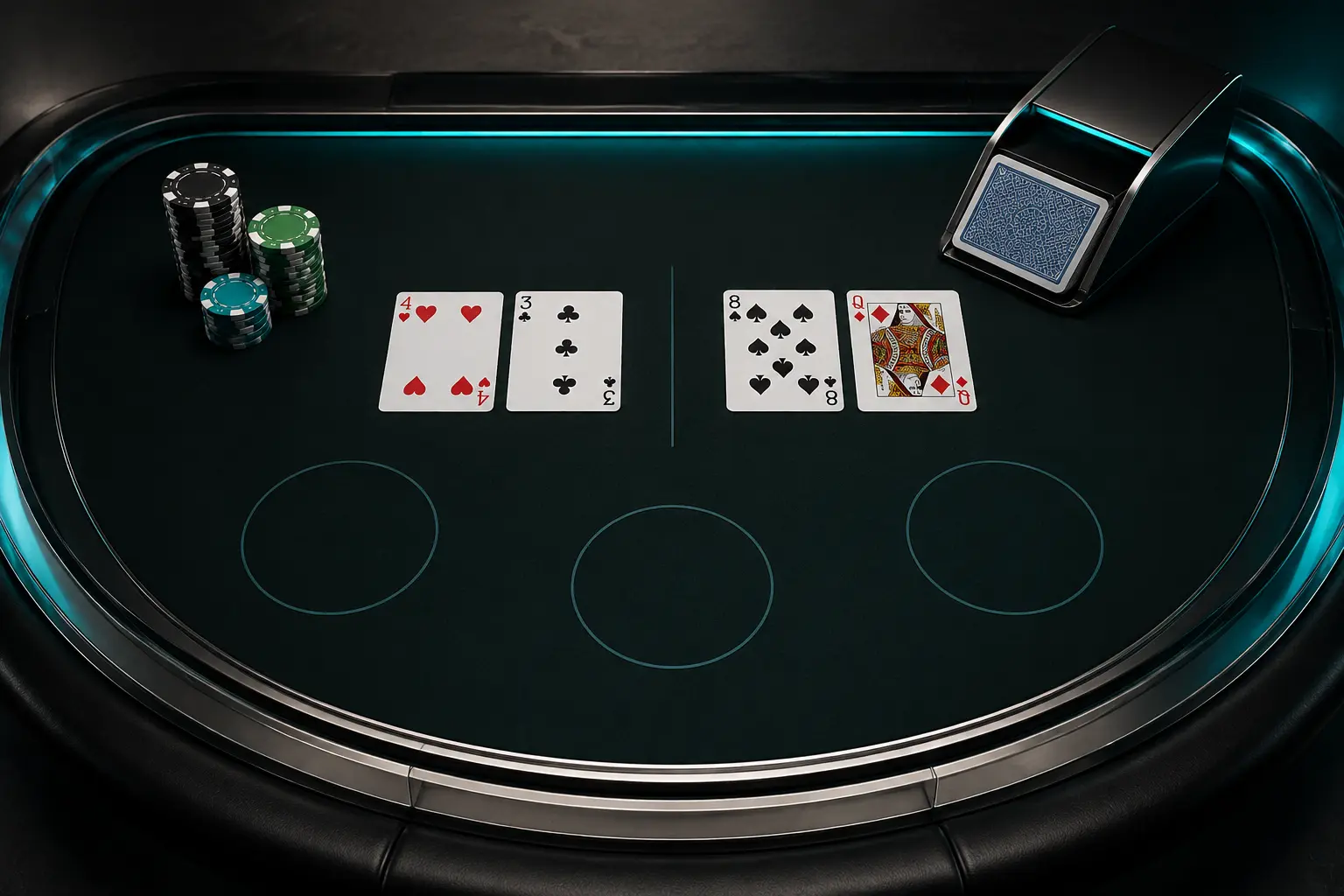
Blackjack tables, whether physical or rendered on screen, follow a restrained visual language: green or dark-toned felt, clear card faces, and minimal ornamentation around the betting area. Digital adaptations vary in polish – some use photorealistic card animations and dealer avatars, others keep a flat, minimalist layout focused purely on readability of hand totals. The visual priority in every version is legibility, since misreading a card value has direct financial consequences.
Hard and Soft Hands
Audio cues in blackjack are functional rather than atmospheric. A card flip has a distinct sound, and many platforms use a short audio signal to mark a bust or a win, reinforcing the outcome without requiring the player to re-read the screen. Live-dealer formats add ambient casino sound and the dealer’s spoken confirmation of the total, which gives the round a rhythm closer to an in-person table than to a typical digital game loop.

Dealer Bust Rules and Payouts
Bust Cards and Their Values
Blackjack doesn’t rely on symbols in the way slot games do – cards themselves function as the only symbolic elements, and their meaning is fixed rather than randomized. The ace’s dual value is the closest equivalent to a “special symbol” mechanic, since it directly determines whether a hand is soft or hard, and by extension, how close to a bust the hand actually sits.
Busting on Split and Doubled Hands
Standard blackjack has no bonus rounds or free spins in the traditional sense. Some casino variants add optional side bets – insurance against a dealer blackjack, or perfect-pairs wagers – but these run parallel to the main hand rather than altering the bust rule itself. A side bet win or loss doesn’t change whether the main hand busts; the two outcomes are calculated independently.
What Happens to Your Bet on a Bust
Payout structure in blackjack is narrow compared to other casino games: a standard win pays 1:1, a natural blackjack typically pays 3:2 (or 6:5 in some house rules), and a bust simply forfeits the stake with no partial return. There’s no scaled combination system – the entire paytable rests on beating the dealer’s total without exceeding 21, or the dealer failing to do the same.
Busting and Jackpot Side Bets
Progressive jackpots aren’t part of standard blackjack. Where they exist, they’re tied to specific side bets, such as hitting a particular combination of matching cards across the table, and they operate entirely separately from the bust mechanic. A jackpot side bet can pay out even on a hand that later busts, since the two are evaluated at different points in the round.
Busting on Mobile and Live Tables
Card-based games translate well to smaller screens because the interface depends on static images and numeric totals rather than complex animation. Most mobile blackjack tables load quickly on standard connections, and touch controls for hit, stand, and double down are large enough to avoid misinputs – an important detail, since a mistaken tap during a hit decision is what directly causes an avoidable bust. Performance dips are rare and usually tied to live-dealer video streams rather than the core game logic.
Bust Risk: What Helps and What Hurts
How to Avoid Busting in Blackjack
The bust rule keeps blackjack’s math transparent – a player can calculate risk before drawing a card, rather than relying on hidden odds. Basic strategy charts convert this transparency into a repeatable decision framework, which is unusual for a casino game. The rule also applies evenly to the dealer, so the house doesn’t get a hidden exemption from the same threshold.
Why the Player Always Busts First
The same rule that makes the game transparent also makes it punishing: a single misjudged hit can end a hand instantly, with no partial recovery. Soft-hand situations, in particular, trip up newer players who don’t immediately recognize that an ace has shifted the total. House rule variations – such as dealer hitting on soft 17 – also change bust probabilities in ways that aren’t always obvious from the table layout alone.
and Get Your Bonus Today
Bust in Blackjack: Key Points
A bust in blackjack is a fixed outcome rather than a judgment call: once a hand’s total passes 21, the round ends for that hand. What separates strong play from weak play isn’t avoiding the rule – it’s reading hand totals accurately enough to know when hitting still makes sense and when standing is the safer math. Understanding dealer bust patterns, particularly the forced draw at 17, adds a layer of strategic awareness that pure card-counting alone doesn’t cover.