21+3 in Blackjack: Side Bet Rules and Payouts
21+3 is a blackjack side bet that combines your two cards with the dealer’s up card into a three-card poker hand. Flush, straight, three of a kind, straight flush and suited trips all pay, typically from 5:1 up to 100:1. Below: the rules and the full payout table.
What the 21+3 Side Bet Is
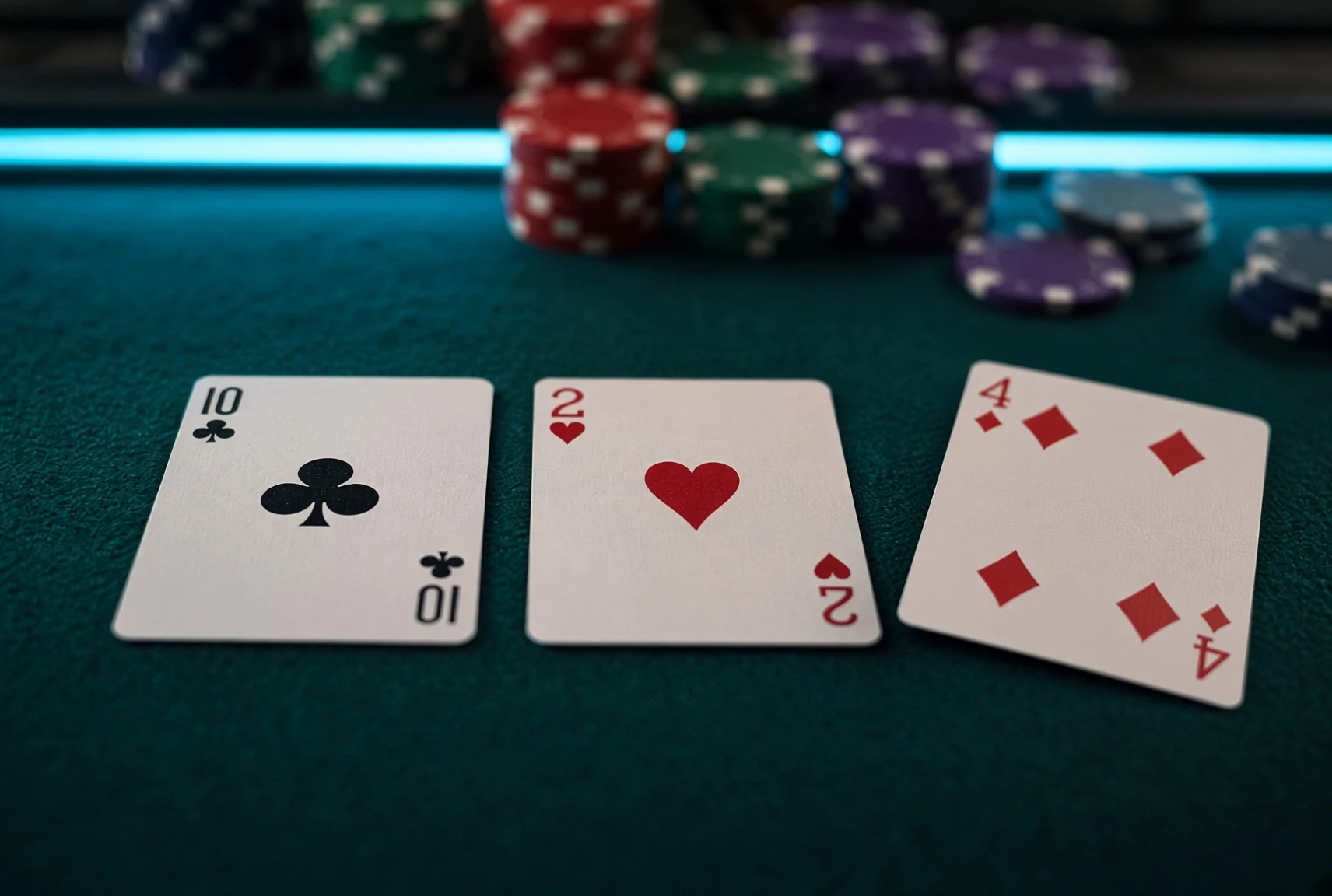
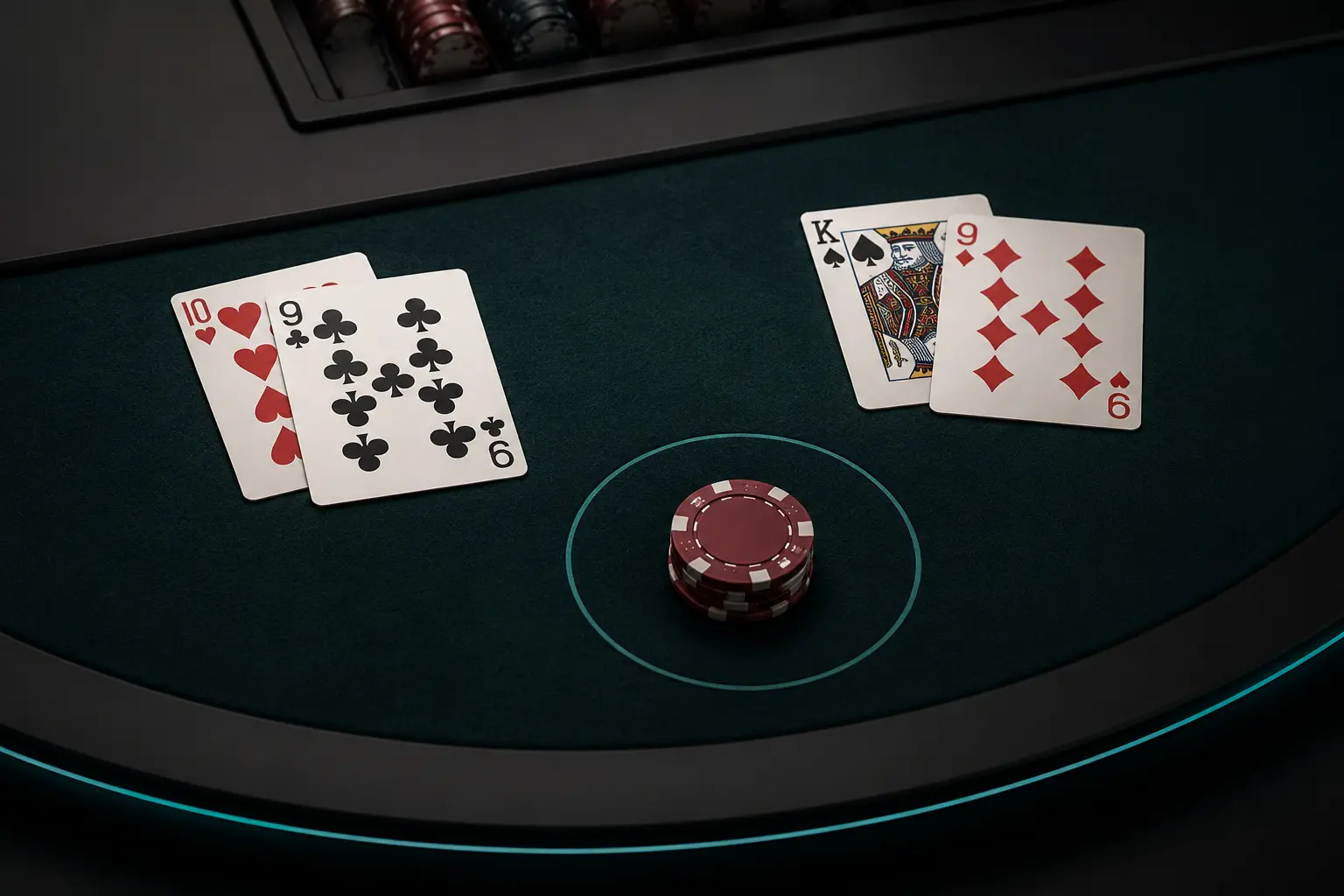
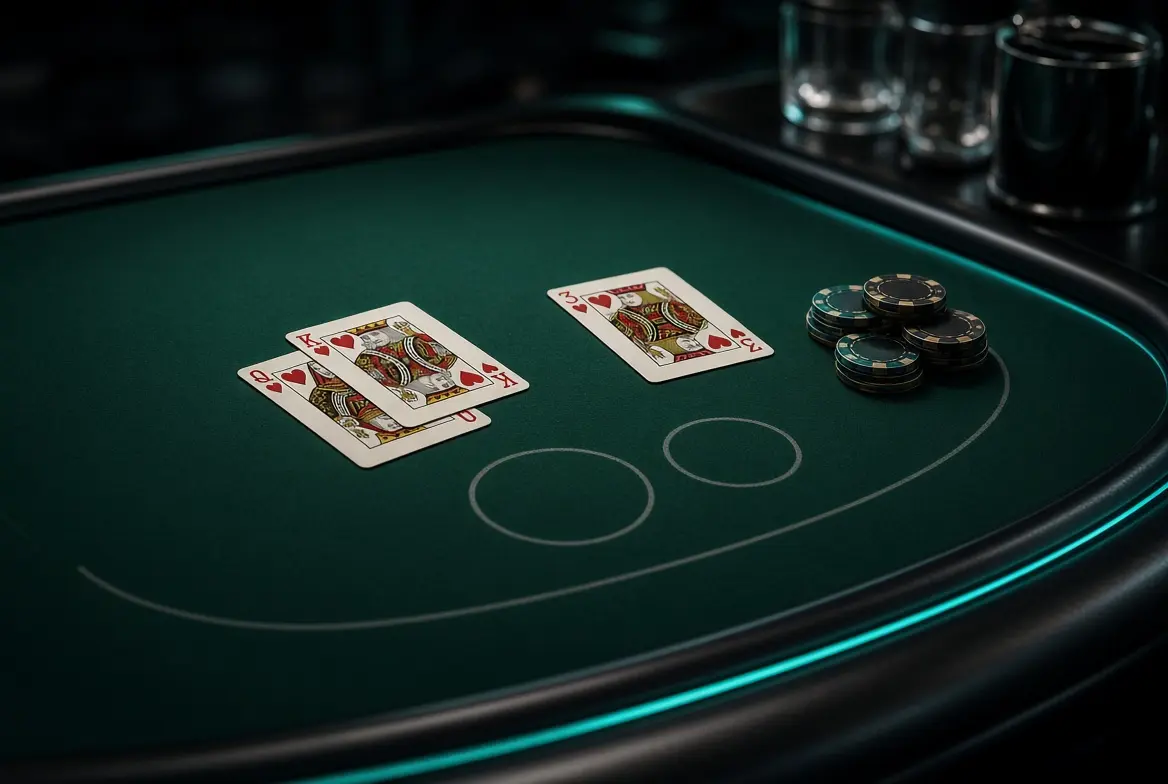
Three cards decide this wager: the two dealt to the player and the single card showing on the dealer’s side. Before the main hand even develops through hits or stands, those three cards are evaluated against poker hand rankings – a flush, a straight, three of a kind, and rarer combinations sitting above them. That’s what is 21+3 in blackjack at its core: a separate, optional bet placed at the start of a round that has nothing to do with reaching 21 or beating the dealer’s final total.
The wager exists on a betting spot distinct from the main blackjack chip stack, usually marked directly on the felt near the player’s position. Once the dealer deals the initial two cards to each player and takes their own up card, the 21+3 outcome is already locked in – no further decisions affect it. This is what separates it from the primary hand, where choices like doubling down or splitting still shape the result.
Table variants differ in exactly which combinations pay and how much, so the answer to what is 21+3 side bet in blackjack isn’t identical everywhere – the underlying three-card logic stays fixed, but payout tables shift between operators and even between live dealer studios.
and Start Winning Today
How to Place a 21+3 Bet
Placing this bet requires no extra skill beyond recognizing five card patterns, which makes it accessible even to players who’ve never touched three-card poker. There’s no strategy chart to memorize, no decision tree to follow mid-hand – the chips go down, the cards land, and the result reads itself against the paytable printed on the table felt or displayed on-screen in a live dealer interface.
At physical tables, dealers typically confirm the 21+3 result before moving into the main hand’s hit-or-stand sequence, which keeps the pace brisk rather than dragging out settlement. In live dealer formats, the software resolves the side bet automatically the instant the up card is revealed, displaying the payout multiplier on-screen without requiring the player to manually check hand rankings.
Because the bet settles independently and immediately, it doesn’t interrupt the rhythm of the surrounding blackjack round – a practical detail that matters more at crowded tables where slow resolution creates bottlenecks for other players waiting their turn.
What Is 21+3 in Blackjack? Side Bet Rules
The Three Cards That Count
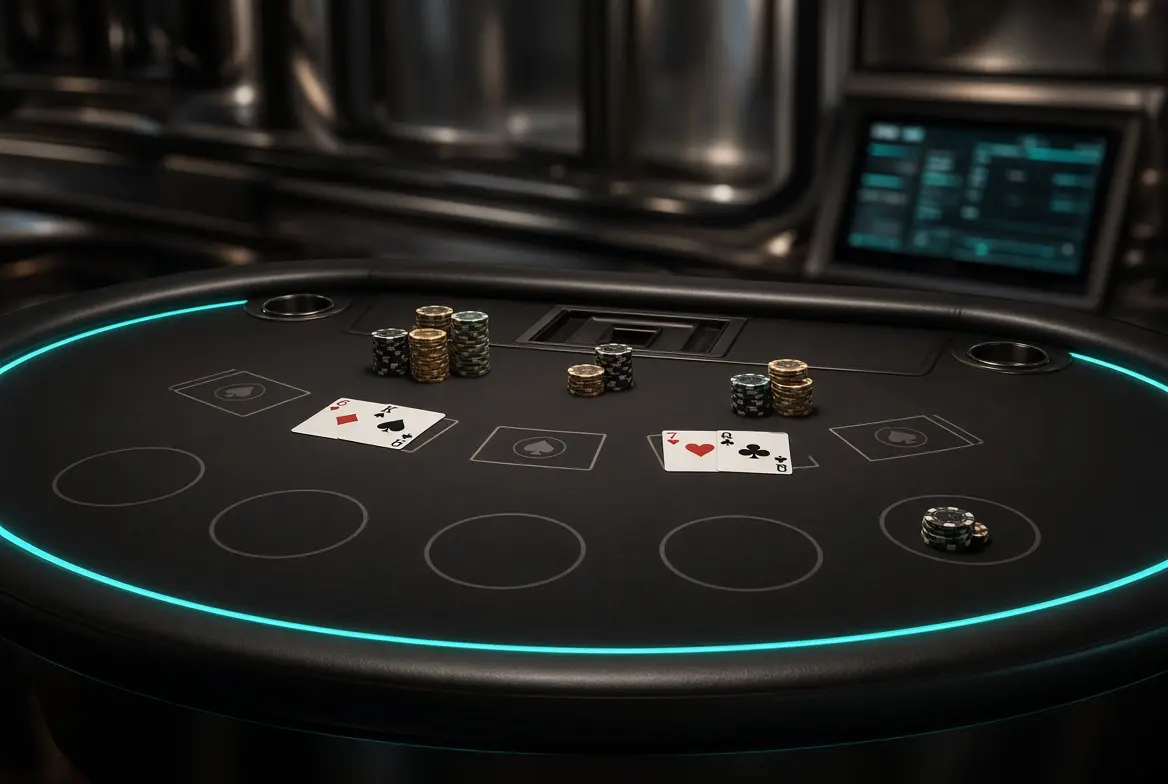
Visually, the 21+3 spot rarely gets special treatment – it’s usually a small labeled circle or rectangle on the table layout, sometimes color-coded to distinguish it from the main betting box. Live dealer versions from providers like Evolution or Pragmatic Play tend to overlay a semi-transparent payout table directly on the video feed, letting players glance at the multiplier structure without needing a physical reference card.
Land-based tables often print the paytable directly onto the felt in small type near the betting circle, styled to match the casino’s table design rather than carrying any theme of its own. There’s no narrative skin here – the visual identity stays functional, oriented toward quick readability rather than atmosphere.
When the Bet Is Settled
Live dealer platforms usually mark a winning 21+3 combination with a short chime distinct from the main hand’s win sound, giving players an auditory cue before the visual confirmation even loads. This small separation in audio design helps players tell at a glance whether the side bet or the main hand – or both – triggered a payout, especially when action moves quickly across multiple seats.
At physical tables, the experience relies entirely on the dealer’s verbal call, which varies by casino – some announce the specific hand type (“flush pays”), others simply state the multiplier. This creates a slightly different pace depending on venue, something absent from the more standardized live-streamed format.
21+3 Payouts and Odds
Poker Hands That Win
There are no traditional symbols in the slot-machine sense here – the “symbols” are the three playing cards themselves, functioning as the entire basis for resolution. Suit and rank replace icons: a suited pair combined with a matching dealer card becomes the visual trigger for a payout, rather than any graphical element layered on top of the cards.
21+3 Alongside Other Side Bets
This mechanic doesn’t include bonus rounds or free spins in any form – it resolves in a single evaluation per round, with no secondary trigger or escalating feature. Some casinos bundle 21+3 into broader blackjack promotions, such as periodic multiplier boosts on suited trips during specific hours, but these are operator-side marketing additions rather than built-in mechanics of the bet itself.
21+3 Blackjack Payout Table
| Three-card hand | Typical payout |
|---|---|
| Suited three of a kind | 100:1 |
| Straight flush | 40:1 |
| Three of a kind | 30:1 |
| Straight | 10:1 |
| Flush | 5:1 |
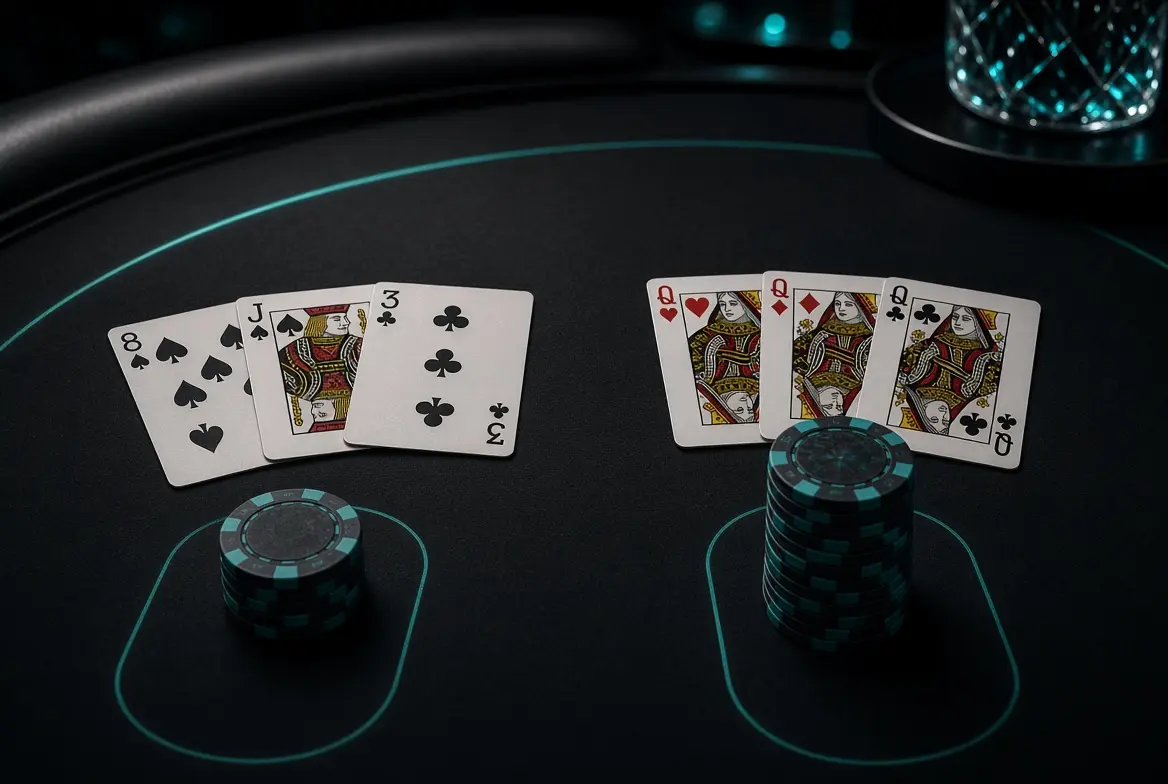
Standard 21+3 blackjack payouts commonly follow this structure: a flush pays 5 to 1, a straight pays 10 to 1, three of a kind pays 30 to 1, a straight flush pays 40 to 1, and suited trips – three identical cards in the same suit – pay as high as 100 to 1. Some tables consolidate the paytable into fewer tiers, merging straight and flush into a single lower payout to simplify the structure, which changes the effective odds noticeably.
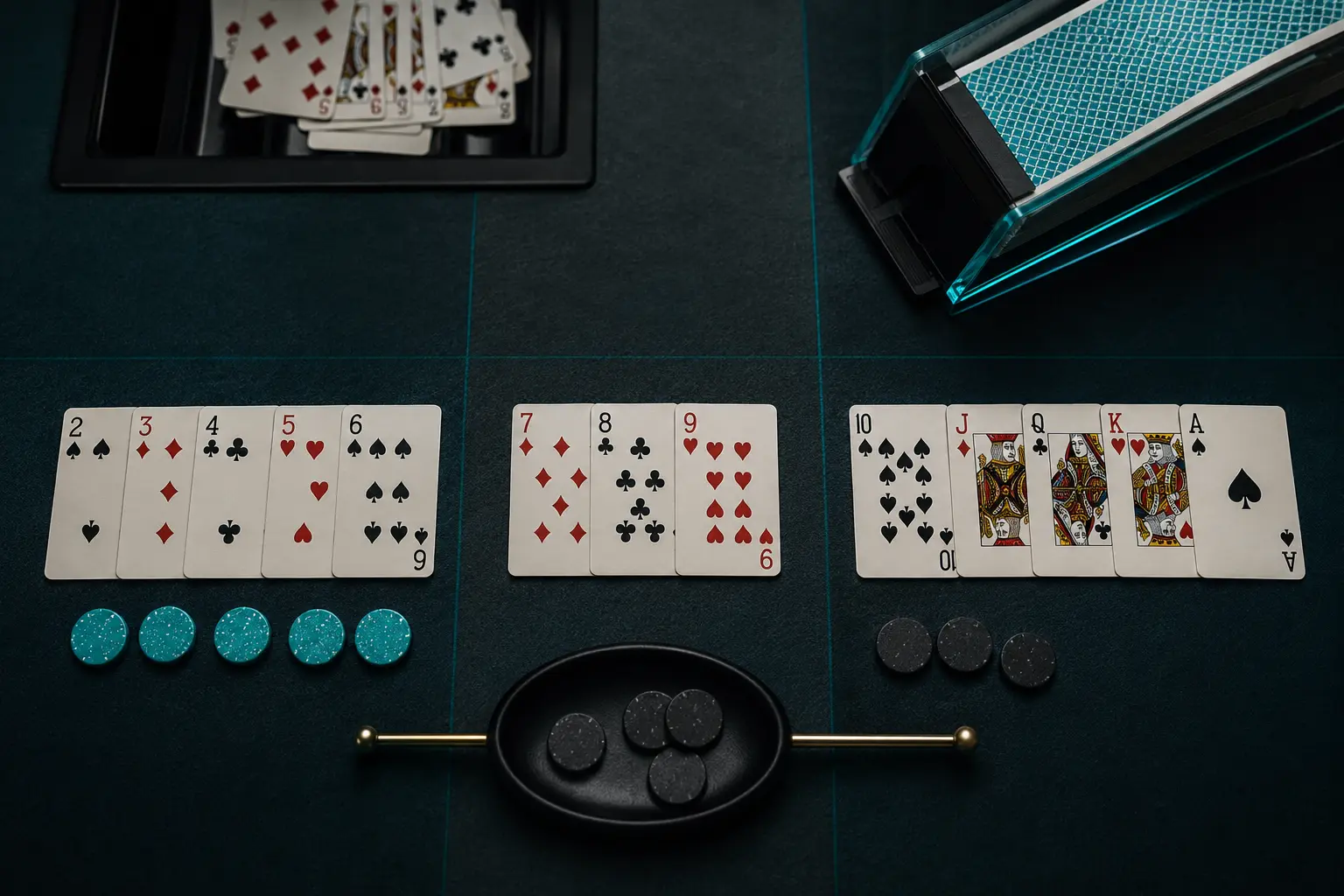
A flush requires three cards of the same suit regardless of sequence; a straight needs consecutive ranks across mixed suits; three of a kind means identical rank across different suits; a straight flush combines sequence and suit; suited trips demand the same rank and same suit across all three cards – the rarest and highest-paying outcome by a wide margin.
Progressive Jackpot Versions of 21+3
There’s no progressive jackpot tied to 21+3 in its standard form – payouts are fixed multipliers set by the paytable, not pooled or accumulating prizes. A small number of specialty tables have experimented with a bonus jackpot pool funded by a portion of side bet stakes, paid out for extremely rare combinations like suited trips of a specific rank, but this remains a niche variant rather than the default structure found at most operators.
21+3 on Mobile and Live Tables
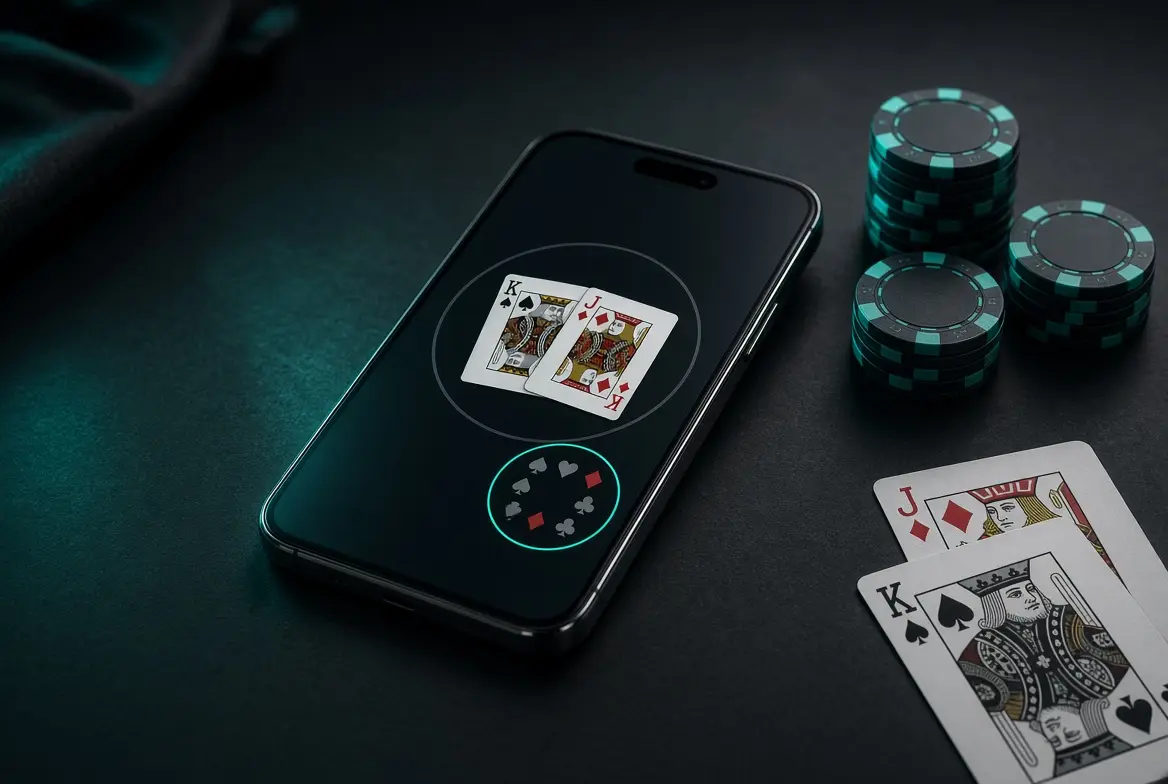
Live dealer blackjack tables offering 21+3 generally run through HTML5 streaming clients, which adapt the video feed and betting interface to smaller screens without requiring a dedicated app in most cases. The side bet spot resizes along with the main betting area, though on smaller phone screens the paytable overlay can shrink enough to require a tap-to-zoom action to read clearly.
Touch input handles chip placement on the 21+3 spot the same way it does on the main betting circle – a tap to select a chip value, a tap on the betting zone to confirm. Connection stability matters more here than screen size, since a dropped frame during the up-card reveal can delay confirmation of whether the side bet paid, unlike the main hand, which naturally spans more time and tolerates minor lag better.
21+3: Advantages and Drawbacks
Why Players Add the 21+3 Bet
The payout ceiling on suited trips – up to 100 to 1 – offers a return unavailable anywhere in the main blackjack hand, where even blackjack itself typically pays 3 to 2. Resolution happens instantly after the deal, meaning players get a result without waiting through the full hand, which suits those who want quicker feedback loops during a session. It also requires zero additional strategy knowledge, unlike card counting or basic strategy adjustments tied to the main game.
The House Edge Behind 21+3
The house edge on 21+3 typically runs higher than a well-played main blackjack hand – often in the range of 3% to 8% depending on the specific paytable variant, compared to under 1% for basic strategy blackjack at favorable tables. Because it’s a side bet resolved independently, a losing 21+3 wager can stack on top of a losing main hand, doubling the loss in a single round. Payout structures aren’t standardized, so a player moving between casinos or live dealer studios has to re-check the paytable each time rather than relying on memorized figures.
and Get Your Bonus Today
21+3 in Blackjack: Key Numbers
21+3 works as a mechanically simple add-on that trades consistency for occasional high-multiplier payouts, built entirely around three cards that settle before the main hand’s outcome is even decided. Its value depends heavily on which paytable a given table uses, since the gap between a merged four-tier structure and a full five-tier one meaningfully shifts the odds. Treated as a supplementary wager rather than a replacement for solid main-hand strategy, it adds a distinct layer of variance without altering how the core game of blackjack is played.