Lightning Dice Strategy: Betting Tips, Odds and Payouts
Lightning Dice has a single bet type – the total of three dice, 3 to 18 – so strategy is really about which totals you cover and how you treat the lightning multipliers. Totals around 10 and 11 land most often; the extremes pay far more. Below: the odds, payouts and approaches.
What a Lightning Dice Strategy Can Do
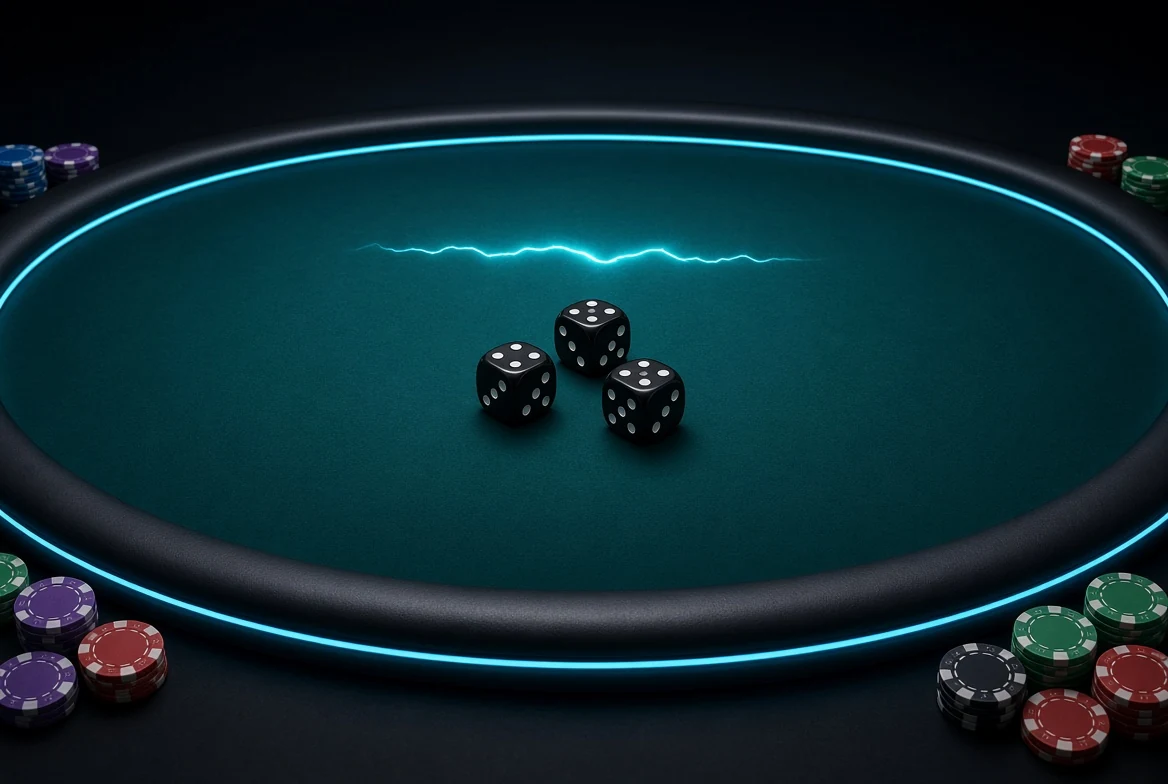
Lightning Dice is a live casino product built around three standard six-sided dice and a single random multiplier mechanic that strikes after every roll. The format sits between a table game and a game show: a live dealer triggers the dice roller, and a separate random number generator applies lightning multipliers to select numbers before the outcome settles. Bets are placed on the total of the three dice, which can range from 3 to 18, with each number carrying its own fixed payout based on statistical probability.
The structure is simple on paper but the math behind it rewards attention. Numbers closer to the extremes (3 or 18) pay far more than numbers near the middle (10 or 11), because the probability of hitting them is lower. This is a house-edge game with published RTP figures that hover around 96.5%, though the exact figure shifts slightly depending on which totals a player targets. Understanding this baseline is the starting point for any lightning dice strategy, since the payout table is fixed and cannot be influenced by betting patterns.
and Start Winning Today
How to Start Playing Lightning Dice
Each round in Lightning Dice runs on a short timer, usually under a minute from betting window to result. There’s no card counting, no positional strategy, and no multi-step decision tree – a player selects a number or a range, confirms the wager, and waits for the dealer to release the dice. This pace makes the game accessible to newcomers who find blackjack or baccarat rule sets intimidating.
The betting interface groups numbers visually by payout tier, so the relationship between risk and reward is visible before a chip is placed. Multi-bet placement is supported, meaning a player can cover several totals in a single round without needing to wait for the next cycle. Table limits are usually flexible enough to suit both micro-stakes testing and higher-volume play within the same session.

How Lightning Dice Works
The Tower, Three Dice and Lightning Multipliers
The visual identity leans on a dark studio backdrop with electric-blue lightning bolts that animate across the screen whenever a multiplier lands. The dice roller itself is a physical, camera-tracked device, not an animation, which keeps the presentation closer to a live floor experience than a digital simulation. Number displays use a clean, high-contrast font designed for quick scanning during fast-paced betting windows.
Round Pace and the Betting Window
Audio cues are deliberately sparse – a mechanical clatter when the dice are released, a rising electrical hum when a lightning strike is about to reveal a multiplier, and a short chime confirming the payout. There’s no looping background track competing for attention, which keeps focus on the dealer’s callouts and the countdown timer. The pacing feels closer to a broadcast segment than a slot machine loop.
Payouts, RTP and Odds
Which Totals Are Most Likely
Lightning Dice doesn’t use symbols in the traditional slot sense. Instead, the three dice faces themselves function as the core visual elements, and their combined total determines the outcome. The only additional visual marker is the lightning bolt overlay, which appears on randomly selected numbers before each roll and signals which totals are eligible for a multiplier boost that round.
Multiplier Rounds and Their Effect
There are no free spins or bonus rounds in the conventional slot format. The entire bonus mechanic is condensed into the lightning strike feature: before dice are rolled, between one and five numbers are struck by lightning and assigned multipliers ranging from 50x to 500x. If the dice total lands on a struck number, any bet placed on that number is multiplied accordingly, on top of the standard payout.
Lightning Dice Payout Table
| Total of three dice | Base payout |
|---|---|
| 3 or 18 | 150:1 |
| 4 or 17 | 50:1 |
| 5 or 16 | 25:1 |
| 6 or 15 | 15:1 |
| 7 or 14 | 10:1 |
| 8 or 13 | 8:1 |
| 9 or 12 | 6:1 |
| 10 or 11 | 5:1 |
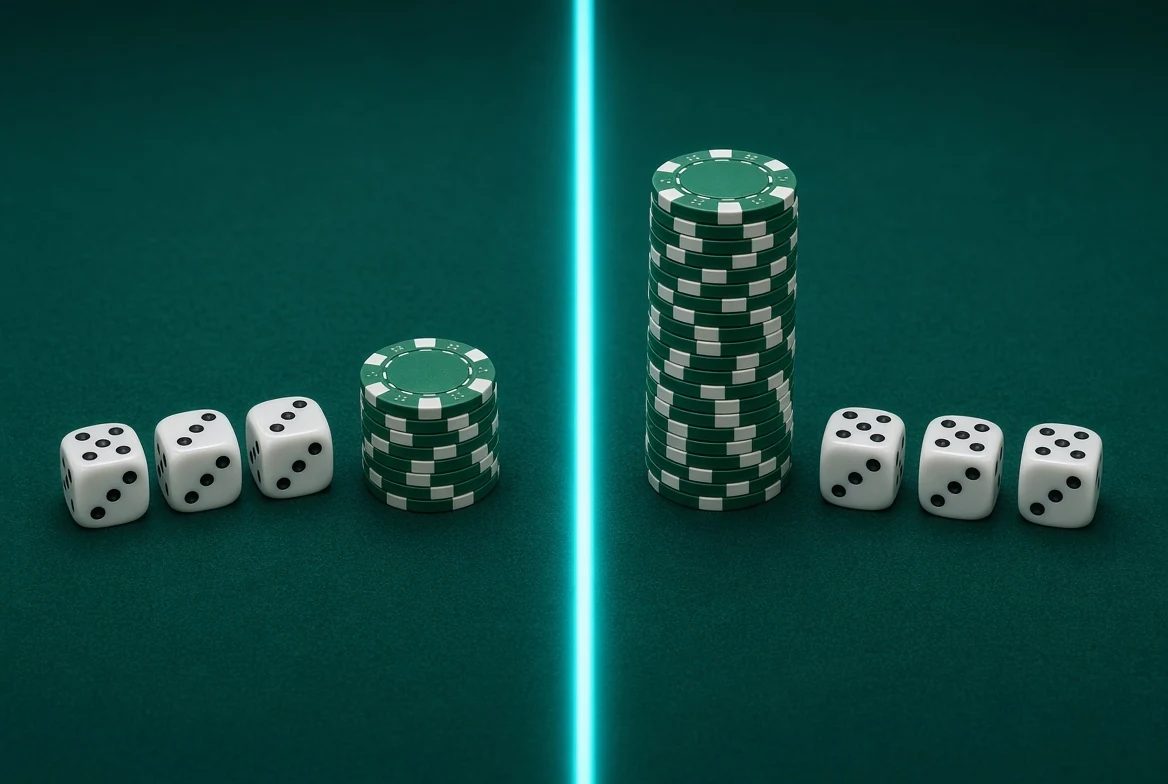
Standard payouts follow dice probability curves. Totals of 3 or 18 pay the highest at roughly 180:1, since there’s only one combination of dice that produces each. Totals of 10 or 11 pay the lowest, around 6:1, because multiple dice combinations can produce them. Split bets covering ranges (such as 4-6 or 15-17) offer moderate payouts with better hit frequency. When a lightning multiplier applies to a winning number, the base payout and the multiplier combine, which is where the largest single-round wins originate.
Big Multiplier Hits and Jackpot-Style Wins
There’s no progressive jackpot pool in Lightning Dice. The closest equivalent is a maximum-value lightning strike – a 500x multiplier landing on a bet placed on the correct total – which can turn a modest wager into a five-figure payout in a single round. This ceiling is fixed by design rather than accumulated through player contributions, distinguishing it from network-linked jackpot slots.
Lightning Dice on Mobile
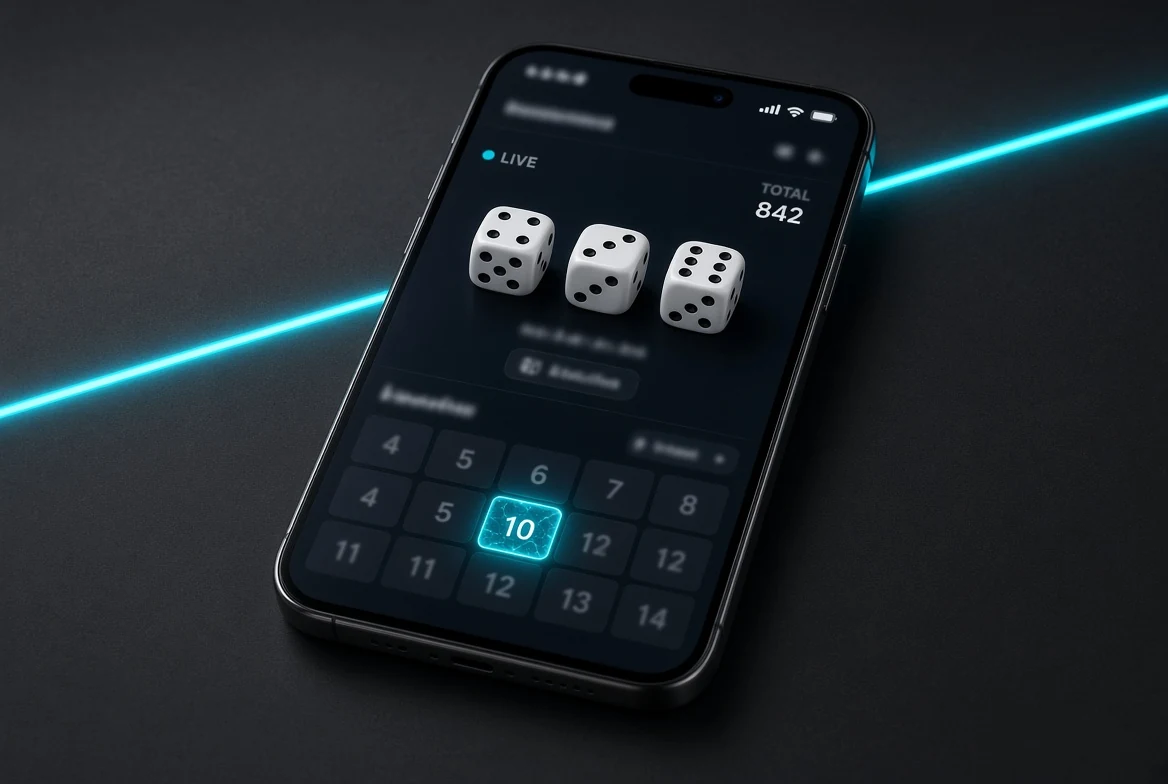
The live feed streams through standard HTML5 video protocols, which keeps load times reasonable on mid-range smartphones without requiring a dedicated app. Betting controls are repositioned into a bottom-anchored panel on smaller screens, keeping the dice camera visible at all times. Portrait mode works without cropping the essential number grid, though landscape orientation gives a clearer view of the full payout table during multi-number betting.
Betting Approaches: Advantages and Drawbacks
Spreading Bets Across Middle Totals
The fixed-odds structure means every payout is known in advance, removing ambiguity from betting decisions. Round speed keeps sessions efficient for players who dislike downtime between wagers. The lightning multiplier system adds genuine variance without requiring a separate bonus purchase or trigger condition, and the live-dealer format satisfies players who want a human element without full table-game complexity.
Why Chasing Multipliers Costs More
The house edge on middle-range numbers is noticeably steeper than on extreme totals, which can quietly erode a bankroll for players who default to “safe” middle bets without checking the payout table. There’s no skill-based decision beyond bet selection, so long-term outcomes are governed entirely by variance. Players seeking deep bonus features or narrative elements will find the format repetitive after extended sessions, since every round follows an identical structure.
and Get Your Bonus Today
Lightning Dice Strategy: Key Points
Lightning Dice rewards players who treat bet selection as a probability exercise rather than a guessing game. The fixed payout table means a lightning dice betting strategy comes down to balancing hit frequency against payout size – extreme totals offer rare but large wins, while central totals offer frequent but modest returns. The lightning multiplier layer adds a genuine variance spike without altering the underlying odds, which keeps the math transparent even as outcomes stay unpredictable. For players comparing formats, this game sits closer to a fast-paced table game than a slot, and its value depends on whether short, high-clarity rounds suit their playing style better than longer, feature-heavy alternatives.