What Is a Push in Blackjack?
A push in blackjack is a tie: your hand and the dealer’s finish on the same total, so nobody wins and your stake is returned. No money changes hands, and side bets are settled separately. Below: exactly when a push happens and how it is paid.
What Does Push Mean in Blackjack?
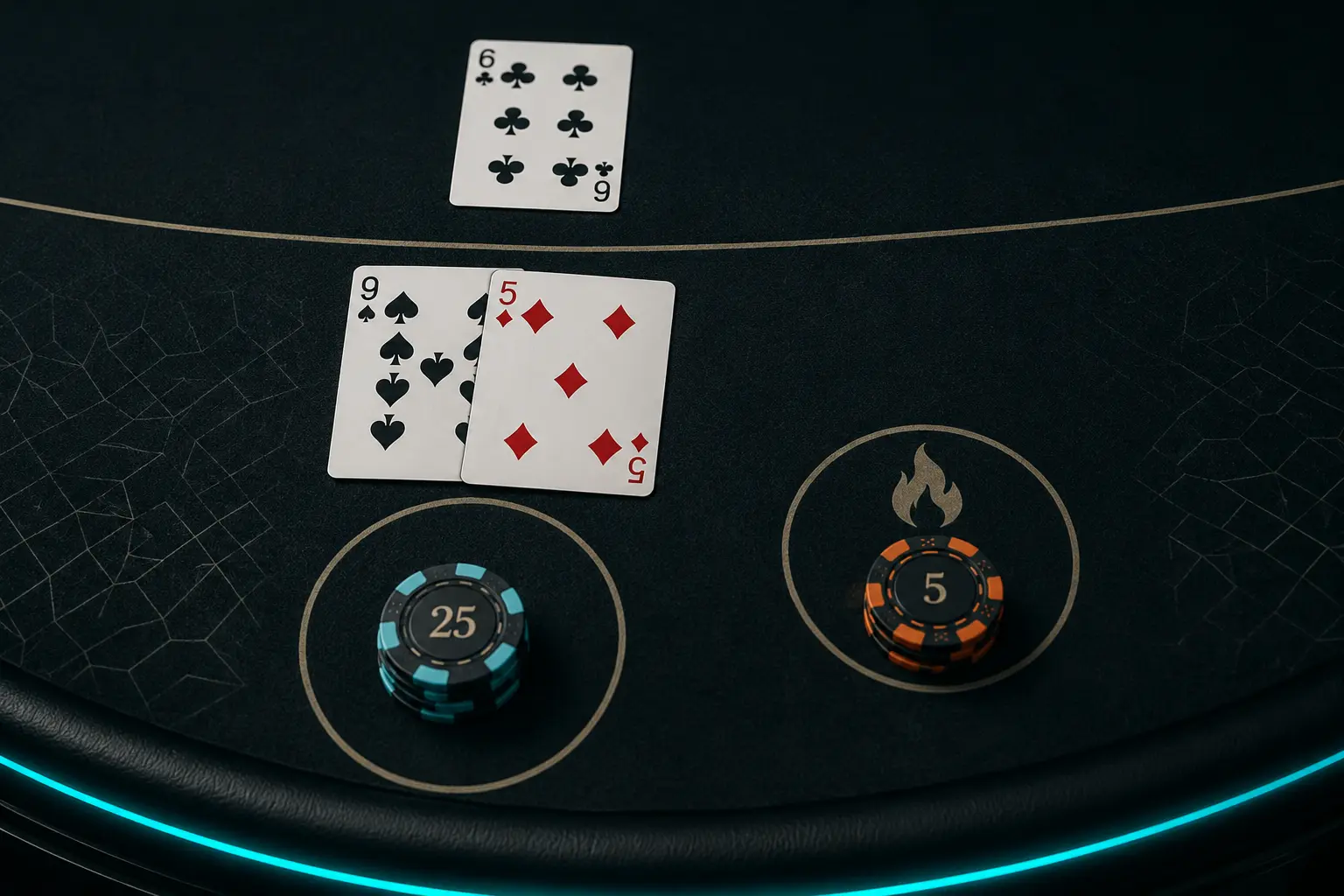
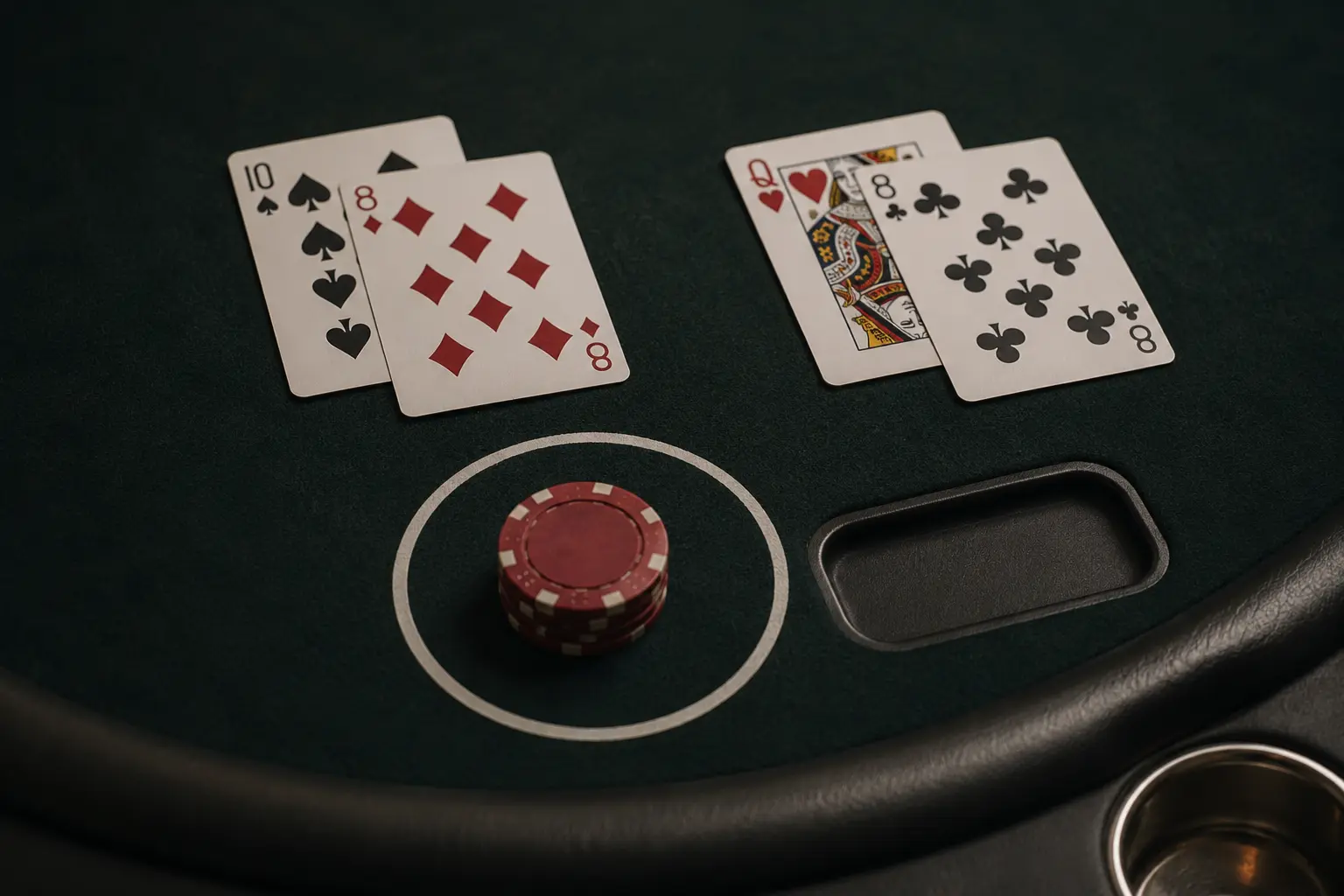
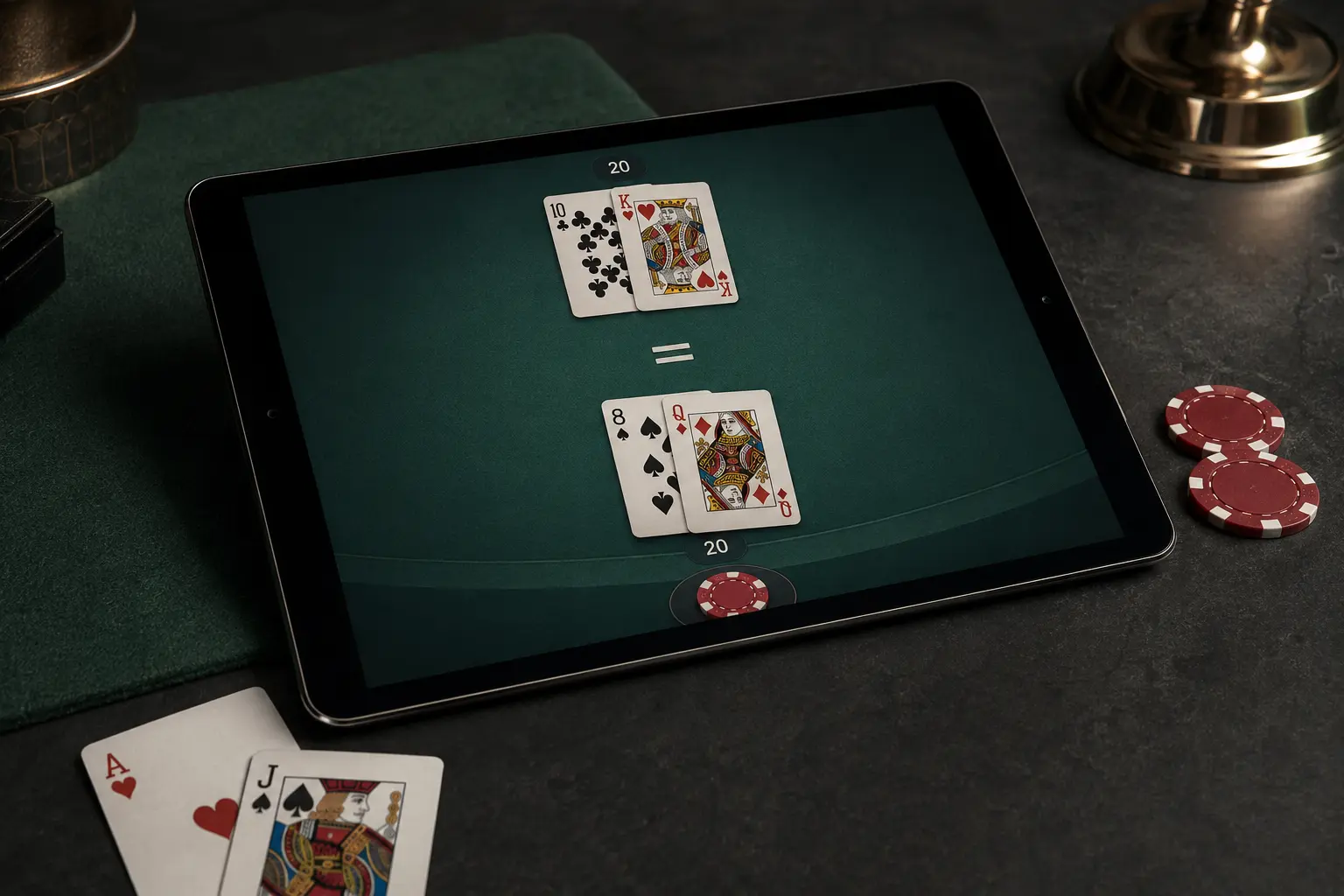
A push happens when your final hand total matches the dealer’s final hand total, and neither side busts. In that scenario, no chips change hands. The bet you placed simply returns to you, exactly as it was before the round started. This is different from a win, where the house pays you, and different from a loss, where the house collects your wager.
The push meaning in blackjack traces back to the game’s basic scoring logic: whoever gets closer to 21 without going over wins the hand. If both the player and dealer land on the same number – say, both hold 19 – the round is a draw by definition, and the rules treat it as a neutral outcome rather than forcing an arbitrary winner.
Pushes are not rare anomalies. Depending on the specific rule set at a table, a tie occurs in roughly 8-9% of hands over the long run. That frequency matters for anyone tracking bankroll swings, since a push doesn’t grow your stack, but it doesn’t shrink it either – it’s a round that effectively didn’t happen from a financial standpoint.
and Start Winning Today
How a Push Looks at the Table
Recognizing a push at the table takes no special skill. The dealer announces it verbally – “push” or “tie” – and taps the layout near your bet or draws a hand signal across it. There’s no confusion about what happens next: your chips stay put, and the dealer moves to the next hand or the next round.
In live casino settings, dealers are trained to clarify ties immediately so there’s no ambiguity for players unfamiliar with the term. Online and live-dealer platforms display the same outcome as text on screen, often labeling it directly as “Push” next to the resolved hand, which removes any guesswork for someone asking what does push mean in blackjack for the first time.
Because a push requires no calculation beyond comparing two totals, it’s one of the few outcomes in the game that never triggers a dispute. Wins involve payout ratios, blackjack bonuses, or side bets that can get complicated – a tie is simply a tie.
When a Push Happens
Tied Totals Against the Dealer
Whether at a physical table or in a digital layout, the visual signal for a push is typically minimal by design. Most digital blackjack interfaces use a small banner or highlight color – often gray or neutral, in contrast to green for wins or red for losses – to indicate the round ended without a payout change. This visual restraint reflects the outcome itself: nothing dramatic occurred.
Physical tables rely on dealer gestures rather than any printed signage. There’s no chip design, no card graphic, and no thematic element tied specifically to a tie – it’s absorbed into the standard felt layout and card presentation used for every hand.
Blackjack Against Blackjack
Digital blackjack titles usually mute or soften audio cues for a push compared to the audio used for a win. A win might trigger a short chime or animation; a tie typically produces a flat, neutral tone or no sound at all. This design choice keeps the player’s attention calibrated correctly – nothing worth celebrating happened, but nothing was lost either.
At a live table, the pacing barely changes. Dealers move through a push without pause, often within the same breath as resolving the next hand at the table, keeping the overall rhythm of the game consistent regardless of the outcome.
How a Push Is Paid

Card Totals That End in a Tie
Blackjack doesn’t use symbols in the way slot machines do – there are no wilds or scatters. What matters here are card values: numbered cards count at face value, face cards count as ten, and the Ace flexes between one and eleven. A push occurs strictly based on the numeric total these cards produce, with no symbol-based multiplier affecting the outcome.
Pushes on Side Bets
Standard blackjack has no free spins or bonus rounds in the slot-game sense. Some variants offer optional side bets – Perfect Pairs, 21+3, or progressive side wagers – but these are resolved independently of the main hand. A push on the primary hand doesn’t cancel or void these side bets; each is settled on its own criteria, separate from whether your main hand tied with the dealer’s.
Push Payout: Your Stake Returned
This is where push blackjack payout logic becomes concrete. A standard win pays 1:1 – bet $10, win $10. A natural blackjack (Ace plus a ten-value card) typically pays 3:2, though some tables use 6:5, which reduces player returns. A push, by contrast, pays nothing and takes nothing: your original $10 stays exactly as it was, untouched by either ratio.
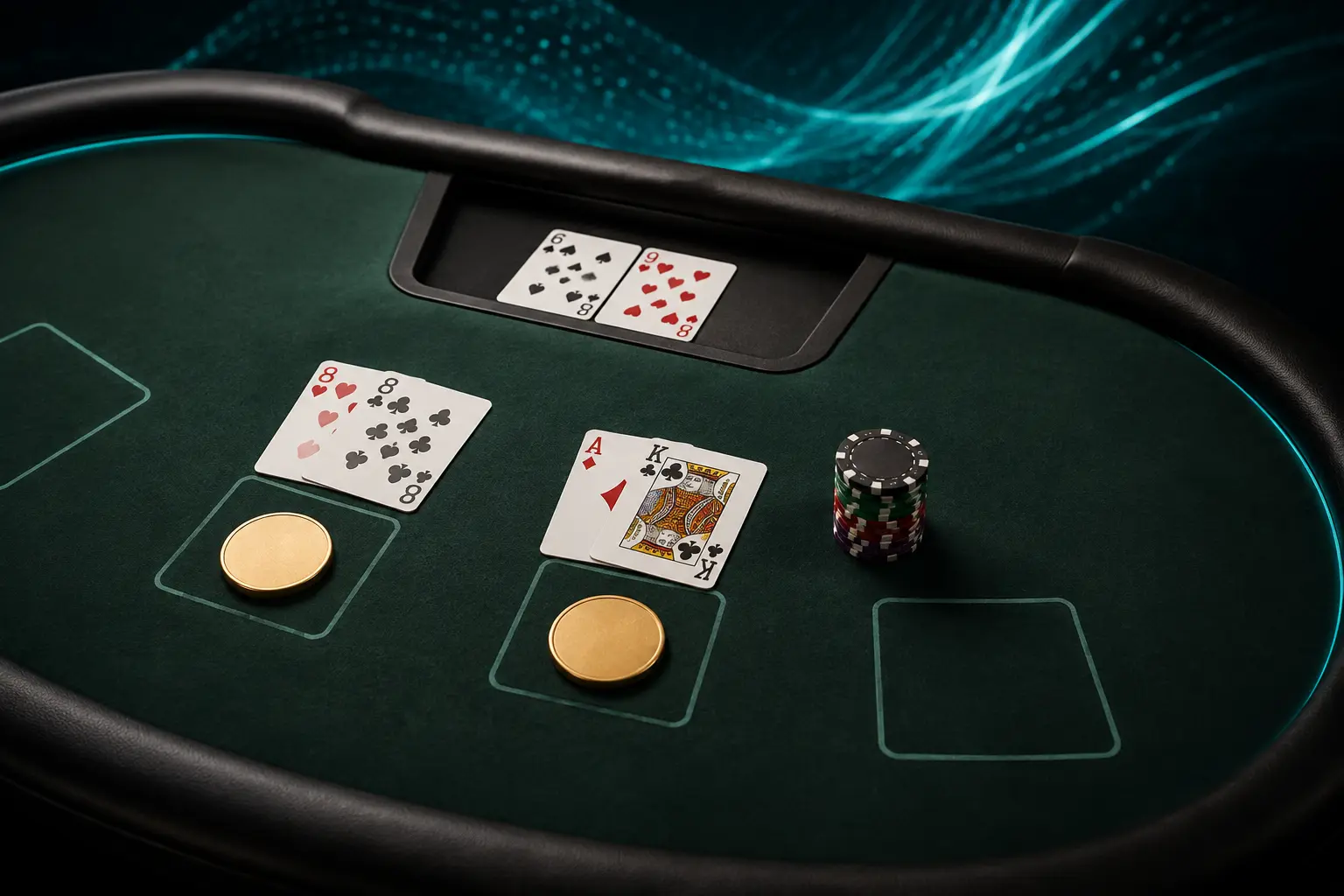
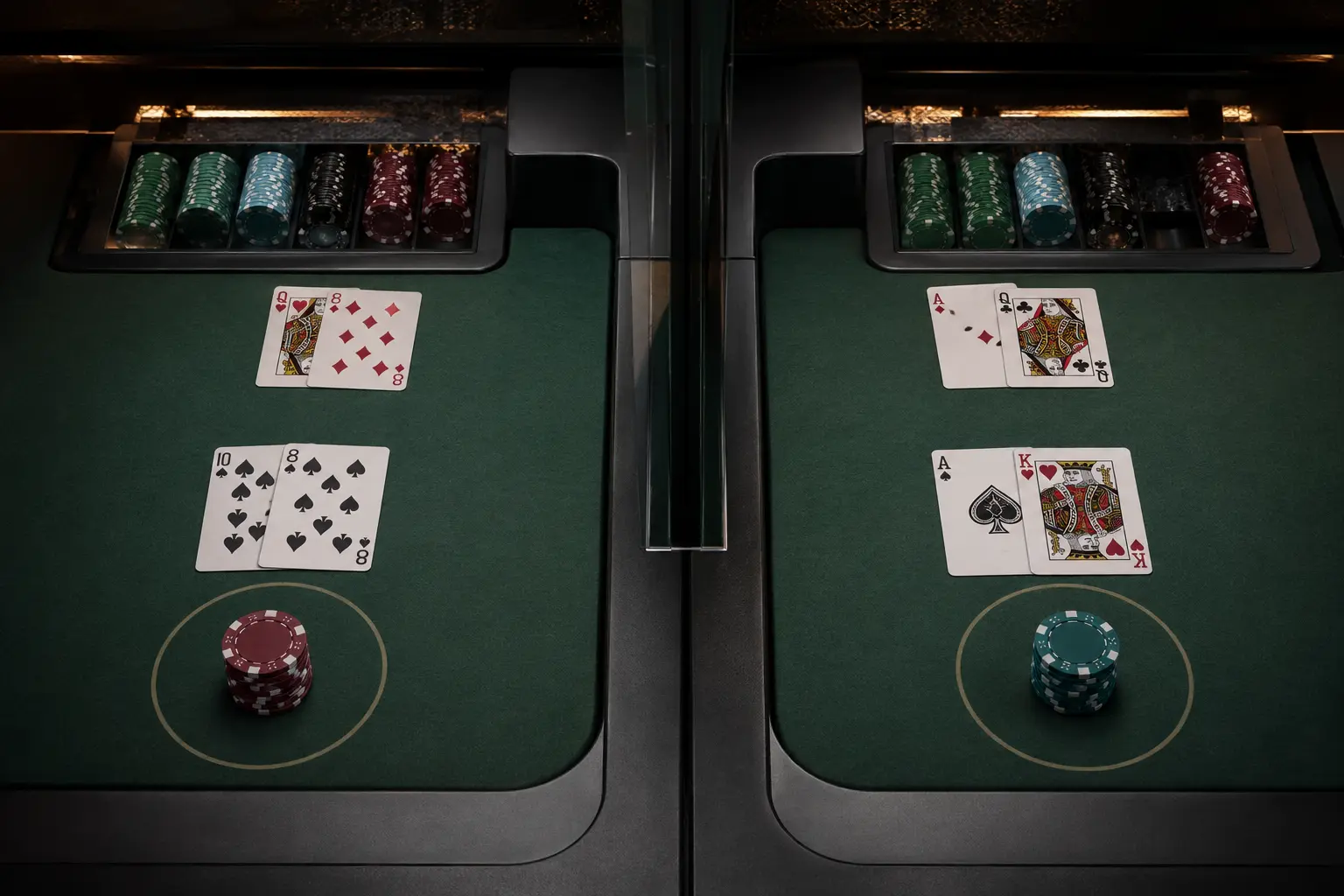
There’s a specific edge case worth flagging: if you draw a natural blackjack and the dealer also draws a natural blackjack, that’s a push as well, even though a blackjack usually pays at the premium 3:2 rate. In this scenario, the premium payout is voided because both hands are equal – the tie meaning in blackjack overrides the bonus payout structure entirely.
Pushes and Jackpot Side Bets
Standard blackjack has no built-in jackpot mechanic tied to the base game. Some casinos layer optional progressive jackpot side bets onto the table, usually triggered by specific card combinations regardless of whether the main hand results in a win, loss, or push. These jackpots operate on a completely separate wager and payout track from the primary hand’s outcome.
Pushes on Mobile and Live Tables
Digital blackjack tables render push outcomes identically across devices, though the clarity varies by screen size. On a phone, the “Push” label or banner tends to appear directly over the hand in question, since there’s limited room for peripheral UI. On tablets or desktop browsers, the same information often appears alongside a running tally of wins, losses, and ties for the session, giving a broader view of how often the dealer push blackjack rules have applied to your recent hands.
Touch controls don’t introduce any added complexity for a tie – there’s no extra tap or confirmation required, since a push resolves automatically the moment both hands are compared.
What a Push Means for Your Bankroll
Why a Push Is Better Than a Loss
A push protects your bankroll during a hand that would otherwise feel like a coin-flip loss in a different card game. It also gives new players a clean, low-stakes way to understand hand comparison without financial consequence, since a tied 18 against a dealer’s 18 teaches the mechanic without costing anything.
For side-bet strategy, understanding that pushes don’t affect independent wagers like Perfect Pairs means players can track those bets separately without confusing them with main-hand outcomes.
Where a Push Still Costs You
A push doesn’t advance your bankroll, which means a session full of ties can feel stagnant even though you haven’t technically lost money. Some newer players mistake a string of pushes for a “cold” table, when statistically it’s simply a normal variance pattern.
Tables using 6:5 blackjack payouts instead of 3:2 slightly shift the math against the player even when pushes remain unaffected, since the reduced win payout doesn’t compensate for the same tie frequency. This makes overall table selection more important than understanding push mechanics alone.
and Get Your Bonus Today
Push in Blackjack: Key Points
A push is blackjack’s built-in safety valve – a rule that keeps equal outcomes from arbitrarily favoring the house or the player. It doesn’t grow your stack, but it also doesn’t erode it, which makes it a mechanically neutral event rather than a strategic concern. Once you understand push meaning in blackjack, tracking wins, losses, and ties becomes far easier, and the confusion that new players often feel at seeing a tied hand disappears entirely.