Teen Patti Kaise Khele: Step-by-Step Rules for Beginners
Teen patti kaise khele: every player gets three cards face down, everyone puts the boot (a fixed starting stake) into the pot, and betting goes round the table until only one player is left or two players “show” their cards. The best three-card hand wins the pot. This guide walks through one round step by step, then explains blind and seen play, chaal, pack, show, side show and hand rankings.
Teen Patti Kaise Khele: The Basics
Teen Patti is a three-card game that originated in India and goes back to the British game three-card brag. The name means “three cards“. It is played with a standard 52-card deck, and each player receives exactly three cards.
Most tables seat from three to six players, though private games can differ. The goal is simple: either hold the best hand when the cards are shown, or make everyone else fold. Because you can win without ever showing your cards, bluffing is a big part of the game.
From strongest to weakest, the hands are trail (three of a kind), pure sequence, sequence, color, pair and high card. The full list with examples is in the section on hand rankings below.
and Start Winning Today
How to Start Your First Game
At a home table you only need a deck, some chips or coins and two or more friends. Agree on the boot amount before the first deal, and agree on the rules that vary (see the notes on side show and ties below).
Online, you pick a table first. Tables are usually grouped by stake size, and each table shows its boot and its limits. Check the boot and the maximum bet before you sit down, because they differ from platform to platform. If real-money play needs account verification (KYC), complete it before your first deposit or withdrawal.
As a beginner, watch a few hands without betting, or choose the lowest stake available. You will learn the order of hands and the buttons much faster when little money is on the table.
Teen Patti Game Kaise Khele Step by Step
Dealing, Boot and the First Round
One round follows the same order every time:
- Boot. Every player puts the same starting stake into the middle. This creates the first pot.
- Deal. The dealer gives each player three cards face down, one at a time, clockwise.
- Choose blind or seen. Each player decides whether to bet without looking at the cards (blind) or to look first (seen).
- Bet clockwise. Starting with the player to the dealer’s left, each player in turn can chaal (bet), raise, or pack (fold). The current stake is the unit that bets are measured in.
- Side show, if allowed. A seen player may ask for a private comparison with the previous seen player.
- End of the round. If everyone else packs, the last player wins the pot without showing. If two players remain, one of them can call a show, both reveal, and the better hand wins.
Blind and Seen Play
A blind player has not looked at their cards. A seen player has. You can stay blind for several turns, and you can turn seen at any point when it is your turn. You cannot go back to blind after looking.
The two modes bet at different sizes. In the most common version, a blind player’s chaal equals the current stake and a seen player’s chaal is double it. Some tables use different multipliers or caps, so read the table rules before you play.
Staying blind is cheaper, and it hides information from opponents, because they cannot tell how strong your hand is. The price is that you may keep betting on a weak hand you have never seen. Looking at your cards gives you information, but each bet then costs more.
Chaal, Pack, Show and Side Show
| Action | What it means |
|---|---|
| Chaal | Stay in the hand by putting the required bet into the pot. |
| Raise | Bet more than the minimum, up to the table limit. Later players must match the new stake to stay in. |
| Pack | Fold. You give up your cards and the chips you have already put in. |
| Show | Allowed when two players remain. The player who calls it pays the bet, both reveal, and the better hand wins. |
| Side show | A seen player asks the previous seen player to compare cards privately. The weaker hand must pack. |
Side show has the most variations. It usually needs the other player’s agreement, and it is normally allowed only between seen players. If the two hands are equal, many rule sets make the player who asked pack. Some tables switch side show off completely, so check the rules on your table.
The same applies to ties at a show: the usual rule is that the player who called the show loses an exact tie, but this is not universal.
Hand Rankings and Betting
Which Three-Card Hands Win
Learn the six hand rankings in this order, from best to worst:
| Rank | Hand | Example |
|---|---|---|
| 1 | Trail (three of a kind) | 7♠ 7♥ 7♦ |
| 2 | Pure sequence (straight flush) | 4♥ 5♥ 6♥ |
| 3 | Sequence (straight) | 9♣ 10♦ J♠ |
| 4 | Color (flush) | 2♦ 8♦ K♦ |
| 5 | Pair | Q♠ Q♣ 3♥ |
| 6 | High card | A♣ 9♦ 4♠ |
Within a rank, higher cards win. A trail of aces beats every other trail. Among sequences, A-K-Q and A-2-3 are the two special ones. A-2-3 counts as a valid sequence in most rule sets, and many tables rank it as the highest one, but the order of A-K-Q and A-2-3 differs between tables, so check before you rely on it.
How the Pot Is Won
The winner takes the whole pot. There is no fixed payout table, as the pot is made of the players’ own bets.
Here is a worked example with four players, a boot of 10 each, and the common version of the betting rule. The pot starts at 40. Player A stays blind and bets 10. Player B looks at the cards and bets 20, double the stake. Players C and D pack, and A packs too. B wins the pot without showing: 40 + 10 + 20 = 70.
Jackpot and Bonus Bets in Online Teen Patti
Some online platforms may offer extra side bets, including a progressive jackpot that pays on rare hands. These bets are separate from the main pot and are not part of standard Teen Patti. Read the side-bet rules before you add one, and treat it as an optional extra cost.
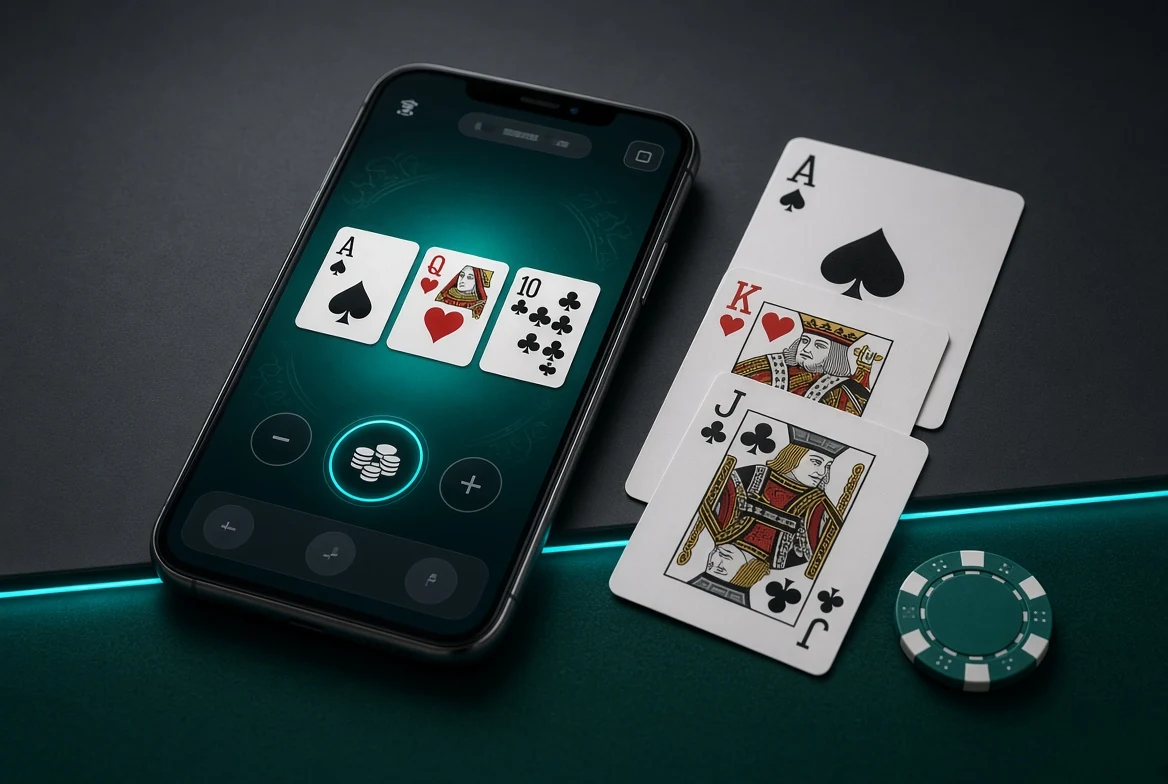
Online Teen Patti Kaise Khele on Mobile
Online play follows the same steps as a home game. The app deals the cards, counts the pot and shows buttons for chaal, raise, pack and show. Side show appears only when the table allows it.
Use only apps and sites you trust, and install apps from official sources. Check the table’s boot, limits and side-show rule on the table screen before you join. Set a deposit limit before you start.
Common Beginner Mistakes
- Chasing weak hands. A high card with a low top card rarely wins a show. Packing early costs less than staying in.
- Staying blind too long. Blind bets are cheaper, but they can build a big pot around a hand you have never seen.
- Mixing up the sequences. A sequence is not a pure sequence, and a color is not a sequence. Learn the ranking order before real stakes.
- Not reading the table rules. Boot, bet multipliers, side show and A-2-3 handling all differ between tables.
- Playing without a budget. Three-card hands swing quickly. Decide how much you can afford to lose before the first deal, and stop when you reach it.
- Ignoring the law. Rules on real-money card games differ between Indian states. Check the legal position where you live before you play for money.
Teen Patti rewards reading opponents as well as luck, but the cards still decide many hands, and no approach guarantees a win.
and Get Your Bonus Today
Teen Patti Kaise Khele: Key Points
- Each player puts in the boot and gets three cards; betting runs clockwise.
- Blind and seen players bet at different sizes; check the multiplier on your table.
- On your turn you chaal, raise or pack; with two players left, one can call a show.
- Hands rank trail, pure sequence, sequence, color, pair, high card.
Play Responsibly
Real-money games are for adults aged 18 and over. Gambling involves a risk of loss, and no strategy guarantees a win. Set deposit and time limits, never play with money you need for bills, and stop if it stops being fun. If gambling is causing you problems, talk to someone you trust or contact a local support service or helpline for gambling problems.
How we checked this guide: against published descriptions of Teen Patti and three-card brag, and against published Teen Patti rule guides for hand ranking and table terms.