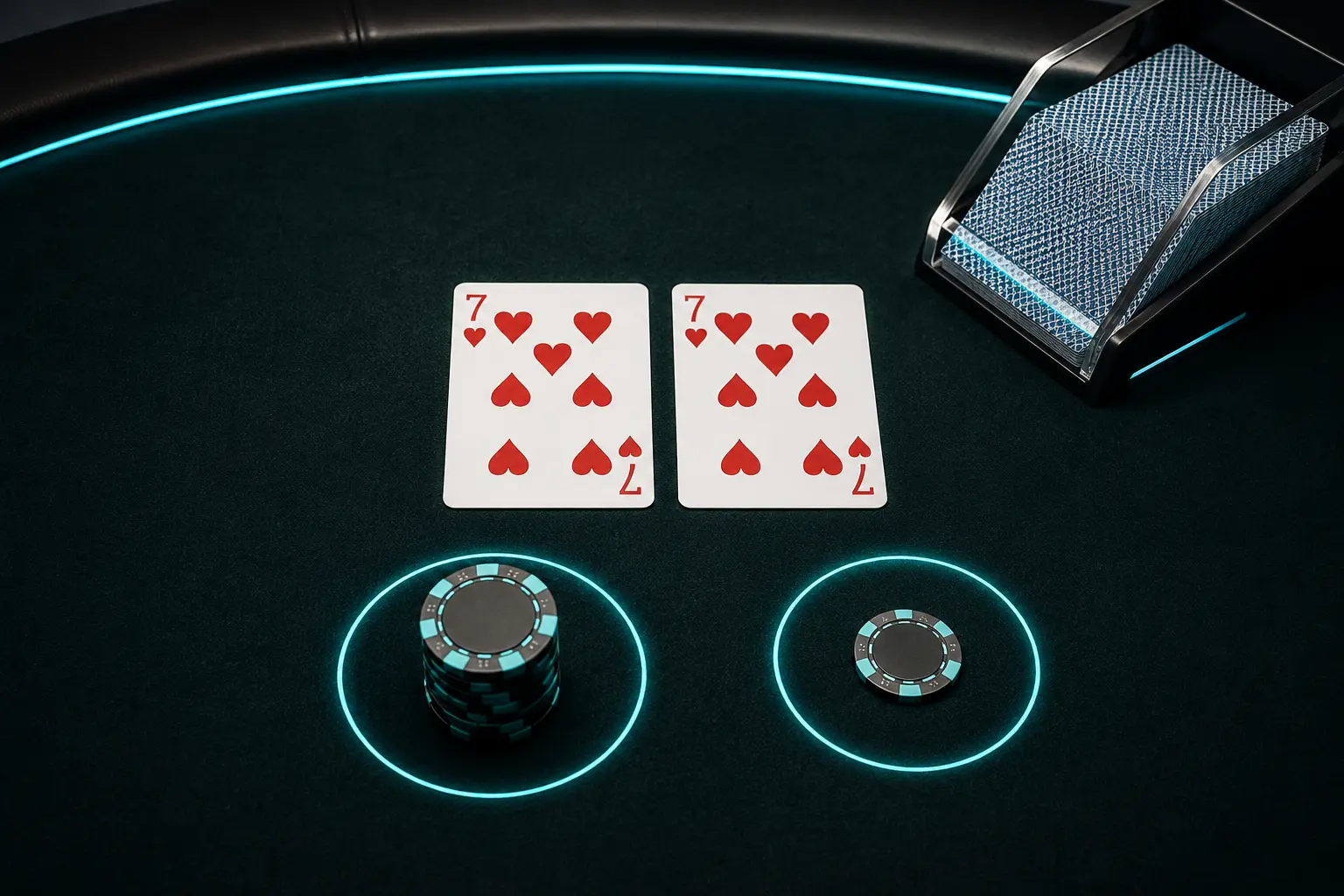
Insurance in Blackjack: When to Insure Your Hand
Insurance in blackjack is a side bet offered when the dealer shows an ace. It costs half your original stake and pays 2:1 if the dealer holds blackjack. Mathematically it loses money unless you are counting cards. Below: the rules and the one case where it is correct.
What Insurance in Blackjack Is
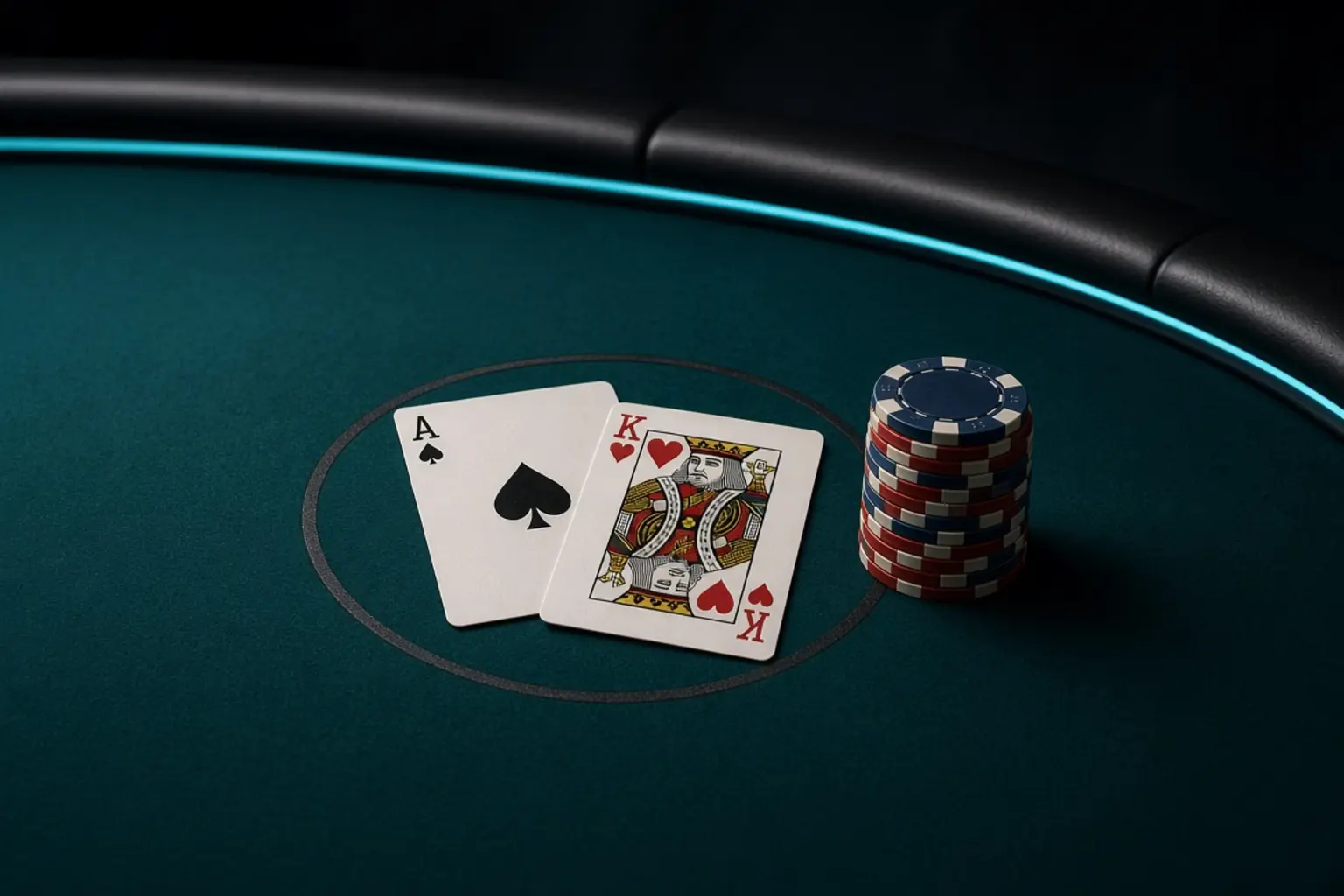
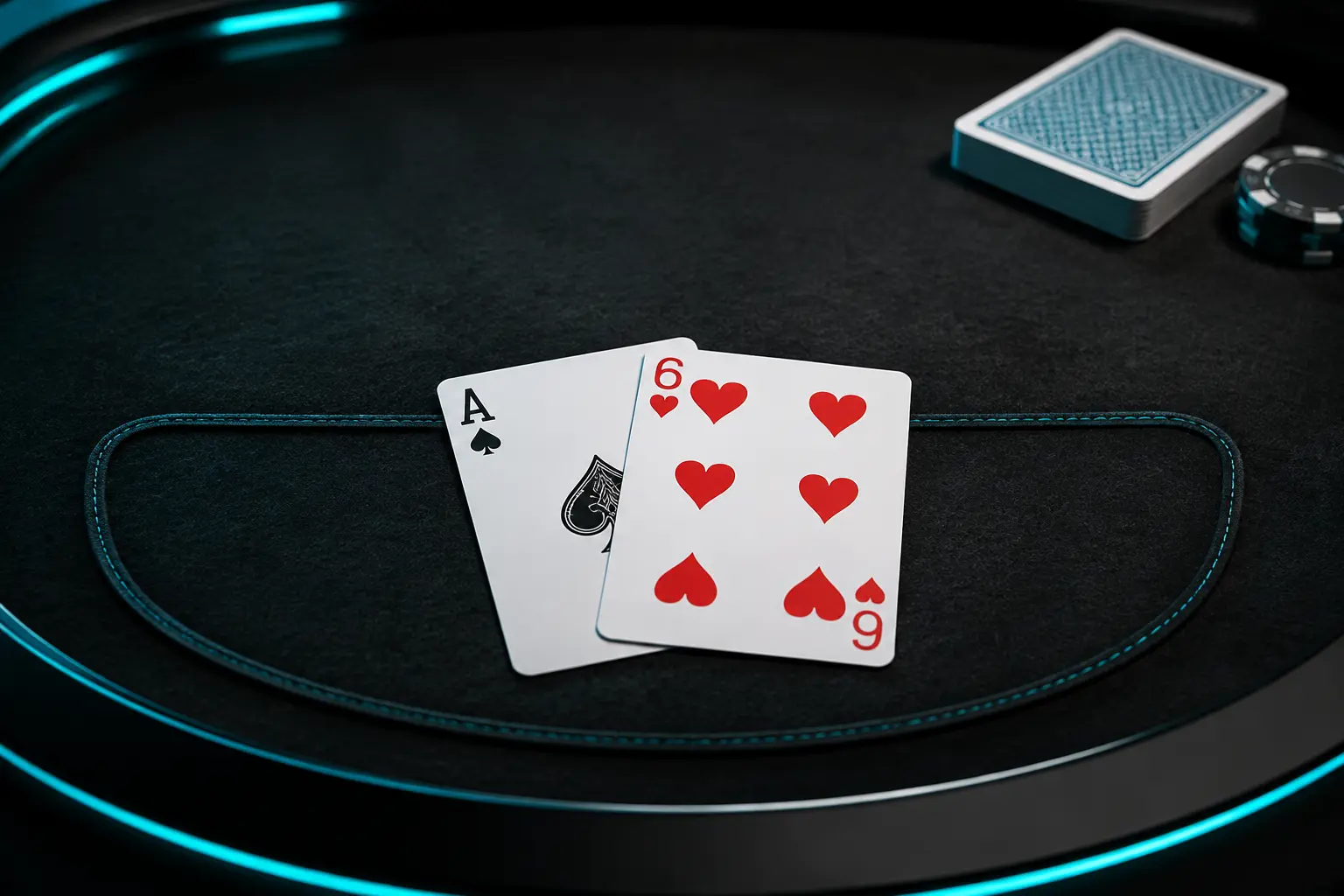
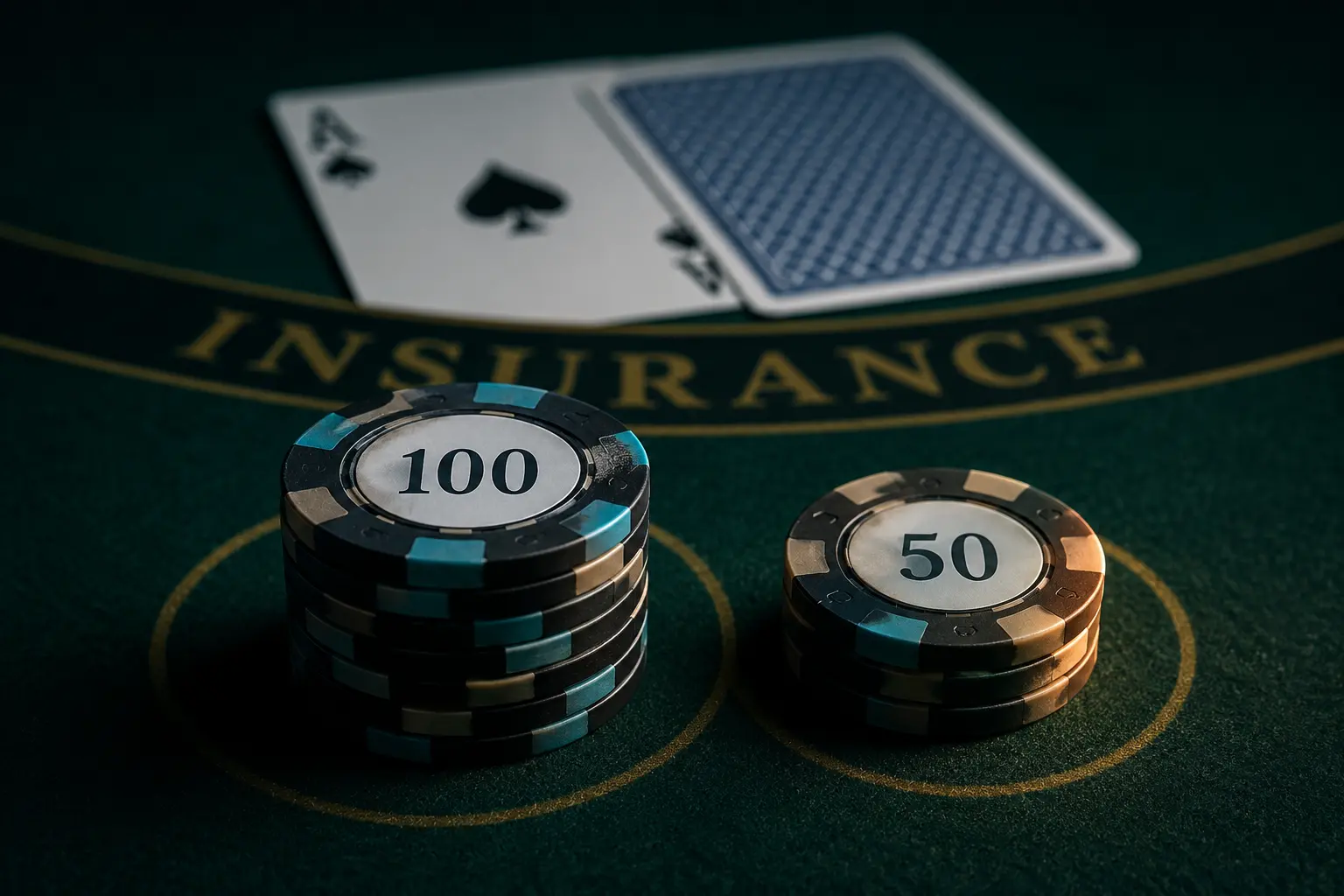
Insurance in blackjack is a side bet that appears only when the dealer’s upcard is an Ace. At that moment, before any other action, the dealer pauses the round and offers every player at the table the option to place a separate wager equal to half their original bet. This is what is insurance in blackjack in its most literal sense: a bet on whether the dealer’s hidden card is a ten-value card, which would complete a natural blackjack.
The mechanics are fixed by the table rules, not by player negotiation. If the dealer does have blackjack, the insurance bet pays 2 to 1, offsetting the loss of the main hand. If the dealer does not have blackjack, the insurance amount is simply lost, and the round continues normally with the original bet still in play. This structure makes insurance mathematically independent from the rest of the hand – it doesn’t interact with the player’s cards, their strategy, or the count of the current shoe beyond the ratio of ten-value cards remaining.
Understanding what is blackjack insurance requires separating it from the main wager entirely. It is not a modifier of the original bet; it’s a standalone proposition tied exclusively to the dealer’s hole card.
and Start Winning Today
How to Insure Your Hand at a Table
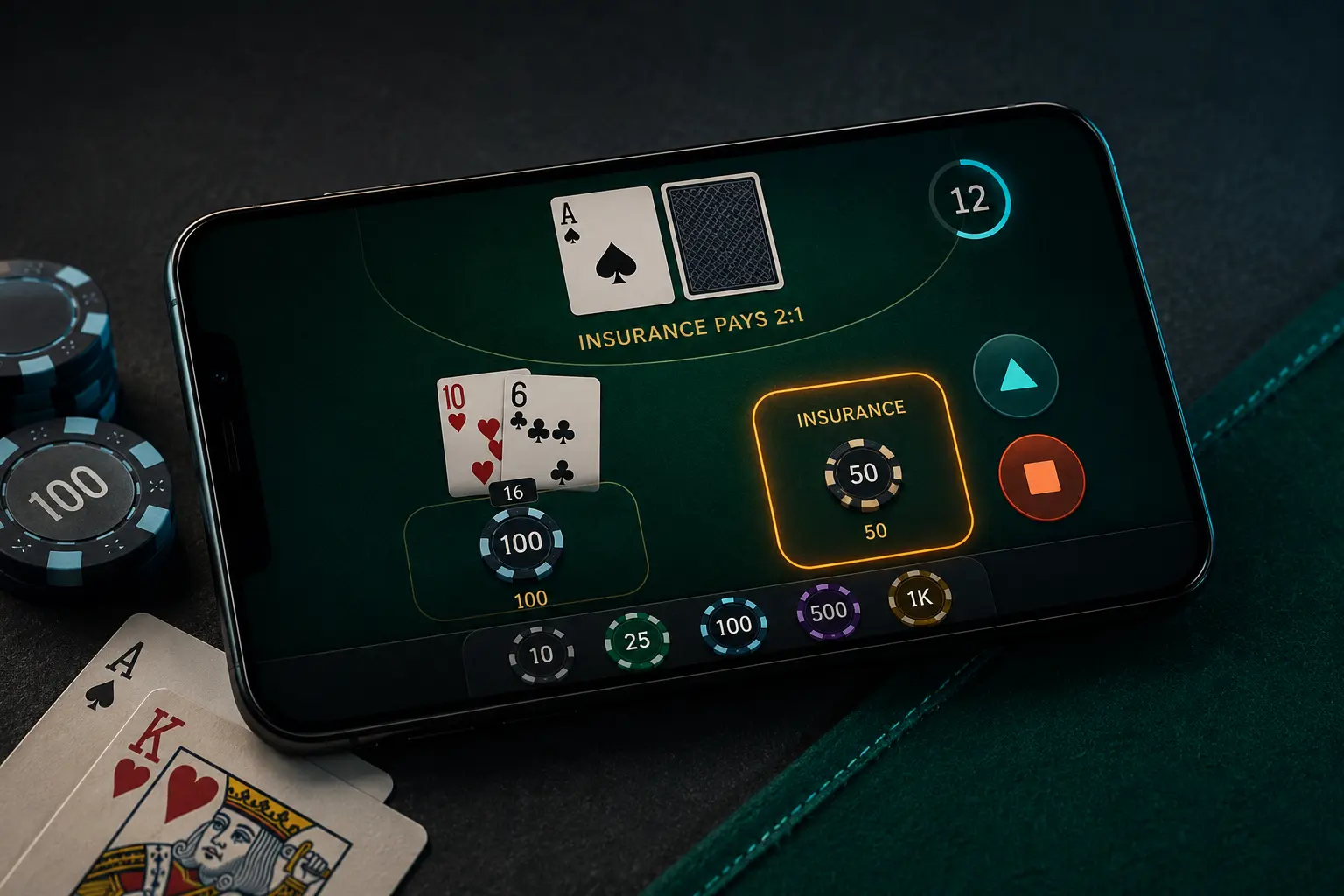
The insurance decision happens quickly, usually within a few seconds after the Ace is shown. Dealers announce it verbally at physical tables, and digital blackjack interfaces display a clear prompt with “Yes” and “No” buttons or chip-placement zones dedicated to the insurance line on the felt.
There’s no complex input required – players either commit the fixed half-bet or decline. Live dealer platforms mirror this same rhythm, with a short countdown timer replacing the verbal cue. Because the choice is binary and time-boxed, it doesn’t slow down the pace of play even for newer participants still learning table etiquette.
Blackjack Insurance Rules
When the Offer Appears
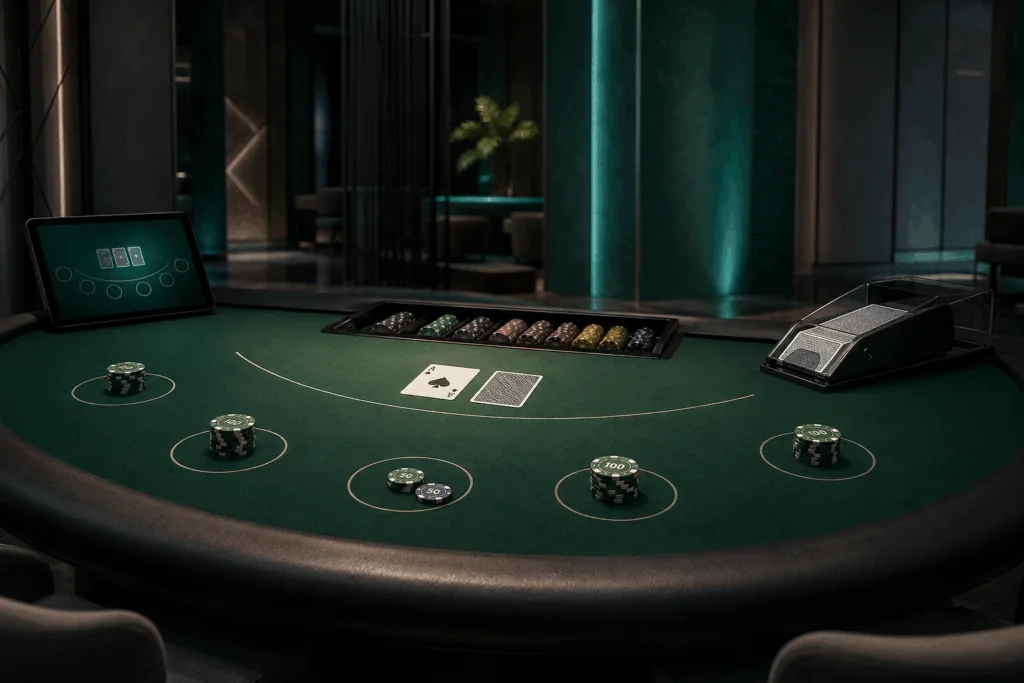
Physical blackjack tables mark the insurance line directly on the layout, typically as a curved strip labeled “INSURANCE PAYS 2 TO 1” positioned beneath the main betting circles. Digital versions replicate this with a highlighted overlay that appears only when triggered, keeping the rest of the table design unchanged.
Live dealer studios use camera angles that zoom toward the insurance strip the moment an Ace is dealt, giving remote players the same visual cue a floor player would get from watching the dealer’s hand movement toward that section of the table.
How Much Insurance Costs
In live formats, the dealer’s spoken prompt – something like “Insurance, anyone?” – creates a distinct auditory checkpoint that separates this decision from the rest of the hand. Digital platforms often use a short chime or tonal cue paired with the on-screen prompt, reinforcing that this is a separate, time-sensitive choice rather than part of the regular betting flow.
This brief interruption in gameplay rhythm is intentional: it forces a pause, giving players a moment to think about the dealer’s exposed Ace before committing chips.
Insurance Payouts and Odds
The Dealer Cards That Matter
Blackjack doesn’t use symbols in the way slot games do, but the card values themselves function as the game’s core symbolic system. Ten-value cards – tens, jacks, queens, kings – are the critical reference point for insurance, since their concentration in the remaining deck directly determines whether the bet has positive expectation.
The Ace itself acts as the trigger symbol: its appearance as the dealer’s upcard is the sole condition that activates the insurance option.
Insurance Compared With Other Side Bets
Standard blackjack has no bonus rounds or free spins in the traditional sense. Insurance is sometimes confused with a bonus feature, but it’s a betting mechanic, not a triggered event with its own payout structure or round extension. Some blackjack variants layer additional side bets – like “Perfect Pairs” or “21+3” – alongside insurance, but these are separate wagers with independent rules, not extensions of the insurance mechanic itself.
Insurance Pays 2:1 and Why That Matters
The insurance payout is fixed at 2 to 1, regardless of casino, variant, or table minimum. If a player bets $10 on insurance and the dealer reveals blackjack, the payout is $20, on top of the original hand being settled as a push (unless the player also has blackjack, which typically results in an even-money outcome for the main hand).
This payout ratio is what makes the bet break even only when ten-value cards make up roughly one-third of the remaining cards – a threshold that matters when answering whether is blackjack insurance worth it in a given shoe composition.
Insurance and Jackpot Side Bets
There is no jackpot associated with insurance. It’s a fixed-odds side bet with a capped payout ratio, structurally different from progressive jackpot mechanics found in slot games or certain proprietary table games with accumulating prize pools.
Insurance on Mobile and Live Tables
Insurance prompts render identically on mobile blackjack apps and browser-based platforms, with touch-friendly Yes/No buttons replacing the physical chip placement. Response windows remain consistent across devices, typically five to ten seconds, and the interface doesn’t compress or hide the option even on smaller screens – it’s treated as a priority prompt that overlays the standard betting layout.
Live dealer blackjack on mobile carries slightly more latency risk during the insurance window, since the decision is time-sensitive and dependent on stable streaming, but most platforms build in a buffer to avoid unfair timeouts.
Is Blackjack Insurance Worth It?
The One Case Where Insurance Pays Off
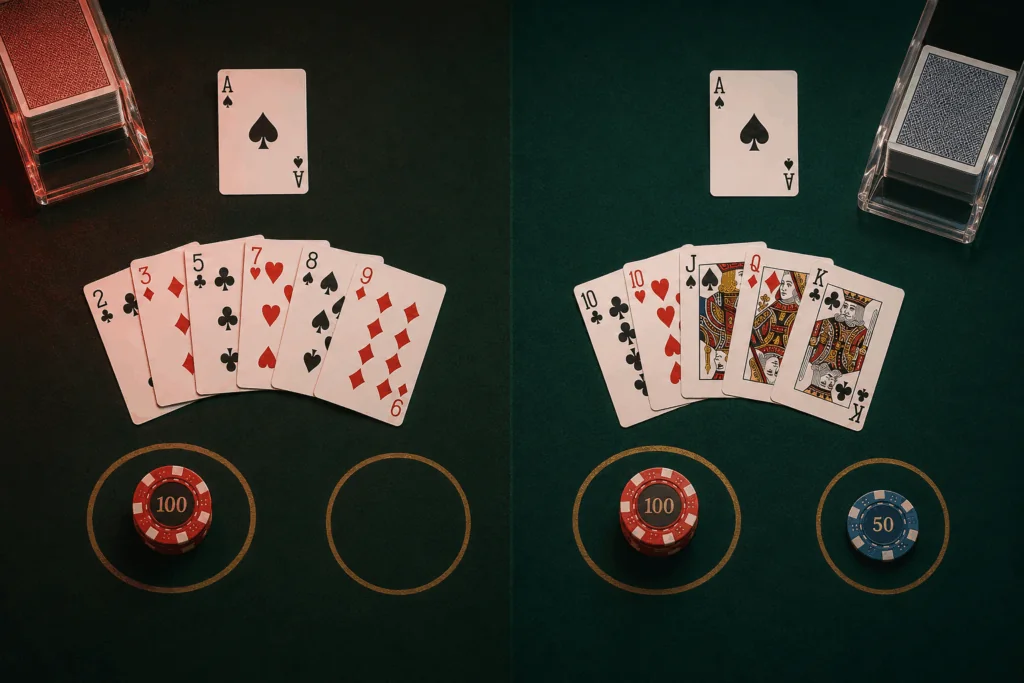
Insurance offers a predictable, capped-loss scenario in a single, specific situation: it caps the downside when a player holds a strong hand against a dealer Ace and wants to hedge rather than risk losing the full bet outright. For card counters, it can become a genuinely profitable side bet when the remaining shoe is rich in ten-value cards, since the standard 2:1 payout can exceed the true odds in that specific moment.
Why Insurance Loses Money Long Term
For the vast majority of players who aren’t tracking card composition, insurance carries a negative expectation close to 7.4% under typical eight-deck rules – worse than most standard blackjack bets. It also creates a decision point that can be misunderstood as “protecting a good hand,” when mathematically it’s unrelated to the strength of the player’s own cards unless they hold a blackjack themselves. The bet’s isolation from the main hand means it doesn’t reduce variance across a full session; it simply adds a separate, usually unfavorable, wager into the mix.
and Get Your Bonus Today
When to Take Insurance in Blackjack
Insurance functions as a narrow, self-contained bet triggered by one specific card – the dealer’s Ace – and its value depends almost entirely on the composition of the remaining shoe rather than on instinct or hand strength. For basic strategy players without a count, declining it consistently aligns with better long-term expectation. For counters capable of estimating ten-value density in real time, it becomes one of the few blackjack side bets that can shift toward player advantage under the right conditions. The decision of when to take insurance in blackjack ultimately comes down to information: without a reliable read on the remaining deck, the bet is a gamble on top of a gamble.