What Is Roulette and How Does the Wheel Work?
Roulette runs on a contradiction most players never resolve: the wheel looks like pure chance, yet the table is covered in numbers, colors, and betting zones that suggest a system. That tension between randomness and structure is exactly what has kept the game alive in casinos since the 18th century. To understand what roulette actually is, it helps to separate two things that are often blurred together – the wheel, which produces the outcome, and the betting layout, which gives that outcome meaning.

What Is Roulette?
Roulette is a casino game built around a spinning wheel divided into numbered pockets, paired with a betting table where players place chips before the spin. The wheel itself contains either 37 pockets (European version, numbers 0-36) or 38 pockets (American version, numbers 0-36 plus a double zero). This single difference in pocket count changes the house edge from 2.70% on the European wheel to 5.26% on the American one – a gap that matters more than most casual players realize.
A dealer, called a croupier, spins the wheel in one direction and releases a small ball in the opposite direction along a tilted track. As the ball loses momentum, it drops onto the spinning wheel and eventually settles into one of the numbered pockets. That pocket determines the winning number, and every bet placed on the table is settled against it.
What is a roulette wheel, mechanically speaking? It’s a precision-balanced disc with alternating red and black pockets, one or two green pockets for zero values, and metal deflectors that force the ball to bounce unpredictably before it settles. The randomness isn’t just about the spin – it’s engineered into the deflectors and pocket dividers themselves.
and Start Winning Today
How to Start Playing Roulette
Roulette doesn’t require memorizing hand rankings or calculating odds mid-game, which is part of why it attracts players who find card games intimidating. A new player can place a bet within seconds of sitting down: pick a number, a color, or a range, and wait for the spin. There’s no decision tree during the round itself – once the ball is released, the outcome is out of anyone’s hands.
Online versions strip away the physical friction entirely. There’s no waiting for a croupier to clear chips or announce results verbally; digital tables process a spin every 20-40 seconds depending on the platform, and live-dealer versions stream in real time with chat functions and multiple camera angles. Betting interfaces on most platforms let players click directly on the number grid, use a racetrack layout for call bets, or apply saved betting patterns with a single tap – no manual chip placement required.
Table limits are usually visible before joining, which removes the guesswork some other casino games leave in place. A player can filter tables by minimum bet, wheel type, or dealer language on most modern platforms, cutting down the time spent searching for the right room.
How the Roulette Wheel Works

European, American and French Wheels
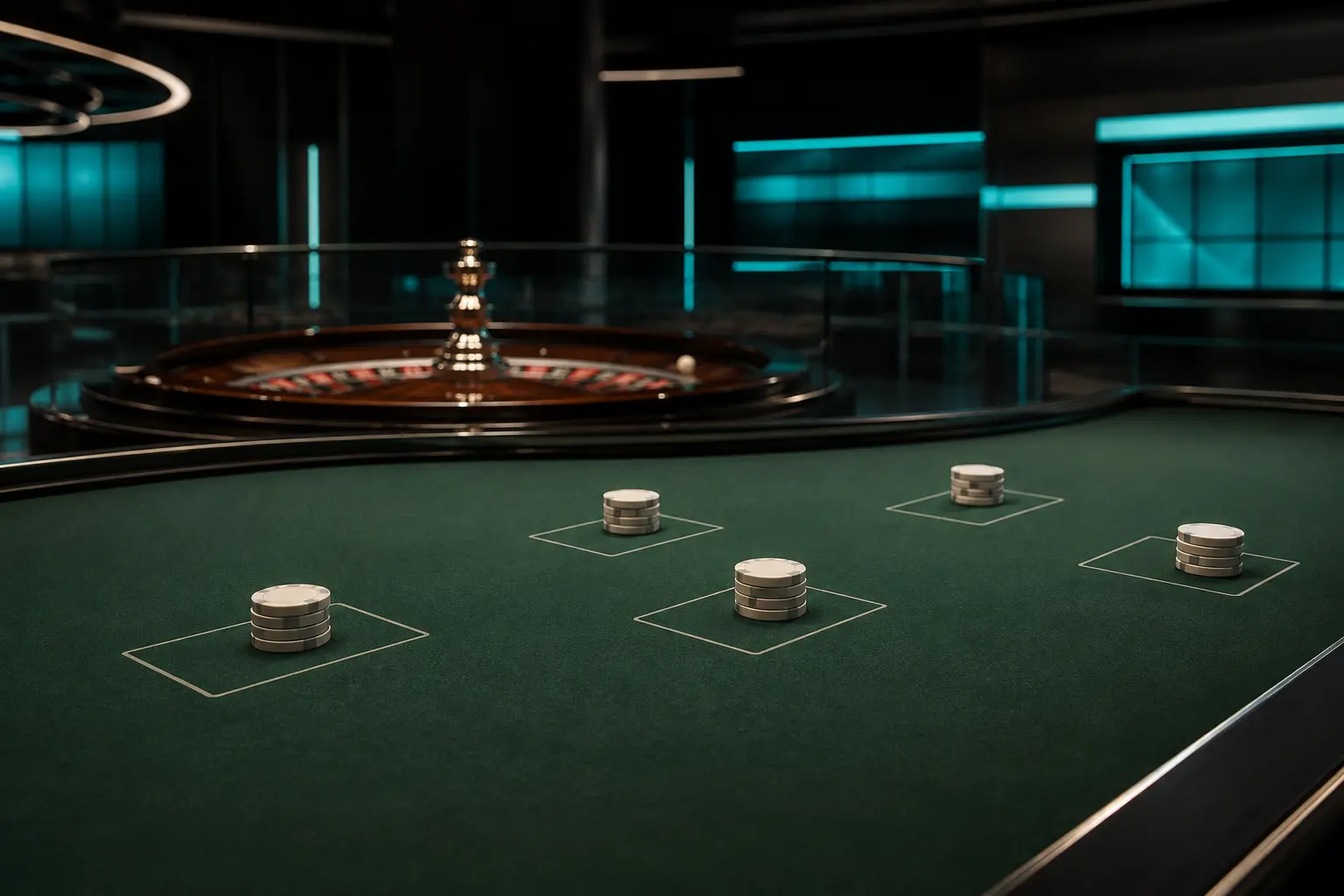
Most digital roulette tables lean into one of two visual directions: a minimalist, almost clinical layout with flat colors and sharp geometry, or a recreated physical casino floor with wood textures, ambient lighting, and a rendered croupier. Live-dealer studios go further, using multiple camera feeds – an overhead shot of the wheel, a close-up on the ball’s landing, and a wide shot of the table – to mimic the visual rhythm of sitting at a physical casino.
The wheel graphic itself is rarely stylized heavily, since players need to read the numbers and colors instantly. Where design teams do experiment is in the surrounding table felt, chip skins, and background environment, which range from generic green baize to themed sets tied to specific casino brands.
Spin Pace and Table Flow
The sound of the ball hitting the deflectors and settling into a pocket is arguably the most recognizable audio cue in casino gaming – a rattling, decelerating clatter that signals the round is ending. Digital versions replicate this with layered audio: the spin’s ambient hum, the ball’s bounce pattern, and a distinct final “drop” sound when it settles.
Live-dealer tables add a human layer – the croupier’s voice calling “no more bets,” the physical sound of chips being swept or stacked, and occasionally background chatter from other players in shared-table formats. This auditory detail is what separates an immersive live session from a purely automated RNG spin, where the sound design is synthetic by necessity.
Roulette Bets and Payouts

The Numbers, Colours and the Zero
Roulette doesn’t use symbols in the way slot machines do – there are no wilds or scatters. Instead, the “symbols” are the numbers themselves (0 through 36) and their color coding (red, black, and green for zero). Each number carries equal probability of appearing on any given spin, regardless of its color or position on the wheel, which is a common misconception among newer players who assume red and black alternate in some predictable rhythm.
Line Bets and Other Combination Bets
Traditional roulette has no built-in bonus rounds or free spins – the entire game consists of a single spin and its resulting payout. Some online variants introduce side bets, like betting on whether the next number will be odd/even combined with a color, or progressive jackpot side bets tied to specific number sequences across multiple spins. These are additions layered onto the base game rather than core mechanics of roulette itself.
Payouts from 1:1 to 35:1
Payouts in roulette are fixed by bet type, not by a paytable in the slot-machine sense. A straight-up bet on a single number pays 35 to 1. A split bet (two adjacent numbers) pays 17 to 1. Street bets (three numbers in a row) pay 11 to 1, corner bets (four numbers) pay 8 to 1, and outside bets like red/black, odd/even, or high/low pay even money (1 to 1). Understanding what is line in roulette matters here: a line bet, sometimes called a “double street,” covers six numbers across two adjacent rows and pays 5 to 1 – a middle-ground wager between the high-risk single-number bet and the safer outside bets.
Jackpot and Multiplier Roulette Variants
Standard roulette has no jackpot mechanic – winnings are capped by the fixed odds listed above. Where jackpots do appear, they’re bolted onto specific online variants as an optional side bet, often requiring a small additional wager per spin. These progressive pools typically trigger on rare number sequences (three consecutive identical numbers, for example) and are entirely separate from the core wheel outcome.

Roulette on Mobile and Live Tables
Roulette translates to mobile screens with fewer compromises than most table games, largely because the interface only needs two core elements: the wheel and the number grid. Most platforms compress the betting layout into a scrollable or tabbed view on smaller screens, letting players switch between “inside” and “outside” bet sections without losing sight of the spin animation.
Load times for live-dealer roulette on mobile depend heavily on connection stability, since the video stream is the heaviest component. RNG-based mobile roulette, by contrast, runs smoothly even on older devices, as the wheel animation is locally rendered rather than streamed. Touch controls for chip placement are generally more error-prone on small screens than on desktop, which is why most mobile apps include a bet confirmation step before the spin locks in.
Roulette: Advantages and Drawbacks
Why Roulette Is Easy to Learn
The betting structure gives players direct control over risk exposure – someone can choose a near-50% chance outside bet or a 1-in-37 straight-up bet within the same session, without switching games. Round speed is another practical strength: physical tables average roughly 40-50 spins per hour, and online RNG tables can exceed that significantly, meaning outcomes resolve fast enough to hold attention without long dead time. The rules are also fully transparent – no hidden multipliers or variable RTP triggers, since payouts are fixed by bet type.
Where the House Edge Bites
The house edge is baked into the wheel itself and cannot be reduced through skill or timing, unlike games where decision-making affects the odds. The American wheel’s extra pocket nearly doubles the house edge compared to the European version, and players who don’t check which wheel they’re using before betting are effectively giving up value. Session length can also work against the player psychologically – because rounds resolve quickly, losses can accumulate faster than in slower-paced games, and there’s no in-game mechanic that pauses or adjusts this pace.
and Get Your Bonus Today
What Roulette Is: Key Points
Roulette’s appeal doesn’t come from complexity – it comes from the direct, visible relationship between a spin and a payout. Every element on the table, from the double-zero pocket to the line bet covering six numbers, exists to define exactly how that single spin translates into risk and reward. Knowing what is roulette wheel construction actually does, and how the betting grid maps onto it, is really the only “strategy” the game allows, since no amount of observation changes what the ball does once it’s released.