What Is Surrender in Blackjack?
Surrender is a rule option that lets a blackjack player exit a hand before it plays out fully, giving up half the original wager instead of risking the entire bet. It sits outside the usual toolkit of hit, stand, double, and split, and most players never encounter it because many tables simply don’t offer it. Where it exists, surrender changes the mathematical shape of certain hands – turning a near-guaranteed loss into a controlled, smaller one. The term itself comes from insurance-style thinking borrowed from other card games, adapted specifically to blackjack’s dealer-versus-player structure.
Not every casino, land-based or online, includes this option in its ruleset. It tends to appear more often in American double-deck or shoe games, and less frequently in European single-deck variants. When it is available, the dealer or the digital interface will typically display a visible prompt, sometimes as a separate button labeled “Surrender,” distinct from the standard action buttons.
What Surrender in Blackjack Means
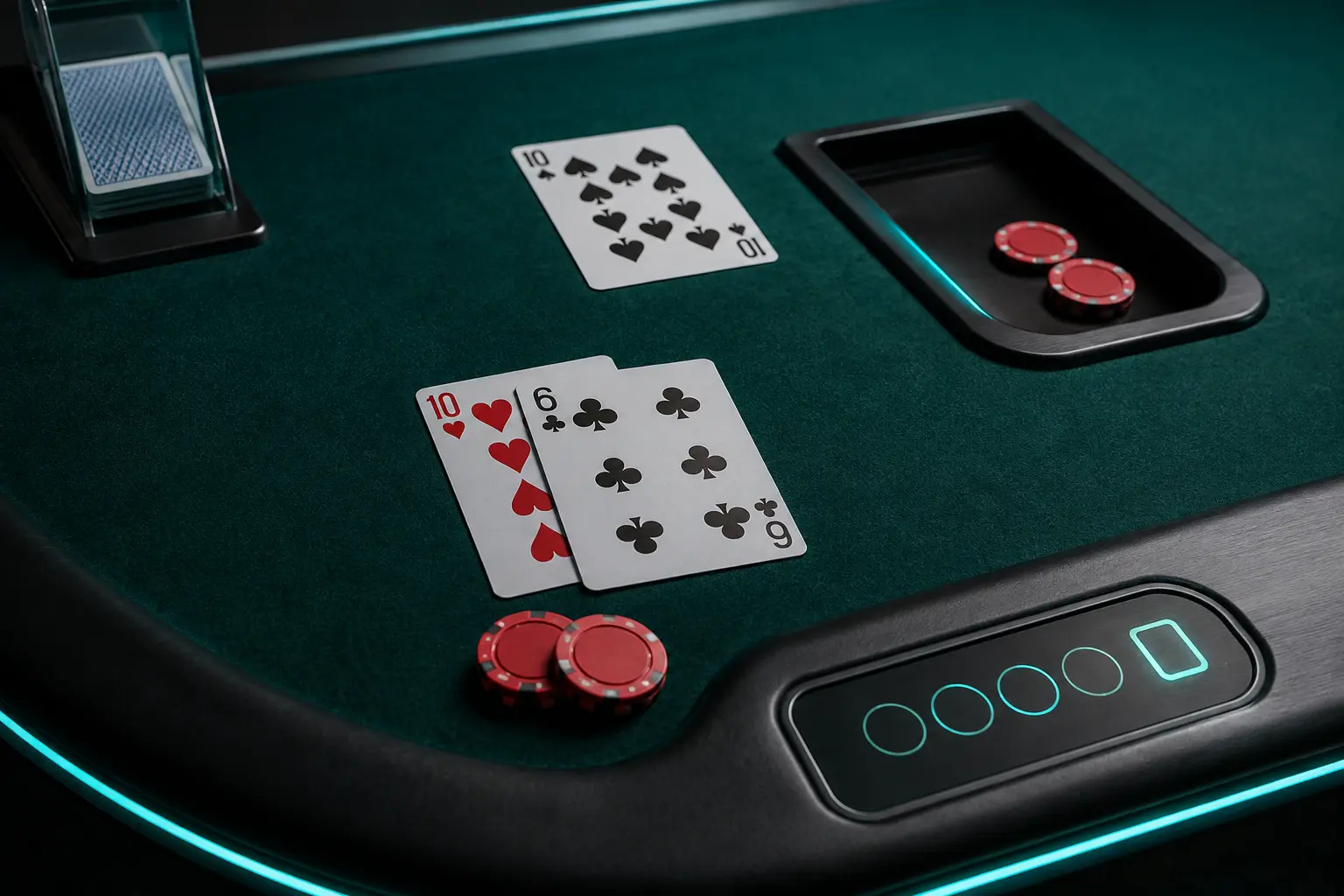
In technical terms, surrender is a conditional forfeiture: the player declares it before taking any card-altering action, and the hand ends immediately with half the stake returned to the house. This differs sharply from standing or busting, where the full bet remains in play until the hand’s natural conclusion. The rule was introduced decades ago in select U.S. casinos as a marketing tool to offset house edge concerns from players wary of high-vig side rules like insurance.
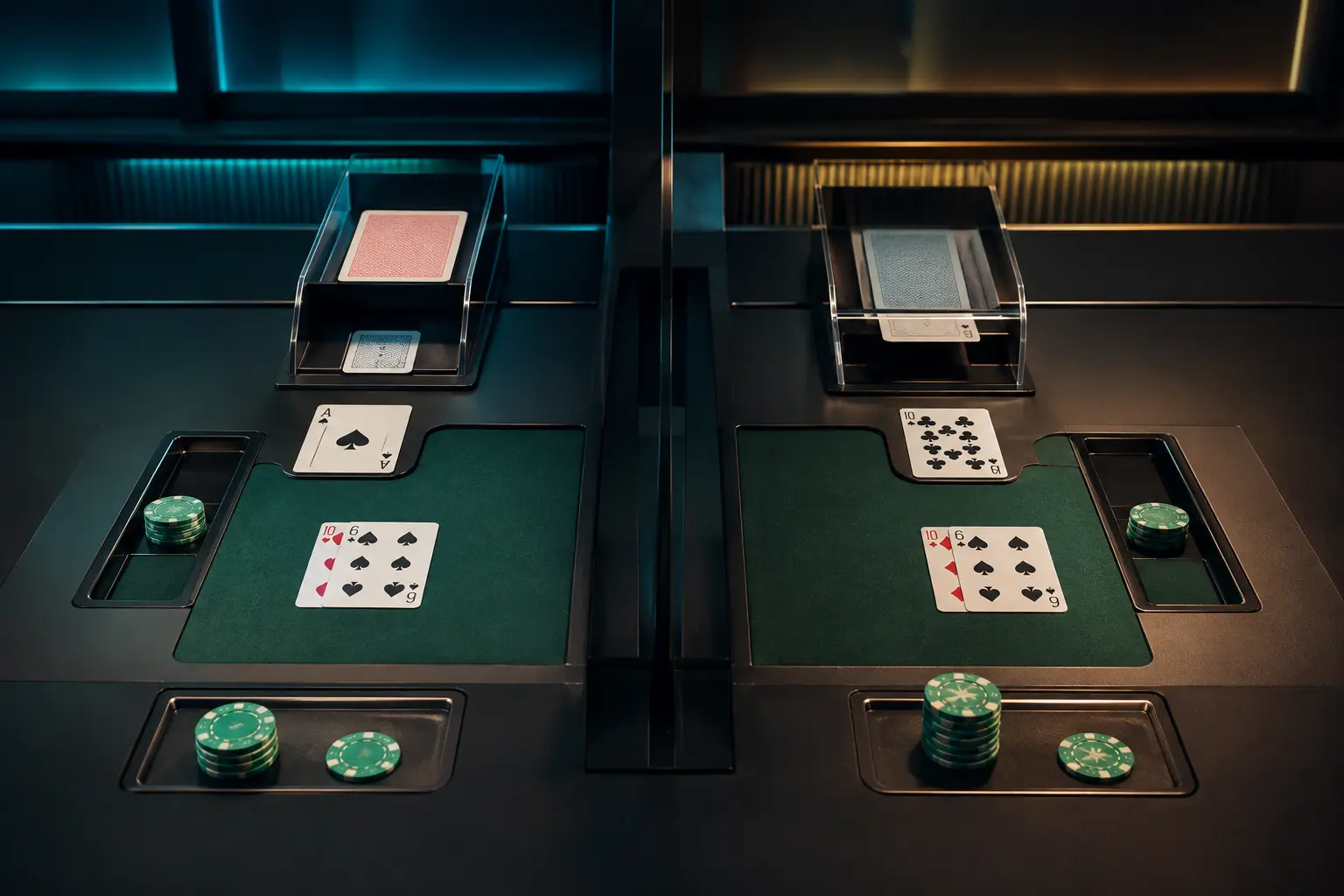
Two structural variants exist: early surrender, permitted before the dealer checks for blackjack, and late surrender, allowed only after the dealer confirms they do not have a natural 21. The distinction matters enormously for expected value – early surrender is mathematically superior for the player, since it can be used even against a dealer’s potential blackjack, whereas late surrender forfeits that protection.
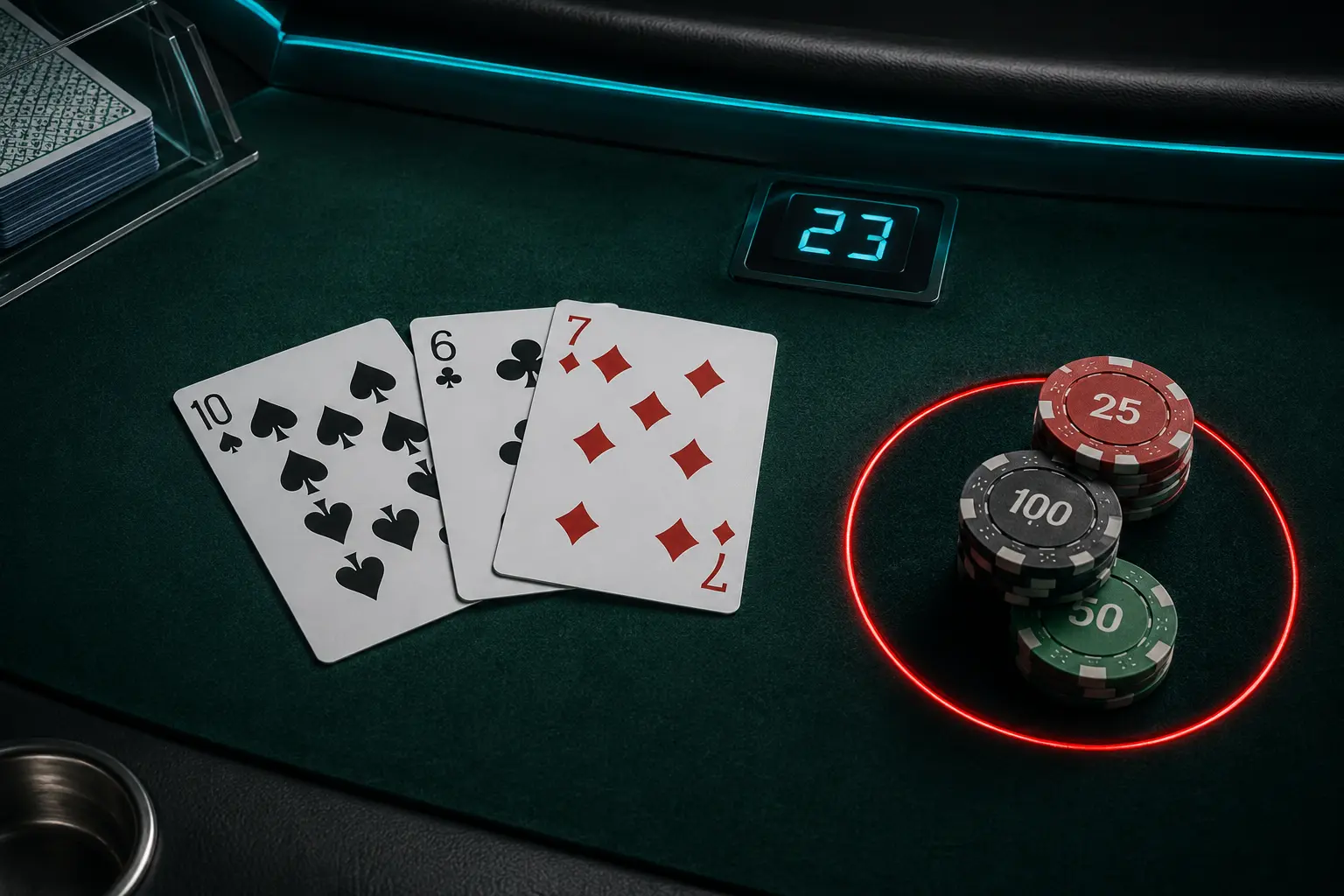
Basic strategy charts incorporate surrender decisions as a distinct layer, separate from splitting or doubling charts. A hand such as 16 against a dealer’s 9, 10, or Ace is the textbook example where surrendering reduces long-term losses compared to playing the hand out under most rule sets.
and Start Winning Today
How to Surrender at a Live or Online Table
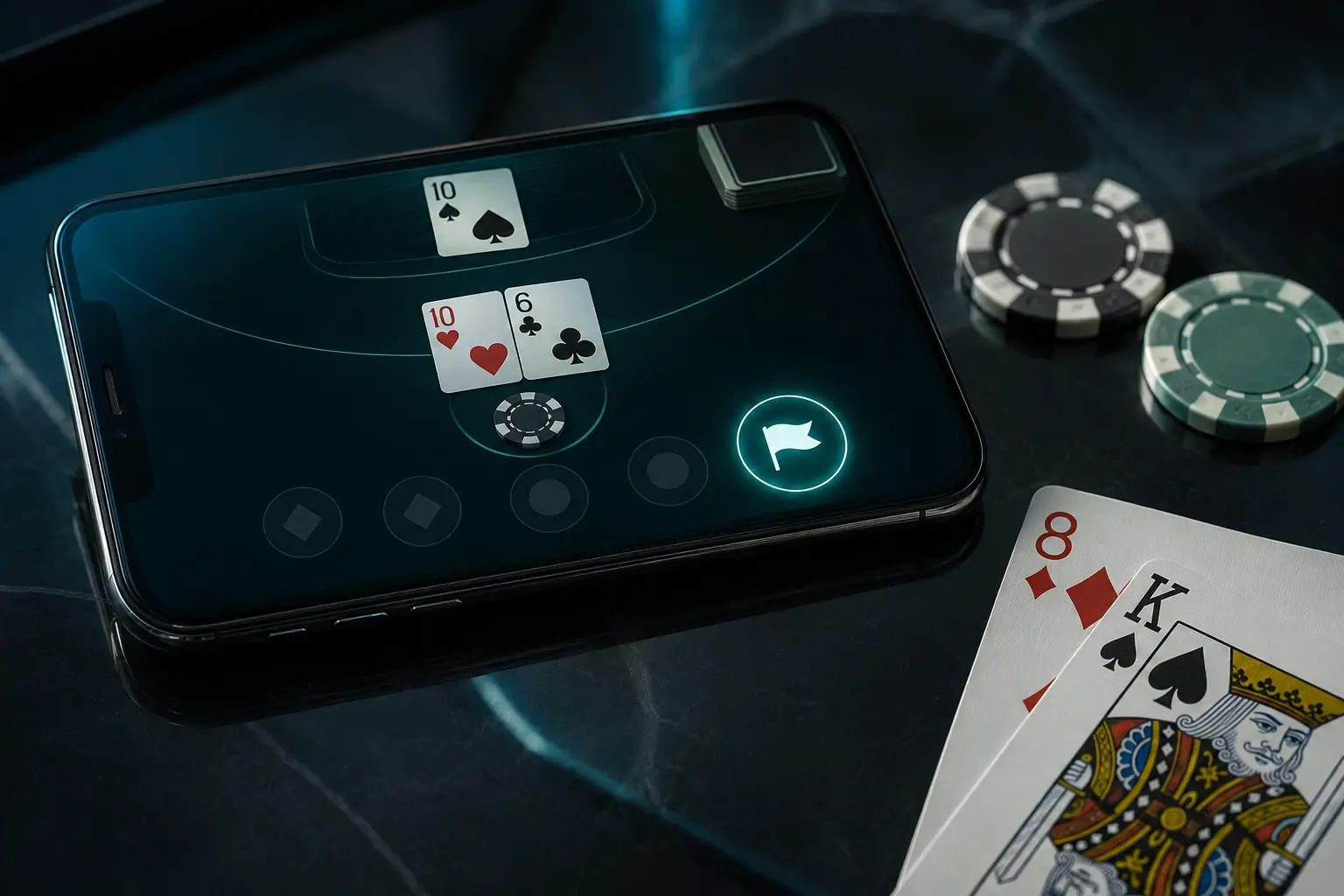
Executing a surrender at a physical table requires a specific hand signal – typically drawing a horizontal line behind the bet with a finger – since verbal declarations alone can create disputes over intent. Online platforms simplify this considerably: a dedicated button appears alongside the standard action set, and clicking it resolves the hand within a second, with half the wager automatically returned to the balance.
The decision window is short by design. Once a player hits or stands, the surrender option disappears for that hand, so hesitation carries a real cost. Digital interfaces generally gray out the surrender button after the first card-related action, which removes ambiguity but also means players need to decide quickly, often within the same few seconds allotted for any other move.
There’s no separate tutorial screen for surrender in most platforms – it’s assumed knowledge, which means players unfamiliar with the term often skip past it entirely without realizing what they gave up strategically.
Blackjack Surrender Rules
Late Surrender vs Early Surrender
Because surrender is a rule mechanic rather than a visual feature, it rarely receives dedicated artwork or thematic treatment. Most tables – whether felt-green classic designs or stylized digital skins – render the surrender option as plain text on a button, without iconography specific to the action itself. Some higher-end live dealer studios include a small on-screen label near the betting circle, but this is functional rather than decorative.
Which Tables Actually Offer Surrender
Audio feedback for surrender is typically minimal – a soft chip-sliding or card-flip sound accompanies the forfeiture, distinct from the more emphatic tones used for wins or blackjacks. This restraint is intentional: designers avoid making surrender feel like a loss celebration or a triumphant moment, since it represents a defensive, not offensive, play. The muted audio cue reinforces the psychological framing of surrender as damage control rather than a rewarding outcome.
When to Surrender in Blackjack
Hands Where Surrender Is Correct
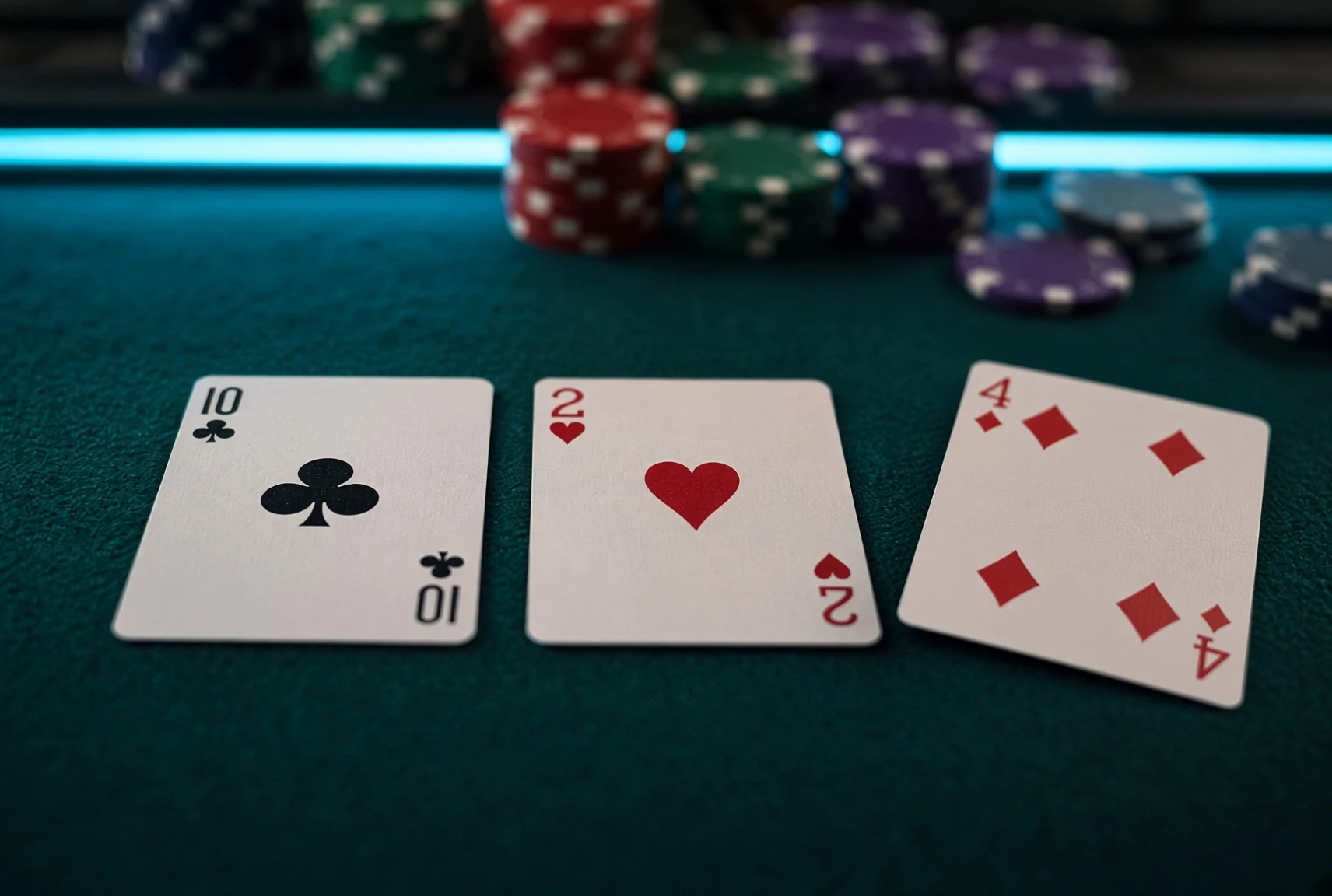
Standard card values apply without alteration – surrender doesn’t introduce special symbols, wilds, or modified card behavior. The rule operates purely at the decision layer, meaning the ten, jack, queen, and king retain identical value regardless of whether surrender is offered at that particular table.
Surrender and Side Bets
Surrender has no connection to bonus rounds or free spin mechanics, since these belong to side-bet features like Perfect Pairs or 21+3, which operate independently of the core hand-resolution rules. A table offering surrender may or may not also offer these side bets; the two systems don’t interact.
What You Get Back: Half the Bet
Because a surrendered hand doesn’t reach a win/loss resolution in the traditional sense, it doesn’t factor into the paytable at all. A natural blackjack still pays 3:2 or 6:5 depending on the table, and a surrendered hand simply returns 50% of the stake with no payout calculation involved. This makes surrender the only in-round action that bypasses the paytable entirely.
Surrender and Jackpot Side Bets
Progressive jackpot side bets, where offered, require a separate wager and are unaffected by a player’s decision to surrender their main hand. Surrendering the primary bet does not forfeit or affect any jackpot side bet already placed, since these are settled independently based on the cards dealt, not on the main hand’s outcome.
Surrender on Mobile and Live Tables
On mobile browsers and dedicated casino apps, the surrender button is generally positioned within thumb’s reach, often as a smaller icon compared to the more prominent hit/stand buttons. Touch response for surrender tends to be immediate, since the action requires no animation sequence – the hand simply resolves and the balance updates. Screen size occasionally causes accidental taps near the surrender zone on smaller devices, particularly in landscape mode where button spacing tightens.
Is Surrender Good in Blackjack?
How Surrender Lowers the House Edge
Surrender reduces the house edge measurably when used correctly – estimates for late surrender alone suggest a reduction of roughly 0.02% to 0.07% depending on the number of decks and dealer rules. It also provides a psychological safety valve for players uncomfortable with high-risk hands like 16 against a dealer’s face card, converting an emotionally taxing decision into a fixed, smaller loss. For bankroll management over long sessions, this predictability has genuine value.
When Surrendering Is a Mistake
The rule is far from universal – many tables, particularly in Europe and at lower-stakes venues, don’t offer it at all, making it unreliable as a strategy pillar across different casinos. Overuse is a real risk too: players who surrender hands that basic strategy actually favors playing out end up increasing their effective loss rate rather than reducing it. Early surrender, the more valuable version, is exceedingly rare in modern casinos, which limits the rule’s practical upside for most players to the weaker late-surrender variant.
and Get Your Bonus Today
Surrender in Blackjack: Key Points
Surrender occupies a narrow but mathematically meaningful niche in blackjack strategy – valuable in specific hand-versus-dealer-upcard scenarios, irrelevant in most others, and entirely dependent on table availability. Its worth isn’t universal; it’s conditional, tied to correct application rather than general use. Players who learn the specific surrender-favorable hands from a strategy chart gain a small but real edge reduction, while those who surrender indiscriminately erode their own bankroll instead of protecting it.