Double Down in Blackjack: Rules and When to Use It
Doubling down in blackjack means doubling your stake after the first two cards in exchange for exactly one more card. It pays even money on the full doubled bet. The strongest spots are hard 9, 10 and 11 against a weak dealer card. Below: the rules and when to use it.
What Doubling Down in Blackjack Means
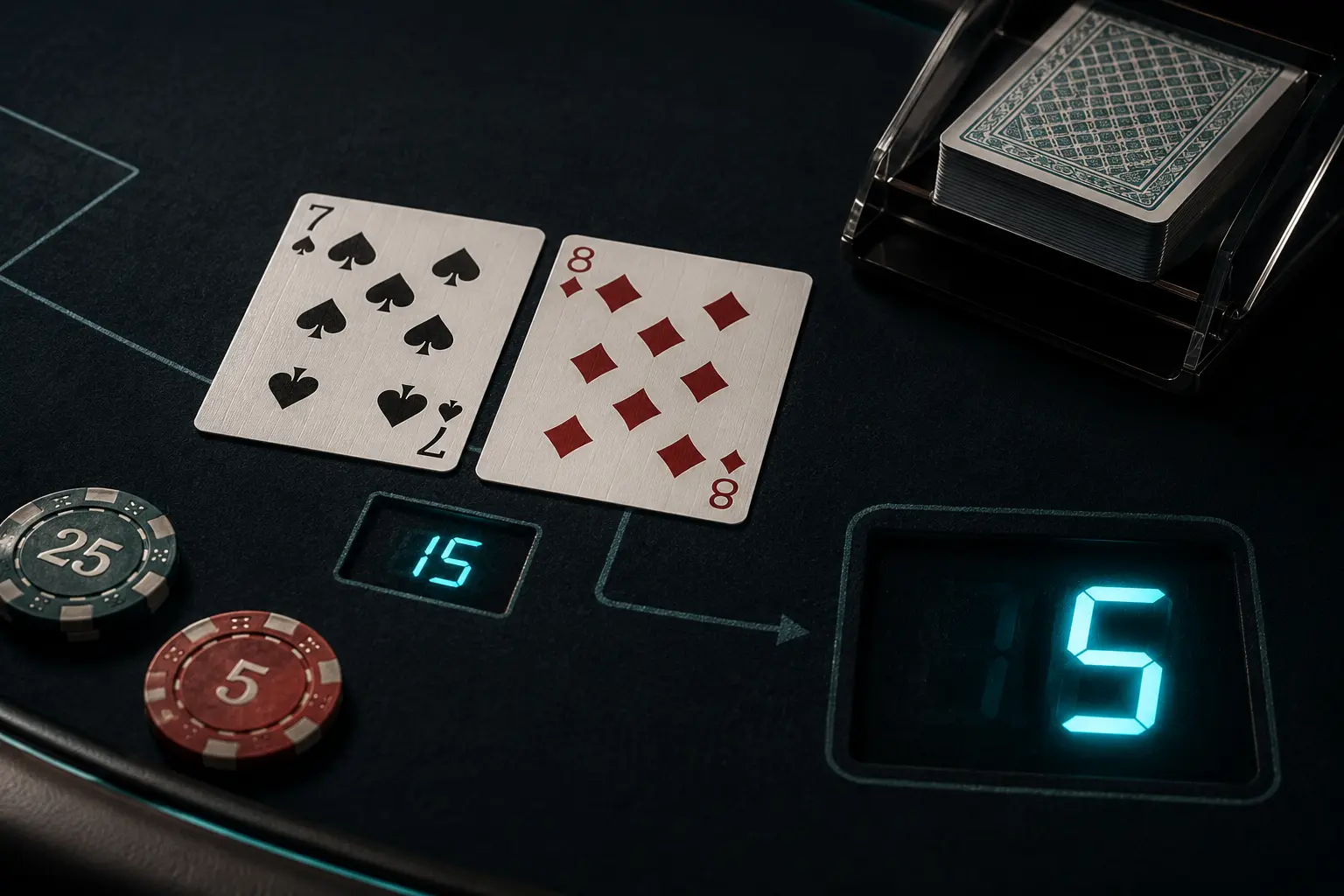
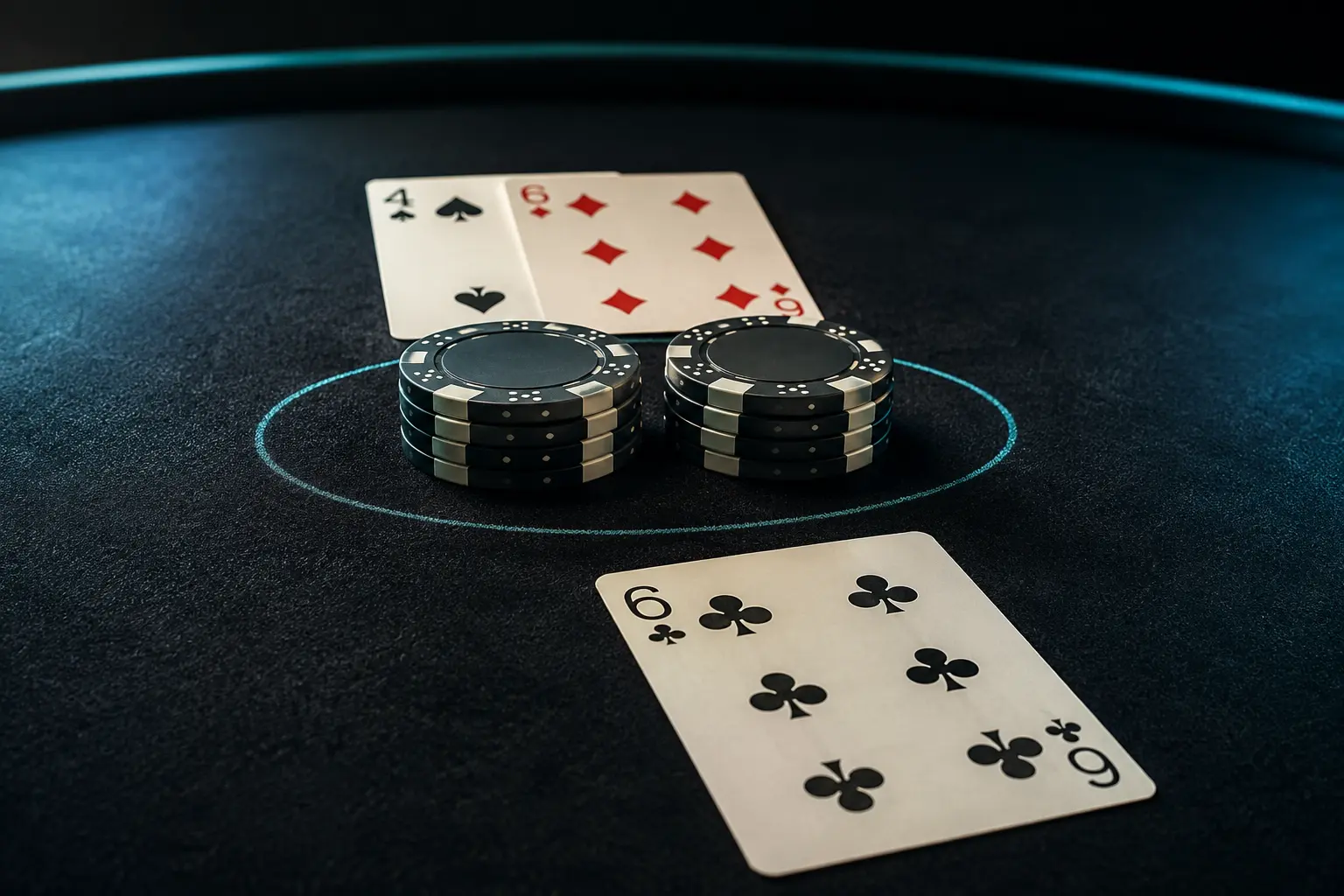
Doubling down is a betting option available after the initial two cards are dealt in blackjack. The player matches their original wager with an equal second bet, and in exchange, the dealer deals exactly one additional card to that hand – no more, no less. Once that card lands, the turn ends automatically, regardless of the total. This is what is double down in blackjack in its most literal sense: a one-time bet increase tied to a single forced draw.
The option typically appears only on the first decision point of a hand, before any card has been added through a hit. Most tables also restrict double down to hands with exactly two cards, which rules out doubling after a hit or, in many rulesets, after a split – though this varies by casino. Understanding this distinction answers a related question directly: what is doubling down in blackjack differs from simply increasing a bet before the round starts, since the extra wager here is placed reactively, based on the two cards already shown.
From a rules standpoint, the mechanic exists in nearly every blackjack variant, though the fine print – which totals qualify, whether it applies after splitting, and how soft hands are treated – changes from table to table. These variations are covered in more depth further down, but the core structure stays consistent: one extra bet, one extra card, no further hits.
and Start Winning Today
How to Double Down at a Table
Executing a double down at a physical or live-dealer table requires a specific hand signal: placing the additional chips beside the original bet, outside the betting circle, while pointing with one finger. Online platforms simplify this into a single labeled button that appears only when the move is legally available for that hand – it disappears automatically once conditions aren’t met, such as after a third card has already been drawn.
Digital interfaces remove most of the friction. Because the software already knows the two-card total and the dealer’s upcard, the double-down prompt is presented instantly rather than requiring the player to calculate eligibility manually. This matters in live-dealer formats too, where a countdown timer forces quick decisions – having the option clearly flagged prevents hesitation that could otherwise cost the round.
The trade-off is speed versus deliberation. A physical table gives players a few extra seconds to mentally review the dealer’s upcard and their own total before committing chips, while a fast digital interface can tempt impulsive doubling on marginal hands. Neither format changes the underlying rule – only the pace at which the decision gets made.
Double Down Rules in Blackjack
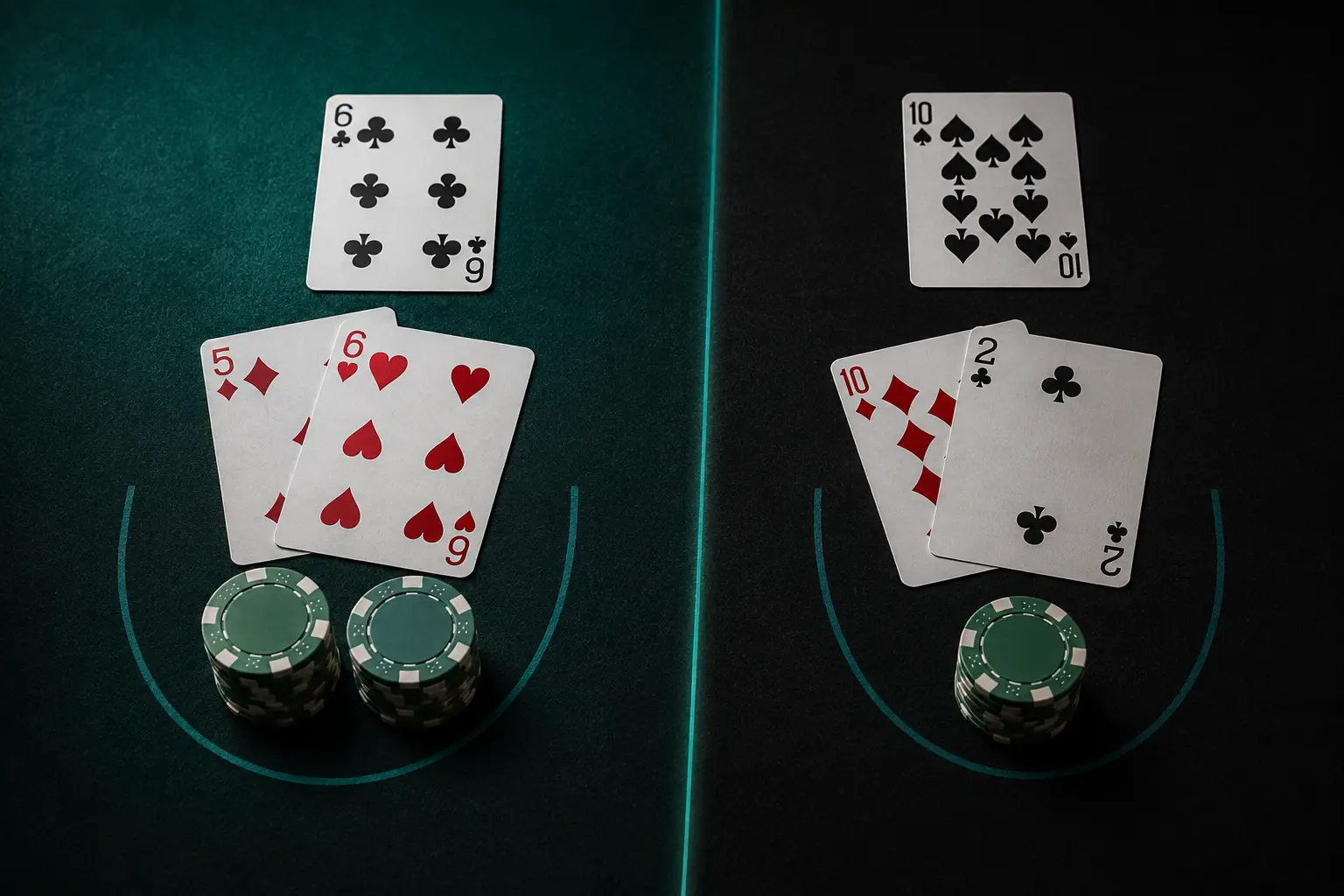
Which Totals You Can Double On
Blackjack tables, whether physical or digital, rarely rely on decorative theming – the visual language is functional. Chip stacks, the betting circle, and the double-down zone are laid out to keep the player’s original bet visibly separate from any added wager, which avoids confusion when the dealer settles the hand. On digital tables, this separation is often reinforced with color-coded chip trays or a distinct highlight around the doubled stack.
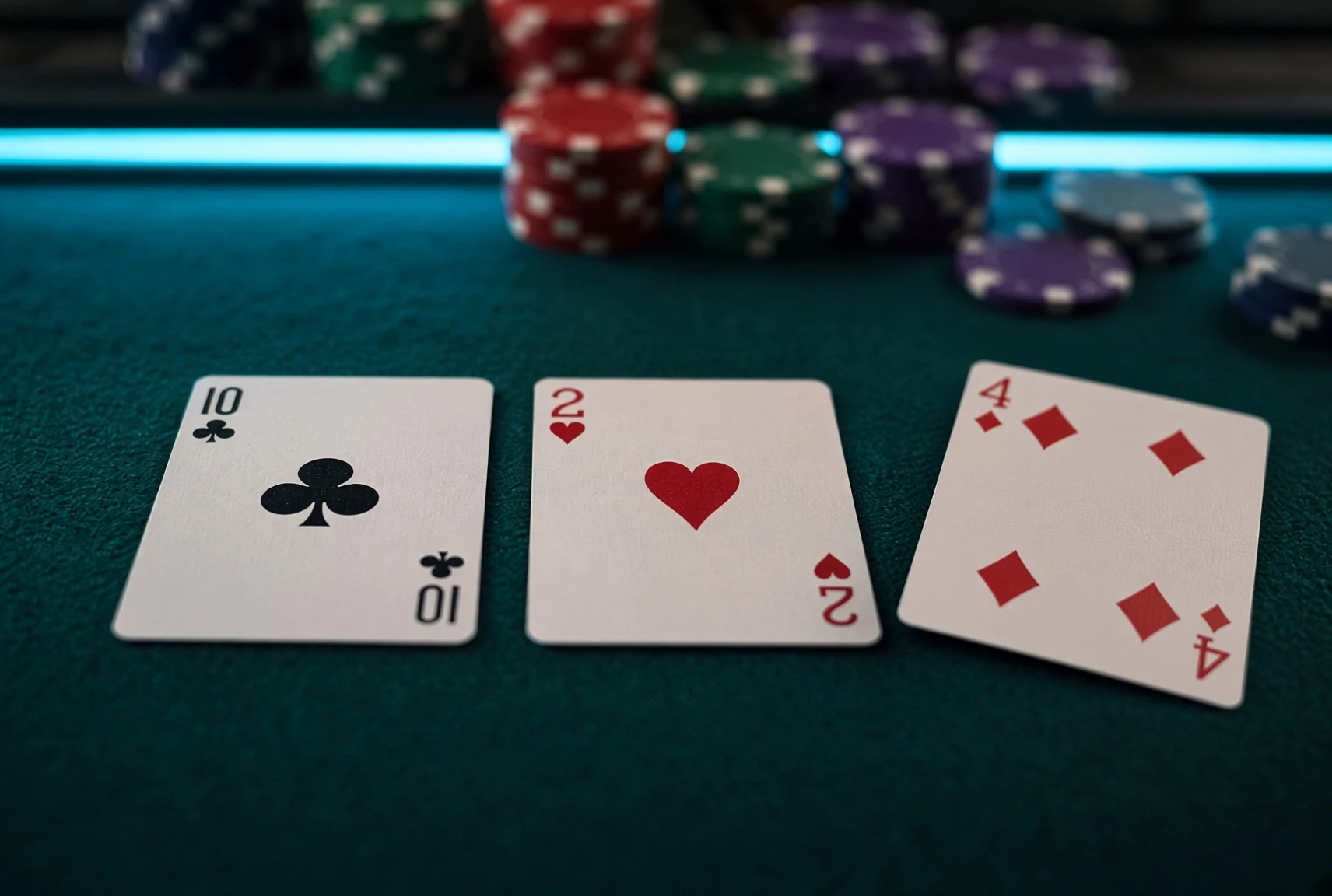
Card rendering also plays a functional role here rather than an aesthetic one: the second card dealt after doubling is frequently displayed at a slight offset or angle, a small design cue that reminds the player no further action is coming for that hand.
Doubling After a Split
The audio cues tied to doubling down are deliberately minimal – a chip-stacking sound when the bet is matched, followed by a distinct card-flip tone for the single additional card. This restraint is intentional: doubling down is a decision point with real financial weight, and overly celebratory sound design could push players toward the option more often than the hand actually warrants.
In live-dealer environments, the dealer’s verbal confirmation (“double down, good luck”) adds a procedural checkpoint absent from fully automated versions, giving the player a final moment to register that the bet has been locked before the card is drawn.
When to Double Down in Blackjack
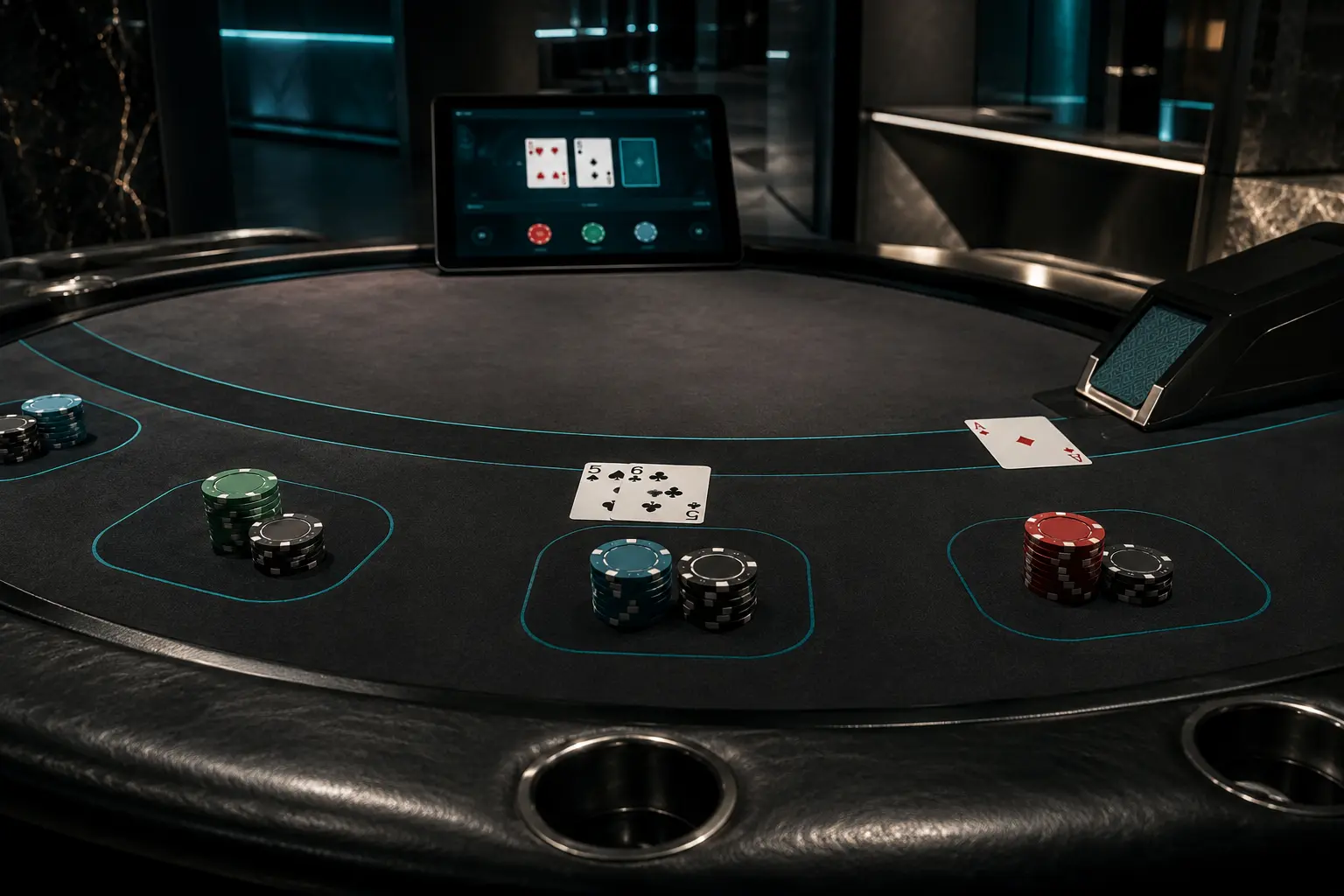
Card Totals That Favour Doubling
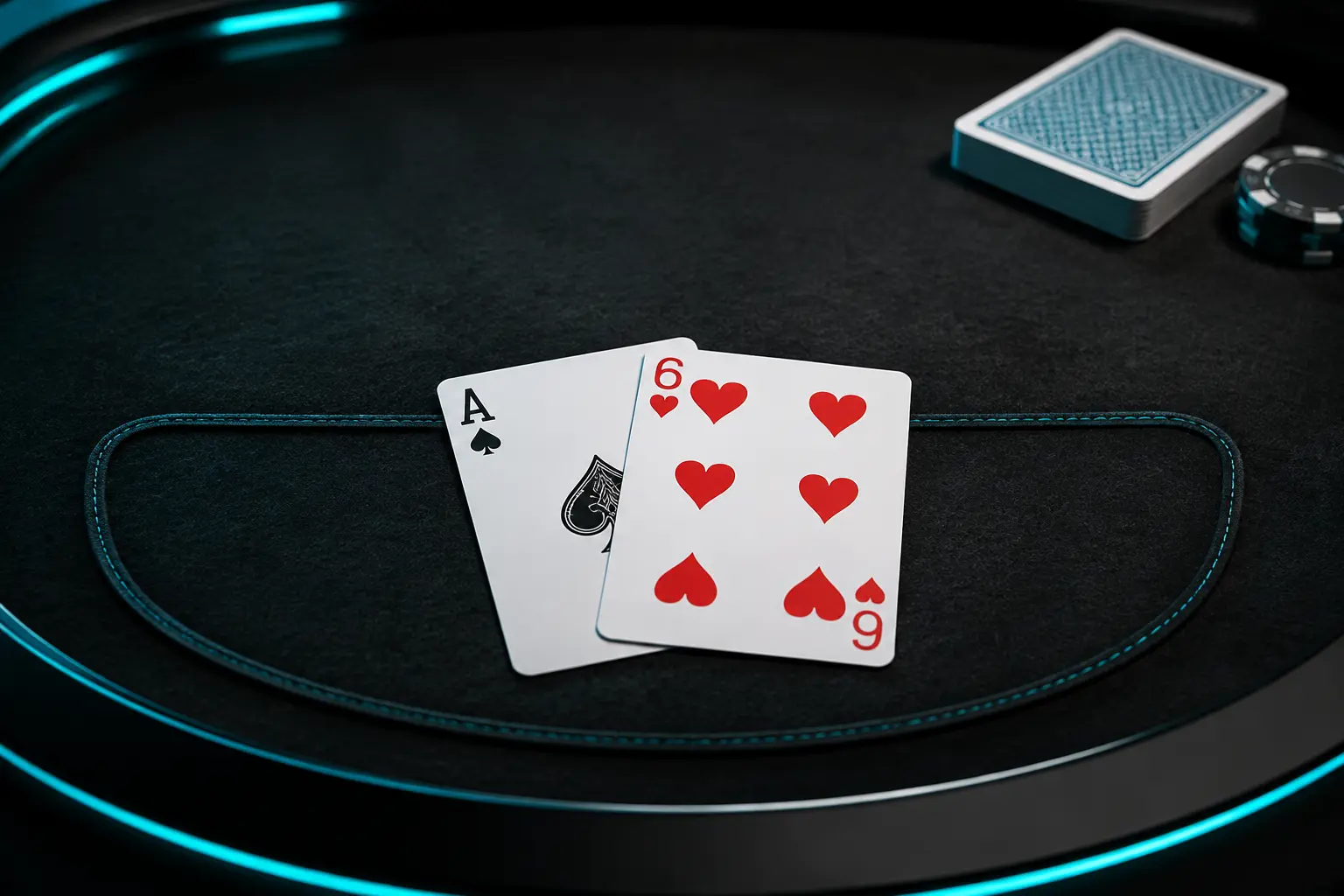
Blackjack has no symbols in the traditional sense, but its cards function similarly by carrying fixed values that determine every decision, including whether to double. Aces holding dual value (1 or 11) are what create “soft” totals – hands where doubling carries different risk than on a “hard” total of the same number. A two-card total of 11 made from a 6 and a 5 behaves identically to one made from an Ace treated as 1 plus a 10, but a soft total involving an Ace left unresolved (such as Ace-7) changes the calculus entirely for doubling decisions.
Doubling and Side Bets
Blackjack doesn’t include free spins or bonus rounds in the slot-machine sense. The closest structural equivalent is the double-down option itself, alongside side bets some casinos layer on top, such as Perfect Pairs or 21+3 – these are unrelated to doubling and settle independently of whether the main hand is doubled.
Double Down Payout: Even Money on Twice the Stake
Double down payout blackjack math is straightforward: a winning doubled hand pays 1:1 on the full doubled amount, meaning a $10 original bet doubled to $20 returns $40 total if the hand wins outright. If the hand loses, both the original and matched wager are forfeited together. A push (tie with the dealer) returns the entire doubled stake with no gain or loss. Blackjack itself – a natural two-card 21 – cannot be doubled, since the hand already stands at its maximum value and typically pays 3:2 instead.
Doubling and Jackpot Side Bets
Standard blackjack has no jackpot structure tied to doubling down; this is a fixed-payout mechanic. Some progressive blackjack variants offer side-bet jackpots for rare card combinations, but these operate on separate wagers and are entirely disconnected from the double-down decision or its payout.
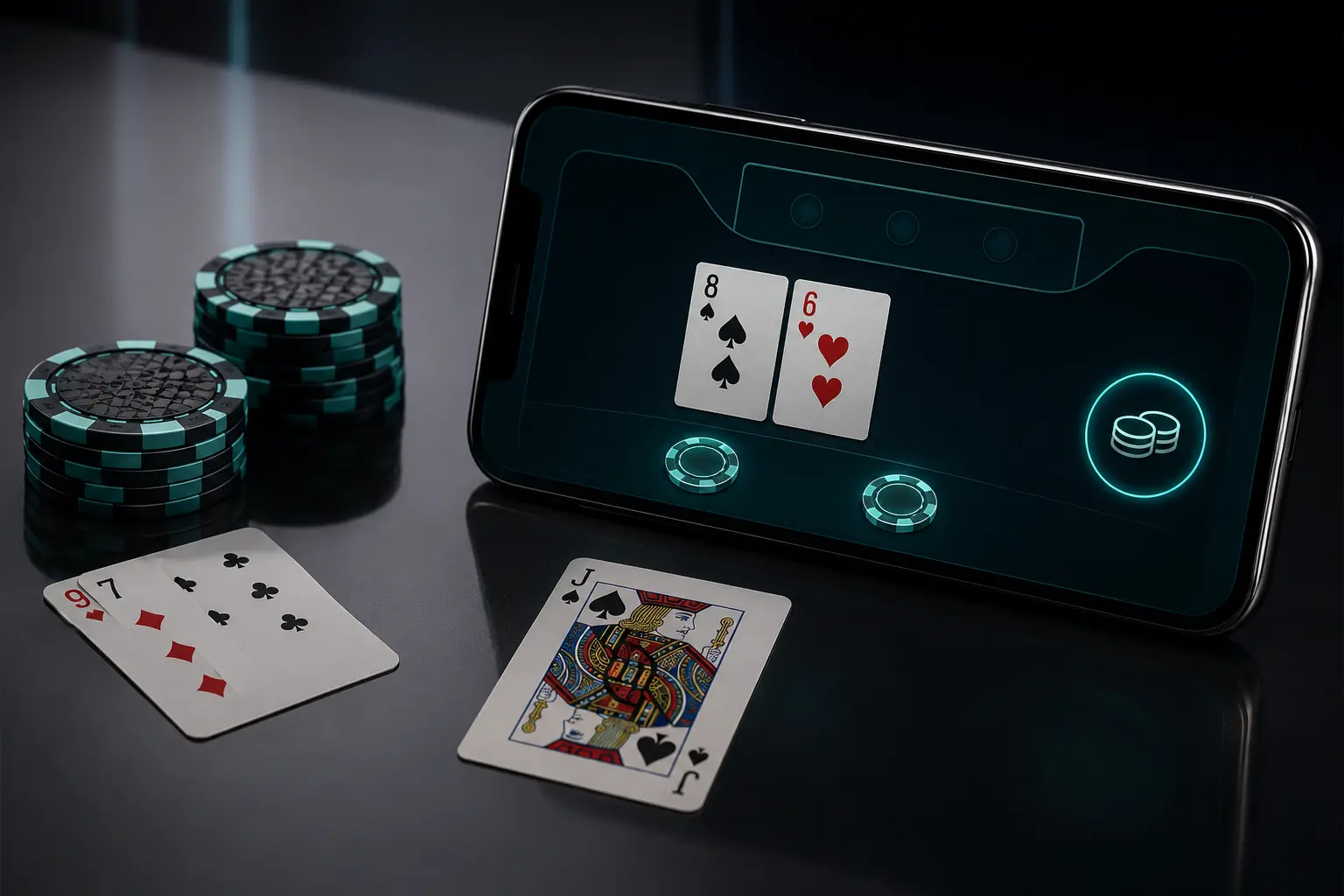
Doubling Down on Mobile and Live Tables
On mobile screens, the double-down button is generally sized larger than standard hit/stand controls, since misclicking here carries real financial consequences. Touch-based confirmation – often a two-step tap-and-confirm sequence – reduces the risk of accidentally doubling a bet on a crowded interface. Live-dealer streams on mobile networks can introduce input lag during the double-down window, so most platforms extend the decision timer slightly for mobile users compared to desktop play.
Doubling Down: Advantages and Risks
Why Doubling Lowers the House Edge
Doubling down at the right moment is one of the few blackjack decisions where the player actively shifts the house edge in their favor rather than just reacting to it. On a two-card 11 against a dealer’s low upcard, basic strategy shows doubling produces a higher expected return than simply hitting and standing separately. The mechanic also resolves hands faster, since no further cards are drawn after the double, which suits players managing session time or bankroll pacing.
When Doubling Down Is a Mistake
The same mechanic punishes poor timing harshly: doubling on a hand like 12 against a dealer’s 6, purely out of impatience, doubles the exposure on a statistically weak position. Table restrictions add friction too – rules limiting doubling to hard totals of 9-11, or disallowing it after a split, vary enough between casinos that a strategy chart memorized for one table may not directly apply at another without checking the posted rules first.
and Get Your Bonus Today
Double Down in Blackjack: Key Points
Doubling down rewards precision more than aggression. The mechanic itself is simple – one extra bet, one extra card – but its value depends entirely on reading the dealer’s upcard against a fixed strategy chart rather than instinct. Players who treat it as a default power move on any strong-looking hand tend to erode the very edge the option is designed to hand them. Used selectively, according to established hard and soft totals, it remains one of the few rule-based tools in blackjack that meaningfully tilts a round’s expected outcome.